

Twistoptics 2026
Description
The conference focuses on light–matter interactions in twisted heterostructures and moiré lattices, including 2D materials and anisotropic crystal slabs. Topics include phenomena related to optical angular momentum, circular dichroism, and chirality.
Topics:
Twisted and moiré systems
- Optical probing of twisted and moiré graphene
- Polaritons in twisted van der Waals heterostructures
- Hyperbolic polaritons in twisted anisotropic crystals
Optical fields and angular momentum
- Optical angular momentum, circular dichroism, and related effects
- Optical vortices and optical torques
Chirality and topology
- Chirality, nonreciprocal optical edge modes, and topological photonic phenomena
ORGANIZING COMMITTEE:
- Sejeong Kim (Sungkyunkwan University (SKKU), South Korea)
- Alexey Nikitin (Donostia International Physics Center (DIPC), Spain)
Objectifs
The conference seeks to maintain balance and inclusivity, promoting racial and gender equality, diversity in participants’ institutional and national affiliations, and proportional representation of senior, mid-career, and early-career researchers to foster creative and interdisciplinary interaction.
Activité s'adressant à
- Étudiants universitaires
- Professionnels
Organisée par


Directeurs
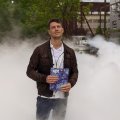
Alexey Nikitin
DIPC, Ikerbasque, Ikerbasque Research Associate
Conférenciers

Pablo Alonso González
University of Oviedo-Asturias
Prof. Pablo Alonso-González holds a Distinguished Researcher position at the University of Oviedo (Spain) where he leads the Quantum Nanooptics Lab at the Department of Physics. He obtained his PhD degree in Physics from the Universidad Autónoma de Madrid (2009). From 2009 to 2015 he was post-doctoral researcher at the Nanooptics group at CIC nanoGUNE in San Sebastian (Basque Country, Spain). Alonso-González´s research activities are focused on materials science and nanophotonics with special emphasis on the study of the opto-electronic properties of novel 2D materials at the nanoscale. In 2014 he received the Spanish Royal Society of Physics (RSEF-BBVA) prize in the category of young experimental scientist, and in 2021 he was selected as finalist for the Falling Walls Science Breakthroughs of the Year 2021 in Physical Sciences. In 2016 and 2022 he was awarded by the European Research Council (ERC) with a Starting and a Consolidator Grant, respectively.

Peter Banzer
University of Graz
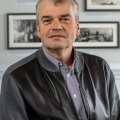
Dmitri Basov
Columbia University
Dmitri N. Basov (PhD 1991) is a Higgins professor and Chair of the Department of Physics at Columbia University [http://infrared.cni.columbia.edu], the Director of the DOE Energy Frontiers Research Center on Programmable Quantum Materials and co-director of Max Planck Society – New York Center for Nonequilibrium Quantum Phenomena. He has served as a professor (1997-2016) and Chair (2010-2015) of Physics, University of California San Diego. Research interests include: physics of quantum materials, superconductivity, two-dimensional materials, infrared nano-optics. Prizes and recognitions: Sloan Fellowship (1999), Genzel Prize (2014), Humboldt research award (2009), Frank Isakson Prize, American Physical Society (2012), Moore Investigator (2014, 2020), K.J. Button Prize (2019), Vannevar Bush Faculty Fellowship (U.S. Department of Defense, 2019), National Academy of Sciences (2020).

Dario Bercioux ---
Donostia International Physics Center
Dario Bercioux is an Ikerbasque Research Associate at the Donostia International Physics Center.
Michael Berry
Konstantin Bliokh
DIPC
Angela Dudley
University of the Witwatersrand
Sonja Franke-Arnold
University of Glasgow
Javier Garcia de Abajo
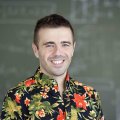
Aitzol Garcia Etxarri
DIPC
Aitzol Garcia-Etxarri is an Ikerbasque Researcher at the Donostia International Physics Center, where he leads a research group of 12 people (6 men, 6 women). His research group primarily studies the interaction of light and matter at the nanometric scale, both at the level of basic science and by seeking applications in biological problems and quantum technologies. Currently, he leads, along with Rafael Yuste, the Basque NanoNeuro Network (B3N), an international consortium of 10 research groups (7 in the Basque Country, 3 in the USA) focused on the application of nanotechnology to the field of neuroscience. However, his contribution to society goes far beyond this. He is an active science communicator. He gives multiple public conferences each year, has been a regular collaborator on Euskadi Irratia since 2007, a contributor to the magazine JotDown, and a member of the interdisciplinary program “Mestizajes” of the DIPC. He is also the co-founder of the initiative “Pride for Science” in the Basque Country, a remarkable effort aimed at increasing the visibility of the LGBTIQ+ community in science in Euskadi.
Harald Giessen
Adolfo Grushin
Néel Institute, CNRS
Francisco Guinea López
DIPC
FLAVIO HENRIQUE FERES
LNLS
Kurt Hingerl Hingerl
Johannes Kepler University Linz
Guangwei Hu
Min Seok Jang
Korea Advanced Institute of Science and Technology
Young Duck Kim
Kyung Hee University
Natalia Litchinitser
Duke University
Luis Manuel Liz Marzán
Lorenzo Marrucci
Luis Martin-Moreno
Instituto de Nanociencia y Materiales de Aragón
Gabriel Molina Terriza
Centro de Fisica de Materiales
Georgia Papadakis
ICFO
Tomasz Smolenski
Department of Physics, University of Basel
Tarifs inscription
| Registration fees | jusqu'au 20-06-2026 | jusqu'au 13-07-2026 |
|---|---|---|
| 0 EUR | 0 EUR | |
| 300,00 EUR | 400,00 EUR | |
| 450,00 EUR | 550,00 EUR |
Lieu de l'événement
Miramar Palace
Pº de Miraconcha nº 48. Donostia / San Sebastián
Gipuzkoa
Miramar Palace
Pº de Miraconcha nº 48. Donostia / San Sebastián
Gipuzkoa
Other courses that might be of your interest...

-

En personne

-
En personne

-
En personne

-

Cours en ligne en direct
-
En personne