

19th International Symposium on Polymer Electrolytes (ISPE-19)
Description
ISPE-19 will take place at Donostia–San Sebastián on 1-5 June, 2026.
Nowadays, there is an urgent need to find efficient and sustainable materials to produce clean energy and to store it in the near future. Polymer electrolytes are key materials in the transition to sustainable and clean energy technologies such as energy storage and conversion. The versability and unique properties of polymer materials lend them the potential to speed up the clean energy transition. This symposium seeks to provide fruitful discussions between chemists, physicists, electrochemists, engineers, etc. from around the world thanks to highlighted scientific talks of next-generation electrochemical devices based on polymer electrolytes.
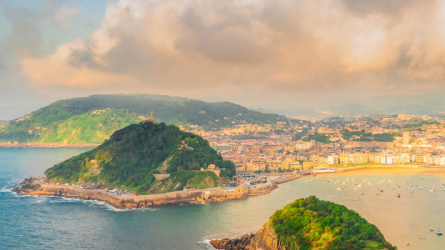
We are delighted to welcome you to Donostia–San Sebastián, a pioneering city that work and support of over 50 public and private entities from strategic sectors such as biosciences, nanotechnology, energy, and ICT. Its commitment to local policies supporting innovation and scientific excellence promote knowledge exchange and collaborations. The symposium will take place at the Miramar Palace (https://www.miramar.eus/en/the-palace/). It will be five-day program including plenary talks, keynotes, invited talks, oral sessions, poster presentations, and activities specifically designed to support and connect senior and young researchers in polymer electrolyte field.
We look forward to welcoming you to Donostia-San Sebastián!
CONFIRMED SPEAKERS
- Michel Armand (CIC Energigune, Spain)
- Nitash P. Balsara (University of California, Berkeley, USA)
- Sandrine Lyonnard (CEA, France)
- Vito Di Noto (University of Padova, Italy)
- Louis Madsen (Virginia Tech, USA)
- Steven Holdcroft (Simon Fraser University, Canada)
- Daniel Brandell (Uppsala University, Sweden)
- Jelena Popovic-Neuber (University of Stavanger, Norway)
- Amy Bazylak (University of Toronto, Canada)
- Cristina Iojoiu (LEPMI, France)
- Yoichi Tominaga (Tokyo University of Agriculture and Technology, Japan)
- Claudio Gerbaldi (Politecnico di Torino, Italy)
- Renaud Bouchet (Grenoble Alpes University, France)
- Jasna Jankovic (University of Connecticut, USA)
ABSTRACT SUBMISSION
Please use this TEMPLATE for the submission of your abstract and send it as an attached PDF file to ISPE19th@gmail.com
The abstract should be submitted by March 27, 2026. Please indicate in your email which your preference is: oral contribution or poster presentation.
The poster format for ISPE-19 is A0 vertical.
PAPER SUBMISSION- SPECIAL ISSUE
We plan to publish selected papers from ISPE-19 in a virtual special issue of Electrochimica Acta. Please follow the following instructions on how to submit a paper for the special issue:
- Go to: http://ees.elsevier.com/electacta/
- Click on the "Submit Paper" option from the top menu
- Enter your username and password (first time users will have to register)
- Select "ISPE-19-2026" as the “Article Type”
- Select "Sotiris Sotiropoulos" at the "Request Editor" dropdown menu
- Follow the remaining step-by-step instructions to submit your paper
Submission of contributions: From 6th of June 2026 with deadline 5th of October 2026
IMPORTANT DATES
- Abstract deadline: 03/27/2026
- Abstract Acceptance: 04/24/2026
- End of early bird registration: 05/07/2026
- Registration closes: 05/14/2026
The Organizing Committee is composed of:
- Oihane Sanz (University of the Basque Country, Spain)
- Radmila Tomovska (University of the Basque Country, Spain)
- Irune Villaluenga (POLYMAT-EHU, Spain)
- Didier Devaux (LEPMI, France)
- Nicolas Goujon (University of the Basque Country, Spain)
- Nery M. Aguilar (POLYMAT-EHU, Spain)
- Martino Airoldi (POLYMAT-EHU, Spain)
- Laetitia Dubau (LEPMI, France)
- Grégoire Dupont (LEPMI, France)
- Yanire Armero (University of the Basque Country, Spain)
ACCOMMODATION
The Miramar Palace is located in a privileged setting between La Concha and Ondarreta beaches, within walking distance of many hotels and accommodation options. San Sebastián offers a wide range of hotels, residences and tourist apartments of different categories.
Below you will find a list of accommodation options in the city together with their approximate distance and walking time from Miramar Palace, the venue of the congress.
- Barceló Costa Vasca | 4★ Hotel | 850 m | 11 min walk
- Olarain | University residence | 900 m | 11 min walk
- La Salle Egoitza | University residence | 950 m | 12 min walk
- Resa Manuel Agud Querol | University residence | 1,050 m | 13 min walk
- NH Collection Aránzazu | 4★ Hotel | 1,200 m | 15 min walk
- Hotel Niza | 3★ Hotel | 1,220 m | 15 min walk
- Hotel Avenida | 3★ Hotel | 1,250 m | 16 min walk
- Livensa Living Studios San Sebastián | Student residence | 1,300 m | 16 min walk
- Hotel de Londres y de Inglaterra | 4★ Hotel | 1,320 m | 17 min walk
- Axel Hotel San Sebastián | 4★ Hotel | 1,350 m | 17 min walk
- Zenit Convento de San Martín | 4★ Hotel | 1,380 m | 17 min walk
- Sercotel Codina | 3★ Hotel | 1,520 m | 19 min walk
- Hotel Arbaso | 4★ Hotel | 1,560 m | 20 min walk
- Sercotel Europa | 3★ Hotel | 1,580 m | 20 min walk
- Catalonia Donosti | 4★ Hotel | 1,600 m | 20 min walk
- Room Mate Collection Gorka | 4★ Hotel | 1,650 m | 21 min walk
- Hotel Villa Favorita | 4★ Hotel | 1,700 m | 21 min walk
- Hotel Maria Cristina | 5★ Hotel | 1,720 m | 22 min walk
- Hotel Intelier Villa Katalina | 3★ Hotel | 1,750 m | 22 min walk
- Hotel Zaragoza Plaza | 2★ Hotel | 1,780 m | 22 min walk
- Lasala Plaza Hotel | 4★ Hotel | 2,020 m | 25 min walk
- Atari Hotel | 4★ Hotel | 2,080 m | 26 min walk
- SANSEbay Hotel | 3★ Hotel | 2,120 m | 27 min walk
- Hotel Parma | 2★ Hotel | 2,150 m | 27 min walk
- Bidaia Boutique Hotel | Boutique hotel | 2,200 m | 28 min walk
- Hotel Arrizul Congress | 4★ Hotel | 2,350 m | 29 min walk
- Hotel Arrizul Beach | 4★ Hotel | 2,380 m | 30 min walk
- abba San Sebastián Hotel | 4★ Hotel | 2,400 m | 30 min walk
- One Shot Tabakalera House | 4★ Hotel | 2,420 m | 30 min walk
- Hotel Punta Monpás | 2★ Hotel | 2,550 m | 32 min walk
- Hotel Terminus | 2★ Hotel | 2,600 m | 33 min walk
- Welcome Gros Hotel | Hotel / Guesthouse | 2,620 m | 33 min walk
- Hotel Villa Eugenia | Boutique hotel | 2,700 m | 34 min walk
- Zinema7 | 4★ Hotel | 2,720 m | 34 min walk
- Casual de Jazz San Sebastián | 2★ Hotel | 2,750 m | 34 min walk
- Casual de las Olas San Sebastián | 2★ Hotel | 2,780 m | 35 min walk
- Leonardo Boutique Hotel San Sebastián | 4★ Hotel | 2,820 m | 35 min walk
- Hotel Villa Soro | 4★ Hotel | 3,000 m | 38 min walk
- Hotel Intelier Victoria | 2★ Hotel | 3,100 m | 39 min walk
- Zenit San Sebastián | 4★ Hotel | 3,150 m | 39 min walk
- Hotel Anoeta | 3★ Hotel | 3,200 m | 40 min walk
- Hotel Ilunion San Sebastián | 4★ Hotel | 3,250 m | 41 min walk
- Hotel Distrito Oeste | 3★ Hotel | 3,300 m | 41 min walk
- Sömn Hipsuites Ondarreta | Tourist apartments | 3,350 m | 42 min walk
Objectifs
- Promot scientific discussions and knowledge exchange between chemists, physicists, electrochemists, engineers, etc. from around the world to highlight advanced results based on polymer electrolytes for the next-generation electrochemical devices.
- Create a warn enviroment for sharing ideas and collaborations in the polymer electrolyte field.
Activité s'adressant à
- Étudiants universitaires
- Professionnels
Organisée par
En collaboration avec





Directeurs

Irune Villaluenga Arranz
POLYMAT
Irune Villaluenga is an Ikerbasque Associate Professor and Ramon & Cajal Fellow at POLYMAT, University of the Basque Country in Spain. She obtained her PhD in Chemistry at the University of the Basque Country and Tecnalia Research & Innovation (2010). She did post-doctoral stays at CIC Energigune (2011-2012) and Lawrence Berkeley National Laboratory/University of California, Berkeley (2013-2016). Her current research interests include the development and understanding of novel inorganic-polymer hybrids, bio-based polymer and nanostructured block copolymers for energy storage applications.

Didier Devaux
Since 2016, Didier Devaux is a CNRS research scientist at LEPMI lab. (Univ. Grenoble Alpes, Univ. Savoie Mont Blanc, CNRS, Grenoble INP) on electrochemical energy storage devices. He graduated in 2012 with a PhD in materials science on electrochemical and physico-chemical characterizations of polymer electrolytes for Li metal battery. He is focusing on the analysis of the functioning and failure modes of electrochemical energy storage devices by coupling techniques (in-situ and operando methodologies), notably using X-ray and Neutron techniques with electrochemistry and impedance. The objective being to tackle the phenomena at stake at the different relevant length scales typically from the local (nm) to the cell (cm) scale in devices comprising liquid, solid, and hybrid electrolytes.
Conférenciers

Michel Armand
CICenergiGUNE
Nitash Balsara
University of California, Berkeley, USA
Vito Di Noto
University of Padova
Sandrine Lyonnard
CEA-IRIG-SyMMES
Louis Madsen
Virginia Tech
Tarifs inscription
Les frais d'inscription comprennent l'accès à la conférence, l'accès aux résumés et aux présentations, les pauses café et déjeuner pendant la conférence, une activité sociale et le dîner du 4 juin.
| Registration | jusqu'au 07-05-2026 | jusqu'au 27-05-2026 |
|---|---|---|
| 700,00 EUR | 750,00 EUR | |
| 500,00 EUR | 550,00 EUR |
Lieu de l'événement
Miramar Palace
Pº de Miraconcha nº 48. Donostia / San Sebastián
Gipuzkoa
Miramar Palace
Pº de Miraconcha nº 48. Donostia / San Sebastián
Gipuzkoa
Objectifs de développement durable
Chez UIK, nous voulons contribuer à la réalisation des objectifs de développement durable (ODD) 2030. Pour ce faire, nous avons identifié les objectifs auxquels nos programmes contribuent. Vous pouvez vérifier les objectifs ci-dessous.
L'Agenda 2030 est le nouvel agenda international de développement adopté en septembre 2015 par les Nations Unies. Cet agenda se veut un outil pour favoriser le développement humain durable sur toute la planète. L'éradication de la pauvreté, la réduction de l'inégalité et de la vulnérabilité et la promotion de la viabilité constituent ses principaux piliers. Il s'agit d'une chance unique de transformer le monde jusqu'en 2030 et de garantir les droits de l'homme à tous.

7 - Énergie propre et d'un coût abordable
Garantir l'accès de tous à des services énergétiques fiables, durables et modernes, à un coût abordable. Questions clés : accès universel, hausse de la proportion d'énergies propres, efficacité énergétique, recherche, promotion de l'investissement en infrastructures énergétiques et technologies propres, services énergétiques modernes et durables.
Plus d'informations
Other courses that might be of your interest...
-

En personne

-
En personne
-
En personne

-
En personne

-
En personne