

20th European Student Colloid Conference
Description
We are pleased to announce the 20th European Student Colloid Conference (ESC 2026), to be held in Donostia–San Sebastián from 29 June to 2 July 2026. The ESC offers a unique platform for young researchers to present their work, exchange ideas, and connect in a relaxed and welcoming atmosphere. Scientific discussions will be enriched by plenary lectures given by outstanding scientists, sharing fresh perspectives on the frontiers of colloid and interface science. Recent editions have gathered participants from more than a dozen countries, fostering an open and dynamic community of emerging scientists. The conference will cover topics including interfaces and interfacial phenomena, soft and bioinspired colloids, nanostructured and functional materials, polymers, gels, and complex fluids, with theory and simulations integrated across all areas.
Beyond the scientific program, Donostia–San Sebastián offers an unforgettable setting. Nestled between the sea and the mountains, this beautiful Basque city is world-renowned as a gastronomic capital and an established hub for science and innovation. Participants will also enjoy a conference dinner in a traditional cider house, an authentic Basque experience not to be missed!
Stay tuned for details on registration and abstract submission.
ABSTRACT SUBMISSION
Participants are invited to submit an abstract describing their research for consideration for oral or poster presentation at ESC2026.
Abstracts must be prepared using the official conference template and should strictly follow the formatting and content instructions provided in the template.
The Word file should be named as follows:
SURNAME_oral_ESC2026.docx
or
SURNAME_poster_ESC2026.docx
Completed abstracts should be submitted before March 27th by email to: esc2026.cfm@ehu.eus
ORGANIZING COMMITTEE
- Paula Malo de Molina, Materials Physics Center (CFM-MPC), CSIC-EHU, Donostia-San Sebastian, Spain
- Mareck Grzelczak, Materials Physics Center (CFM-MPC), CSIC-EHU, Donostia-San Sebastian, Spain
- Armando Maestro, Materials Physics Center (CFM-MPC), CSIC-EHU, Donostia-San Sebastian, Spain
- Laura Cervera, Donostia International Physics Center (DIPC), Donostia-San Sebastian, Spain
- Purushottam Dubey, Materials Physics Center (CFM-MPC), CSIC-EHU, Donostia-San Sebastian, Spain
SCIENTIFIC COMMITTEE
- Alexandra Bayles, University of Delaware, USA
- Katarzyna Matczyszyn, Wroclaw University of Science and Technology, Poland
- Mona Tréguer-Delapierre, University of Bordeaux, France
- Monica Carril, Biofisika Institute, Spain
- Kevin Roger, Chemical Engineering Laboratory (LGC) from Toulouse, France
- Eduardo Guzmán Solís, Universidad Complutense de Madrid, Spain
Objectifs
Promote the exchange of research results, technical experience and scientific communications in the area of colloids and interface science.
Foster interdisciplinary exchange and network-building.
Create a meeting point for researchers from academia, industry and early-career scientists.
Encourage a welcoming and inclusive scientific environment.
Activité s'adressant à
- Professionnels
Organisée par
En collaboration avec
Directeurs

Paula Malo de Molina
Materials Physics Center, San Sebastian, Spain
Paula Malo de Molina is a polymer and soft-matter physical chemist specializing in biomimetic macromolecular systems, single-chain nanoparticles, and complex media. Her research focuses on understanding structure and dynamics across length scales using advanced scattering techniques (SAXS, SANS, and light scattering) combined with polymer synthesis and self-assembly. She completed her PhD in Physical Chemistry at TU Berlin and later worked at the University of California, Santa Barbara. She is currently a Ramón y Cajal researcher at the Centro de Física de Materiales (CSIC–UPV/EHU) in Donostia–San Sebastián.
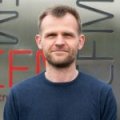
Marek Grzelczak ---
Centro de Fisica de Materiales CSIC-UPV/EHU
Marek Grzelczak is a research professor at the Consejo Superior de Investigaciones Científicas. His research interests focus on the nanofabrication of new materials through nanoparticle assembly processes for applications in plasmonic catalysis, biosensors, and neuroscience.
Conférenciers

Laura Alvarez
Dr. Laura Alvarez is an Associate Professor at the University of Bordeaux and leads the Soft BioColloids group at the CRPP Centre de Recherche Paul Pascal (CNRS). She completed a joint PhD between the University of Bordeaux and KU Leuven on the dynamics of colloidal liquid crystals, followed by postdoctoral research at ETH Zurich on responsive, light-controlled active colloidal assemblies. Her work investigates out-of-equilibrium soft-matter and bioinspired microsystems, using light, chemical gradients, and electric fields to program thermo-/electro-hydrodynamic couplings, active transport, and shape transformations in colloids and giant lipid vesicles, with the aim of engineering cell-mimetic microdevices and colloidal architectures. She also conducts microgravity experiments on giant vesicles in collaboration with DLR (MAPHEUS 14–16).

Martin F. Haase
Utrecht University
Martin earned his PhD in 2011 at the Max Planck Institute of Colloids and Interfaces, focusing on particles at interfaces. During postdoctoral appointments at New York University and the University of Pennsylvania, he developed the Solvent Transfer Induced Phase Separation (STrIPS) technique to create bicontinuous particle-stabilized emulsions (bijels). As Assistant Professor at Rowan University and now Associate Professor at Utrecht University, his research explores bijels as a platform to alleviate diffusion limitations in applications including filtration, catalysis, and lithium-ion batteries.
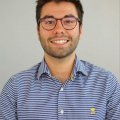
Baptiste Hervé
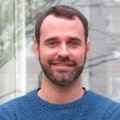
Baptiste HERVE is a French chemical engineer who graduated in 2021 from SIGMA Clermont and started his L'Oréal adventure as a skincare formulator intern before being quickly offered a full-time position.He is currently part of the Transversal Platform for Performance Evaluation within Advanced Research at L'Oréal, where his main mission consists of evaluating deposit properties — from raw materials to finished products — in order to find sustainable alternatives to silicones and achieve long-wear performance. Over four years, he has grown from technical contributor to project leader, managing cross-functional teams on cutting-edge sustainable and bio-based ingredient development. Beyond the lab, he mentors apprentices and develops innovative robotic evaluation methods for sensory prediction.
Carlos L. Bassani
Carlos L. Bassani holds a dual doctorate in Chemical Engineering from Mines Saint-Etienne, University of Lyon (France), and in Mechanical and Materials Engineering from the Federal University of Technology Paraná (Brazil). He received several honors, including an ERC Starting Grant, a Humboldt Research Fellowship, and the CAPES Thesis Award from the Brazilian Foundation for Science. His research centers on modeling and simulating multiscale interactions in crystal formation from solution, including faceted and porous mesostructures and particle agglomeration and transportability in multiphase flow. Carlos is currently a postdoc at the Institute for Multiscale Simulation at FAU Erlangen-Nürnberg (Germany).

Reidar Lund Lund
University of Oslo
Reidar Lund obtained his PhD in 2004 at Forschungszentrum Jülich/University of Münster in Germany. After several postdoctoral stays at Forschungszentrum Jülich, the University of the Basque Country, Spain and UC-Berkeley, US, he was appointed as Associate Professor at the University of Oslo, Norway in 2016 and later full Professor in 2022. He was appointed Researcher (Científico distinguido) at the Donostia International Physics Centre, San Sebastian, Spain in 2025. He is also an associate researcher at the Norwegian Centre for Molecular Medicine (NCCM) a branch of the Nordic European Molecular Biology Laboratory (EMBL) and at the “Hylleraas Centre for Quantum Molecular Sciences” - a Centre of Excellence in Norway. He currently leads the Bio3 – Soft Matter group, which focuses on the structure, kinetics, and thermodynamics of self assembled systems, the development of antibiotic nanoparticles and gels, and the mechanisms of antimicrobial peptides and model lipid membranes. The group employs a wide range of experimental techniques and computational tools, with particular expertise in small angle scattering methods using light, neutrons, and X rays.

Lisa Tran
Lisa Tran is an assistant professor of physics at Utrecht University, where she started her research group in November 2020, focusing on liquid crystal physics in bio-inspired materials and technologies. She was previously a postdoctoral fellow in the Department of Chemical Engineering at Columbia University, funded by the Simons Foundation’s Society of Fellows, where she studied the self-assembly of nanoparticles in liquid crystal emulsions. She earned her Ph.D. in physics from the University of Pennsylvania, investigating topological defects in confined liquid crystals; her doctoral work was supported by an American Association of University Women American Dissertation Fellowship and recognized with the International Liquid Crystal Society’s Glenn Brown Prize. She received her B.A. from New York University, double majoring in physics and philosophy. Her current research is supported by Dutch Research Council Veni, Vidi, and M awards and a European Research Council Starting Grant

Ilja Voets
Eindhoven University of Technology
Tarifs inscription
| Inscription | jusqu'au 29-05-2026 | jusqu'au 22-06-2026 |
|---|---|---|
| 400,00 EUR | 450,00 EUR |
Lieu de l'événement
Gipuzkoa
Gipuzkoa
Other courses that might be of your interest...

-

En personne

-
En personne

-
En personne


-

Cours en ligne en direct
-
En personne