
Machine Learning for Polymer Science
Descripción
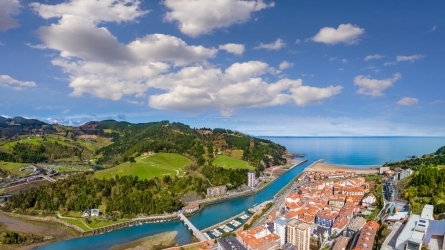
San Sebastián acogerá el curso “Machine Learning for Polymer Science”, que reunirá a investigadores e investigadoras que trabajan en la intersección entre el aprendizaje automático, la ciencia de polímeros y la investigación en materiales.
La escuela tiene como objetivo proporcionar una visión integral de cómo los enfoques basados en datos y la inteligencia artificial están transformando la ciencia de polímeros, ofreciendo una oportunidad única para conectar conceptos fundamentales con aplicaciones reales tanto en el ámbito académico como industrial.
El programa abordará temas clave como:
- Fundamentos del aprendizaje automático y modelización basada en datos
- Laboratorios autónomos (self-driving laboratories) y experimentación automatizada
- Simulación de polímeros y procesos de polimerización asistida por aprendizaje automático
- I+D digital y aplicaciones industriales en ciencia de polímeros
- Diseño de materiales sostenibles mediante enfoques de inteligencia artificial
El curso contará con ponencias de expertos líderes tanto del ámbito académico como industrial, proporcionando a los participantes tanto fundamentos teóricos como conocimientos prácticos sobre la implementación de herramientas de aprendizaje automático. La escuela tiene como objetivo capacitar a los asistentes para aplicar estas técnicas en su propia investigación y contribuir al desarrollo de materiales inteligentes y sostenibles para el futuro.
PONENTES INVITADOS
- Alfred Bazin (Arkema)
- Gregor Simm (Microsoft Research)
- Maciej Haranczyk (IMDEA Materials Institute)
- Thomas Nevolianis (Covestro)
- Matthias Hermann (Citrine Informatics)
- Sabine Beuermann (Clausthal University of Technology)
- Usue Mori (Universidad del País Vasco UPV/EHU y BCAM)
Objetivos
Promover el intercambio de conocimiento entre investigadores que trabajan en la interfaz entre el aprendizaje automático, la ciencia de polímeros y la investigación en materiales.
Presentar los avances más recientes en ciencia de materiales basada en datos, incluyendo fundamentos de aprendizaje automático, simulación de polímeros, laboratorios autónomos y enfoques de I+D digital.
Proporcionar a los participantes tanto fundamentos teóricos como conocimientos prácticos sobre la aplicación de la inteligencia artificial en la ciencia de polímeros.
Fomentar la participación activa de investigadores en etapas iniciales mediante discusiones e interacción con expertos destacados del ámbito académico e industrial.
Reforzar la conexión entre la investigación académica y la innovación industrial, mostrando casos reales de aplicación del aprendizaje automático en el desarrollo de polímeros.
Contribuir al desarrollo de una comunidad científica capacitada en enfoques digitales y sostenibles, abordando los retos actuales en el diseño de materiales y la innovación.
Público objetivo al que está dirigida la actividad
- Profesorado
- Profesionales
Metodología
El curso se estructurará en torno a ponencias invitadas, combinando fundamentos teóricos con aplicaciones prácticas del aprendizaje automático en la ciencia de polímeros y la investigación en materiales. Cada sesión incluirá tiempo dedicado a discusión y preguntas abiertas, fomentando un entorno de aprendizaje interactivo.
Las ponencias tendrán una duración de 50 minutos seguidos de 10 minutos de discusión, permitiendo a los ponentes presentar tanto conceptos fundamentales como casos de estudio reales procedentes del ámbito académico e industrial. A lo largo del curso se integrarán oportunidades para el networking y el intercambio científico, con el objetivo de fomentar la colaboración y el aprendizaje mutuo.
Se pondrá especial énfasis en la participación activa de investigadores en etapas iniciales, promoviendo su implicación en las discusiones y el contacto directo con los ponentes. El curso busca crear un entorno dinámico e inclusivo en el que los participantes puedan adquirir conocimientos prácticos, intercambiar ideas y establecer conexiones interdisciplinarias.
Organiza


Colabora

Directoras/es
Nicholas Ballard
Polymat - University of the Basque Country
Nicholas Ballard is an Ikerbasque Associate Professor at POLYMAT specialized in polymer chemistry, reaction engineering, and advanced polymerization processes, with a strong focus on data-driven approaches and machine learning applied to materials science. His research combines fundamental understanding of polymerization kinetics with the development of sustainable and efficient polymer production processes. He has extensive experience in European research projects, including coordination and participation in Horizon Europe and MSCA programmes, and plays a key role in international collaborative networks. His work has resulted in numerous high-impact scientific publications and contributions to the advancement of bio-based polymers and smart materials. At POLYMAT, he leads research activities related to polymerization modeling and process optimization, contributing to interdisciplinary projects at the interface of chemistry, engineering, and artificial intelligence.
Mónica Moreno Rodríguez
Basque Center for Macromolecular Design and Engineering
Mónica Moreno is Head of the Project Office at POLYMAT. She holds a PhD in Chemistry and has solid expertise in the management of European research projects, particularly within Horizon Europe and MSCA programmes. She specializes in project coordination, financial and administrative management, and liaison with the European Commission, supporting the successful implementation of international collaborative research initiatives.
Ponentes

Alfred Bazin
Alfred Bazin studied Chemistry and Polymer Science in Strasbourg, where he later completed a PhD at ICPEES focused on the synthesis and characterization of biobased polymers. After his doctorate, he specialized in machine learning with a particular emphasis on applications in polymer science. He is currently part of Arkema’s R&D Digital team, working as a Data Scientist and Digital Acculturation Scientist, where he advances data-driven approaches in R&D and leads initiatives to promote digital awareness and adoption across the organization.
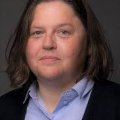
Sabine Beuermann
Sabine Beuermann received a PhD in Physical Chemistry and her Habilitation in Technical and Macromolecular Chemistry at Georg-August-Universität Göttingen (Germany). In 1995/1996 she spent 18 months as visiting scientist at the DuPont Experimental Station in Wilmington/Delaware. After 6 years as a professor of Polymer Chemistry at University of Potsdam she joined Technical University of Clausthal in 2012 and holds the chair of Technical Chemistry. Her research interests include detailed investigations in polymerization kinetics and mechanisms, bio-based monomers, emulsion polymerizations, supercritical CO2 as process and reaction medium, polymer electrolyte membranes, homo- and copolymers of vinylidene fluoride, and kinetic Monte Carlo simulations of polymerizations. Within the German Science Foundation Priority Program "Machine Learning and Chemical Engineering" the application of KI and machine learning methods for modeling and reverse engineering of polymerizations is addressed.
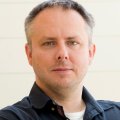
Maciej Haranczyk
Maciej Haranczyk received his PhD in Chemistry from the University of Gdańsk (Poland) in 2008. During his doctoral studies, he held several international research fellowships and collaborated with leading institutions, including Pacific Northwest National Laboratory, the University of Southern California, and the University of Sheffield. After his PhD, he joined Lawrence Berkeley National Laboratory as a Glenn T. Seaborg Postdoctoral Fellow, later becoming a Research Scientist and subsequently a Staff Scientist. In 2015, he joined IMDEA Materials Institute as a Senior Researcher under the Ramón y Cajal programme. He currently leads the Accelerated Materials Discovery Group and manages a robot-equipped polymer research laboratory focused on data-driven approaches for materials design.
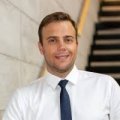
Matthias Hermann
Matthias Hermann is a Senior Solutions Engineer at Citrine Informatics. He holds a PhD in Analytical Chemistry from Queen’s University, where he focused on the development of microfluidic devices for automated mass spectrometry. He also has industrial experience as a lab team leader at BASF, where he led high-throughput screening projects for polymer formulations.
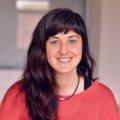
Usue Mori Carrascal
Unviersidad del Pais Vasco. EHU
Usue Mori obtained a Bachelors degree in Mathematics and a PhD in Computer Engineering from the University of Basque Country UPV/EHU in 2010 and 2015 respectively. She completed a master's degree in Applied Mathematics, Statistics and Computing and a master's degree in Computer Engineering and Intelligent Systems in 2011 and 2013, respectively. Currently, she is an associate professor in the Department of Computer Science and Artificial Intelligence at the University of the Basque Country UPV/EHU and teaches various subjects in the field of mathematics, statistics and machine learning. As research merits, it should be noted that she has participated in more than 20 projects of regional, state and European calls, being IP in four of these projects. She has published 18 articles in JCR journals, 12 of them located in the first quartile and she also has 4 contributions in national and international conferences. She has also participated in 6 R&D contracts with companies of the private industrial and public sector, being IP the most recent. In addition, she has co-directed two doctoral theses and today she co-directs 3 doctoral theses with other researchers.
Thomas Nevolianis
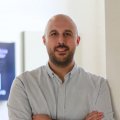
Thomas Nevolianis is a Cheminformatics Expert at Covestro’s Digital Research and Development in Leverkusen, Germany, where he supports R&D projects across the company’s global operations. He obtained his PhD in Chemical Engineering from RWTH Aachen University, following undergraduate studies in Physics. During his doctoral research, he held a visiting scholarship at MIT, specializing in molecular property prediction using machine learning and quantum chemical methods. At Covestro, his work focuses on computational approaches to polymer development, including the screening of monomers and additives for next-generation materials, prediction of polymer–solvent compatibility, and optimization of formulations. His research integrates graph neural networks, machine learning interatomic potentials, quantum mechanics, and molecular dynamics simulations to address regulatory, sustainability, and performance challenges. By translating computational methods into practical workflows, he contributes to accelerating materials discovery while reducing experimental time and costs.
Gustavo Ariel Schwartz Pomeraniec
Consejo Superior de Investigaciones Científicas
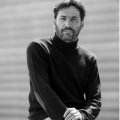
Gustavo Ariel Schwartz es físico y escritor de ensayos y ficciones que exploran las relaciones entre el arte, la ciencia, la literatura y las humanidades. Luego de recibir su doctorado en física de la Universidad de Buenos Aires (Argentina) en 2001, pasó dos años como investigador postdoctoral en la Chalmers University of Tecnology en Goteborg (Suecia). Luego se trasladó a San Sebastián (España) para investigar en el Donostia International Physics Center (DIPC). En 2005 ganó su primer premio literario con el relato La filtración. Desde 2008 es Científico Titular del Consejo Superior de Investigaciones Científicas y desarrolla su actividad investigadora en el Centro de Física de Materiales de San Sebastián. Actualmente compagina su investigación científica con su rol como fundador y director del Programa Mestizajes del DIPC, cuyo propósito es explorar y transitar las fronteras entre el arte, la ciencia, la literatura y las humanidades. En el marco de este programa organizó cuatro Congresos Internacionales sobre Literatura y Ciencia (2011, 2014, 2017, 2021) y puso en marcha el Programa de Escritores en Residencia en 2012.
Gregor Simm
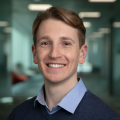
Gregor Simm is a Senior Researcher and Project Lead at Microsoft Research, working within the AI for Science initiative. His research focuses on machine learning and atomistic simulation of matter, with strong interests in geometric deep learning, reinforcement learning, and generative modelling. From 2018 to 2021, he was a Research Associate in the Machine Learning Group at the University of Cambridge. He obtained his PhD in Theoretical Chemistry from ETH Zurich (2015–2018).
Precios matrícula
| Matrícula | Hasta 01-06-2026 |
|---|---|
| 100,00 EUR |
Lugar
Palacio Miramar
Pº de Miraconcha nº 48. Donostia / San Sebastián
Gipuzkoa
Palacio Miramar
Pº de Miraconcha nº 48. Donostia / San Sebastián
Gipuzkoa
Otros cursos que te pueden interesar...

-

Presencial

-
Presencial

-
Presencial