
Waste: we do not want to see it, but it is here
~Open and free activity
~18:00h
~Miramar Palace, San Sebastián or online
Lecture by Iñaki Susaeta. Environmental Technician at the Public Environmental Management Company, Ihobe.
"The pressing need is to create a stable and safe market for secondary materials from waste".
Description
Waste is playing an ever greater role in the development of the modern economy. Proper waste management not only contributes to environmental sustainability, but it can generate significant economic opportunities. This paradigm shift is due to the growing awareness of the circular economy – which is such a topic of conversation – that seeks to transform waste into resources. But… how far does the circular economy go?
This is possibly the most controversial point, which has caused several authors to express a certain criticism of the circular economy as something impossible, as they claim it goes against the laws of thermodynamics (Martínez-Alier, 2016; Mayumi & Giampietro, 2020).
Yet regardless of however we answer the question, which does seem true is that if we are not able to build a stable and efficient market for quality materials from waste, we cannot actually talk about the circular economy.
What do we need to facilitate that secondary material market? In my opinion, four basic and universal actions must take us to that open and efficient market of secondary raw materials: the mass sorting of waste at source; the incorporation of innovative technologies to the correct processing of the waste; a strict quality control of the secondary materials produced; and fostering their preferential use.
We have an opportunity to improve the current situation. However, we should not only rely on technology, as the commitment of each stakeholder of the chain is our best asset.
Many materials from waste, such as plastic, metal and paper, along with others, can be reincorporated in the productive processes. That reduces dependency on natural resources, lowers extraction costs, and contributes to protect the environment.
The transition to what we call the circular economy is key to guarantee sustainable and competitive development in the future.
Activity directed to
- University student
- Students not from university
- Teachers
- Professionals
Program
12-03-2026
“Residuos: No quisiéramos verlos, pero están aquí“
Language: Spanish
- Iñaki Susaeta Elorriaga | Ihobe - Técnico Ambiental de la Sociedad Pública de Gestión Ambiental
Eva Caballero kazetariak hizlariarekin elkarrizketa izango du hitzaldia amaitutakoan / La periodista Eva Caballero mantendrá un diálogo con el ponente una vez finalizada la conferencia
Speakers
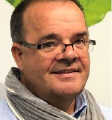
Iñaki Susaeta Elorriaga
Environmental Technician at the Public Environmental Management Company, Ihobe
Iñaki Susaeta is a technician at Ihobe, the Basque Government’s environmental management agency, with over 38 years of experience across public administration, research and education, and the private sector. He holds a degree in Science from the University of Navarra and advanced studies in Environmental Engineering from the University of the Basque Country, with research experience in biotechnology at Wageningen University (Netherlands) and the Stevens Institute of Technology (USA). He has lectured on the Master’s Degree in Environmental Agrobiology at the University of the Basque Country and has extensive experience coordinating international R&D&I projects. He has served on expert committees for the Spanish Ministry of Science and Technology and the European Commission. From 2019 to 2021, he was Secretary General of Regions4 Sustainable Development, leading advocacy and representation work on biodiversity, climate change and sustainable development. In 2022, he coordinated the participation of the Spanish Autonomous Regions in the EU Environment Council under the Czech Presidency.
Venue
Miramar Palace
Pº de Miraconcha nº 48. Donostia / San Sebastián
Gipuzkoa
Miramar Palace
Pº de Miraconcha nº 48. Donostia / San Sebastián
Gipuzkoa
Other courses that might be of your interest...
-

Face-to-face
-
Face-to-face
-
Face-to-face