

Europa y el Sur Global ante el reto de un nuevo Multilateralismo inclusivo
Un espacio para debatir propuestas orientadas hacia una relación beneficiosa para las dos partes y su multiplicidad de actores, que a la vez fortalezcan el sistema multilateral.
Description
This Summer Course proposes a reflection on Europe's role in its relationship with the group of states encompassed by the so-called Global South, in political, economic, trade, and technological aspects, as well as in joint actions to strengthen the multilateral system, with particular attention to International Law.
With the participation of experts—diplomats, officials, and academics—from Europe and countries of the Global South, the demands and proposals of the Global South in different fields will be presented, and European responses will be analyzed and suggested.
The objective is, on the one hand, to develop a knowledge base supported by data and evidence on Europe's relationship with the Global South in aspects such as migration, geopolitics, democratic governance, and trade. On the other hand, it aims to discuss proposals for a mutually beneficial relationship for both sides and their diverse actors, while simultaneously strengthening the multilateral system.
The course will consist of presentations, panel discussions, and dialogues among participants. A final summary (in Basque, Spanish, and English) will be prepared covering the topics discussed and the recommendations made.
Objectives
To spread eAtlantic Foundation's pro-European values
To discuss the geopolitical chaos in the world and Europe's role.
To make proposals for inclusive multilateralism.
To analyze advances in the EU's ad intra and ad extra governance.
Activity directed to
- All public
- University student
- Students not from university
- Teachers
- Professionals
Organised by

Program
14-09-2026
Institutional Opening session. Speaking order:
- Estitxu Garai Artetxe | EHU - Vicerrectora del Campus de BizkaiaLanguage: Basque
- Iñigo Urkullu Rentería | eAtlantic - PresidenteLanguage: Basque
- Mariano Aguirre Ernst | CIDOB - Non resident senior researcherLanguage: Spanish
“Conferencia inaugural: Naciones Unidas ante el caos geopolítico“
Language: Spanish
- Antonio Vitorino | Comision Europea - Ex Comisario Europeo justicia
Coffee break
“El ascenso y las reivindicaciones del Sur Global“
Language: Spanish
- Mariano Aguirre Ernst | CIDOB - Non resident senior researcher
- Antonio De Aguiar Patriota | Embajada brasileña - Embajador de Brasil en Reino Unido
Round table: “Mesa redonda I:Las respuestas europeas a las demandas del Sur“
Language: Spanish
- Juan José Álvarez Rubio | EHU - Catedrático Derecho Internacional Privado
- Victor Burguete | CIDOB - Investigador Senior
- Iker Barbero González | EHU - Profesor Agregado Derecho Administrativo
- Amaia Sanchez Cacicedo | Instituto Europeo (IE) university - Profesora Asociada a IE University
Break
Round table: “Mesa redonda II:El derecho internacional ante los cambios en el orden global“
- Marian Elorza Zubiria | Fundacion eAtlantic - Directora General (Moderator)Language: Basque
- Joana Abrisketa Uriarte | Universidad de Deusto - Catedratica de Derecho internacional PúblicoLanguage: Spanish
- Mariano Aguirre Ernst | CIDOB - Non resident senior researcherLanguage: Spanish
- Ramon Jauregui Atondo | Fundacion EuroAmerica - PresidenteLanguage: Spanish
Closing session
Language: Spanish
- Juan José Álvarez Rubio | EHU - Catedrático Derecho Internacional Privado
Directors
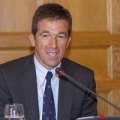
Juan José Álvarez Rubio
EHU, Catedrático Derecho Internacional Privado
Juan José Álvarez Rubio (Zumaia, 1964) is Professor of Private International Law at the University of the Basque Country (UPV/EHU), where he obtained his Bachelor's degree with Extraordinary Prize and his PhD, also distinguished with the Extraordinary Prize (1995). He is Secretary of GLOBERNANCE and was Secretary-General of the Basque Council of the European Movement (EUROBASK/CVME) between 2003 and 2012. He is currently Chairman of the FEDIP (Spanish Forum on Private International Law). He was appointed expert by the European Commission in 2007 in the areas of civil justice, borders, data protection and security. He is principal investigator of the eAtlantic Foundation and Vice-President of JAKIUNDE. He has published ten monographs and over a hundred articles and scientific collaborations. He also serves as a lawyer and consultant in compliance and international recruitment, and is a member of the board of the IKERBASQUE and UNED Bergara foundations. Since April 2022, he has been an independent advisor to the KUTXA Governing Council for Labor.
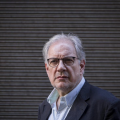
Mariano Aguirre Ernst
CIDOB, International Affairs Analyst
Miembro Asociado de Chatham House (Londres) y Asesor de la Red Latinoamericana de Seguridad de la Fundación Friedrich Ebert (Bogotá). Master en Estudios de Paz y Conflictos, Trinity College, Dublin.Ha sido asesor de la ONU sobre el proceso de paz en Colombia (2017-2019), ex director del Norwegian Centre for Conflict Resolution (NOREF) (Oslo, 2009-2017); co director de FRIDE (Madrid) (2006-2008) y Coordinador de Programas de Paz y Seguridad de la Ford Foundation (New York), (2003-2005). Autor, co-autor y editor de diversos libros sobre relaciones internacionales. Último título: Guerra Fría 2.0. Guía Para Entender la Nueva Política Internacional (Icaria editorial, Barcelona, 2023). Profesor en el Master NOHA del Instituto de Derechos Humanos de la Universidad de Deusto; en el Master de Derechos Humanos de la Fundación de la Universidad Castilla La Mancha; y en la Escuela de Cultura de Paz de la Universidad Autónoma de Barcelona. Escribe en revistas especializadas y medios periodísticos internacionales y españoles como Política Exterior, El País, El Correo, Afkar/Ideas, International Affairs, The World Today, Radio Francia Internacional, y el Anuario Janus (Universidad Autónoma de Lisboa).
Speakers

Joana Abrisketa Uriarte
Joana Abrisketa Uriarte es Catedrática de Derecho Internacional Público en la Universidad de Deusto. Es investigadora principal del proyecto del Ministerio de Ciencia e Innovación sobre “El Pacto Europeo de Migración y Asilo de la Unión Europea” y fue hasta hace unos meses directora del Máster Erasmus Mundus en Acción Internacional Humanitaria. Entre otras funciones fue coordinadora del Comité Técnico de elaboración del II Plan Nacional de Derechos Humanos (2013-2014); fue asistente legal en la Comisión de Derecho Internacional de Naciones Unidas en Ginebra (2015-2016); fue redactora del informe técnico sobre la protección de los hospitales en tiempo de conflicto armado encargado por el Ministerio de Asuntos Exteriores, y presentado ante las Naciones Unidas (Nueva York) (2018); y ha sido la directora de la redacción del proyecto de ley sobre la Igualdad de Trato y No Discriminación en el ámbito de la Comunidad Autónoma del País Vasco (2024-2025). Ha publicado más de cincuenta aportaciones entre artículos, capítulos de libro y monografías, sobre ayuda humanitaria y Derecho internacional humanitario, sobre la Corte Penal Internacional, sobre el Sistema Europeo Común de Asilo, y sobre los rescates de migrantes en el mar.
Mariano Aguirre Ernst
CIDOB, International Affairs Analyst
Miembro Asociado de Chatham House (Londres) y Asesor de la Red Latinoamericana de Seguridad de la Fundación Friedrich Ebert (Bogotá). Master en Estudios de Paz y Conflictos, Trinity College, Dublin.Ha sido asesor de la ONU sobre el proceso de paz en Colombia (2017-2019), ex director del Norwegian Centre for Conflict Resolution (NOREF) (Oslo, 2009-2017); co director de FRIDE (Madrid) (2006-2008) y Coordinador de Programas de Paz y Seguridad de la Ford Foundation (New York), (2003-2005). Autor, co-autor y editor de diversos libros sobre relaciones internacionales. Último título: Guerra Fría 2.0. Guía Para Entender la Nueva Política Internacional (Icaria editorial, Barcelona, 2023). Profesor en el Master NOHA del Instituto de Derechos Humanos de la Universidad de Deusto; en el Master de Derechos Humanos de la Fundación de la Universidad Castilla La Mancha; y en la Escuela de Cultura de Paz de la Universidad Autónoma de Barcelona. Escribe en revistas especializadas y medios periodísticos internacionales y españoles como Política Exterior, El País, El Correo, Afkar/Ideas, International Affairs, The World Today, Radio Francia Internacional, y el Anuario Janus (Universidad Autónoma de Lisboa).
Juan José Álvarez Rubio
EHU, Catedrático Derecho Internacional Privado
Juan José Álvarez Rubio (Zumaia, 1964) is Professor of Private International Law at the University of the Basque Country (UPV/EHU), where he obtained his Bachelor's degree with Extraordinary Prize and his PhD, also distinguished with the Extraordinary Prize (1995). He is Secretary of GLOBERNANCE and was Secretary-General of the Basque Council of the European Movement (EUROBASK/CVME) between 2003 and 2012. He is currently Chairman of the FEDIP (Spanish Forum on Private International Law). He was appointed expert by the European Commission in 2007 in the areas of civil justice, borders, data protection and security. He is principal investigator of the eAtlantic Foundation and Vice-President of JAKIUNDE. He has published ten monographs and over a hundred articles and scientific collaborations. He also serves as a lawyer and consultant in compliance and international recruitment, and is a member of the board of the IKERBASQUE and UNED Bergara foundations. Since April 2022, he has been an independent advisor to the KUTXA Governing Council for Labor.
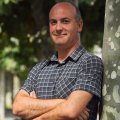
Iker Barbero González
UPV/EHU, Profesor Agregado
Profesor Agregado del Departamento de Derecho Administrativo, Constitucional y Filosofía del Derecho (UPV/EHU). Su docencia se encuadra en el Derecho público y de la Unión europea, con especial mirada a la inmigración y los derechos humanos. Ha dirigido 8 tesis doctorales en torno a estas temáticas Autor de diversas obras en materia de sociología jurídica, Derecho migratorio y de extranjería, entre las que destacan las más recientes “Menores extranjeros en riesgo de apatridia: análisis de casos sobre el derecho a la identidad ya la nacionalidad (Revista de Filosofía del Derecho y derechos humanos: Derechos y Libertades, 2026) o “Cambiando de vía en el mapa del Derecho migratorio y de Asilo" (International Journal of Law in Context, 2026) Investigador visitante en La Universidad de Milán , el Centre for Citizenship, Identities and Governance de la Open University (UK), o la Université de Pau et des Pays de l'Adour (UPPA). En 2014, fue galardonado con el premio “Adam Podgòrecki, por el Research Committee on Sociology of Law de la Asociación Internacional de Sociología.

Victor Burguete
Víctor Burguete is a Senior Research Fellow in the area of Global Geopolitics and Security at CIDOB (Barcelona Center for International Affairs). He is also an associate professor in the Master of Science in Finance and Banking at UPF-BSM (Universitat Pompeu Fabra- Barcelona School of Management). His research focus on foresight geopolitics and issues related to energy, economics, and the European Union. Previously, he had specialized in European issues, political risk and commodities in the Research Service of Banco Sabadell, where he worked as an economist and geopolitical analyst for eight years and he was head of energy and industrial sector analysis. He had previously worked at IESE Business School, as a researcher and research assistant in the evaluation of public policies, macroeconomics and banking competition; and at CaixaBank in the Research Department in the area of European economics. Víctor Burguete has a master's degree in Specialized Economic Analysis in International Trade, Finance and Development from the BSE (Barcelona School of Economics) and bachelor’s degrees in Economics and in Journalism from the Carlos III University of Madrid. He also has a specialized accreditation in financial markets granted by the IEB
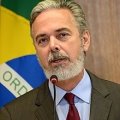
Antonio De Aguiar Patriota
Ambassador to the United Kingdom of Great Britain and Northern Ireland Antonio de Aguiar Patriota was appointed Ambassador to the United Kingdom of Great Britain and Northern Ireland in 2023. Previously, he was Ambassador of Brazil to the Arab Republic of Egypt (2019-2023), Ambassador of Brazil to Italy (2016-2019) and Permanent Representative of Brazil to the United Nations (2013-2016). He served as Foreign Minister (2011-2013), Deputy Foreign Minister (2009-2010) and Ambassador to the United States (2007-2009). Among his publications are “The UN Security Council after the Gulf War” (1998) and two volumes of “Speeches, articles and interviews” during his period as Foreign Minister. He published in 2025 a collection of essays in the English language entitled “A Humanist Foreign Policy for a Multipolar World”. Ambassador Patriota is a member of the “Leaders for Peace” initiative under the chairmanship of former French Prime Minister Raffarin.

Marian Elorza Zubiria
Licenciada en ciencias económicas y empresariales por la Universidad del País Vasco, con titulaciones de posgrado en estudios europeos por la Universidad Católica de Lovaina y el Centro de Estudios Europeos de Nancy. Ha desarrollado su carrera profesional en el Gobierno Vasco. Tras una etapa como técnico especialista de la Delegación de Euskadi para la Unión Europea, fue Directora de internacionalización del Departamento de Industria, Comercio y Turismo (1999-2009). Entre 2012 y 2024 ha ejercido el cargo de secretaria general de Acción Exterior/ secretaria general de Unión Europea y Acción Exterior asistiendo al lehendakari en la definición e impulso de la estrategia de acción exterior del Gobierno Vasco. Asimismo, entre otras funciones, le ha correspondido la dirección de las consecutivas Estrategias marco de internacionalización Euskadi Basque Country, la coordinación de la presencia vasca ante la Unión Europea y de las relaciones internacionales del ejecutivo vasco, y la política de la relación con las colectividades vascas en el exterior. Durante la X legislatura ocupó la presidencia de la Agencia Vasca de Cooperación.Desde junio de 2025 es la Directora General de Fundación eAtlantic Fundazioa.
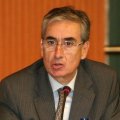
Ramon Jauregui Atondo
• Alcalde de San Sebastián (Gestora Municipal de 1978). • Concejal Ayuntamiento de San Sebastián (1979-1980). • Secretario General de la UGT de Euskadi (1980-1983). • Delegado del Gobierno en el País Vasco (1983-1986). • Vicelehendakari del Gobierno Vasco (1987-1991). • Consejero de Justicia y Trabajo del Gobierno Vasco (1994-1997). En el PSE y en el PSOE: • Secretario General del PSE-EE (PSOE) 1988-1998). • Miembro de la Ejecutiva Federal del PSOE y Secretario de Política Autonómica (1993-2000). Diputado por Álava en el Congreso de los Diputados y Portavoz del PSOE de Política y Empleo y en la Comisión Constitucional (2000-2008). • Secretario General del Grupo Parlamentario Socialista (2008-2009). • Julio de 2009, Parlamentario Europeo y Portavoz del Grupo Socialista en la Comisión Constitucional del Parlamento Europeo. • Octubre de 2010, es nombrado Ministro de la Presidencia. • Noviembre de 2012, es elegido diputado por la circunscripción de Álava. Es Portavoz del Grupo Parlamentario Socialista, en la Comisión Constitucional del Congreso de los Diputados. • Julio 2014 – julio de 2019, miembro de la Comisión Constitucional del Parlamento Europeo y de la Comisión de AsuntoS Económicos y Monetarios

Amaia Sanchez Cacicedo
She is a graduate of Georgetown University and completed her PhD at the School of Oriental & African Studies (SOAS), University of London, which culminated in her book Building States, Building Peace: Global and Regional Involvement in Sri Lanka and Myanmar (Palgrave Macmillan, 2014). Amaia has taught courses on security, as well as on the international relations of Asia at IE University, SOAS and the University of Zurich. She has also worked for the UN Refugee Agency (UNHCR) in Costa Rica, Kenya and Sri Lanka.
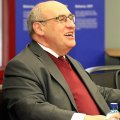
Antonio Vitorino
Licenciado en Derecho y ciencias políticas por la universidad de Lisboa. Accedió como diputado al Parlamento por vez primera en 1980. Posteriormente fue integrante de la administración colonial de Macao hasta la incorporación de ésta posesión a China en 1989. A su vuelta a Portugal fue elegido miembro del Tribunal Constitucional hasta 1994. De regreso en la actividad política, fue elegido Diputado del Parlamento Europeo y residente de la Comisión de Libertades Civiles y Asuntos Internos. En 1995 fue nombrado Ministro de Defensa y Vicepresidente Primero con António Guterres . Posteriormente fue elegido para integrar la Comisión Europea en su calidad de Comisario de Justicia e Interior. En enero de 2018 fue nombrado director general de la Organización Internacional para las Migraciones. Miembro del Board de la Fundacion Jacques Delors.
Registration fees
| Face-to-face | Until 14-09-2026 |
|---|---|
| 0 EUR |
| Live online | Until 14-09-2026 |
|---|---|
| 0 EUR |
Venue
Bizkaia Aretoa-EHU
Avenida Abandoibarra, 3. 48009 Bilbao
Bizkaia
Bizkaia Aretoa-EHU
Avenida Abandoibarra, 3. 48009 Bilbao
Bizkaia
Sustainable development goals
Agenda 2030 is the new international development agenda approved in September 2015 by the United Nations. This agenda aims to be an instrument to favour sustainable human development all over the planet, and its main pillars are the eradication of poverty, a reduction in equality and vulnerability and fostering sustainability. It is a unique opportunity to transform the world up to 2030 and guarantee human rights for all.
16 - Peace, justice and strong institutions
Foster peaceful and inclusive societies for sustainable development, facilitate access to justice for everyone and construct efficient and inclusive institutions that are accountable at all levels. Key issues: a reduction in violence, mistreatment and exploitation, the rule of law, equal access to justice, a reduction in corruption and bribery, efficient and transparent institutions, participation, access to information, protection of fundamental freedoms.
More information
Other courses that might be of your interest...

-

Face-to-face

-
Face-to-face

-
Face-to-face