

Saving Our Seas: Understanding New Pollutants to Take Action
~Open and free activity
~18:00h
~Miramar Palace, San Sebastián or online
Lecture by Mathilde Monperrus, Researcher at the Institute of Analytical Sciences and Physicochemistry for Environment and Materials (IPREM, CNRS–University of Pau and Pays de l’Adour, France).
"Emerging marine pollutants: understanding the unknown to improve regulation".
Description
Our seas are increasingly exposed to a wide range of pollutants, including pharmaceuticals, pesticides, personal care products and compounds produced naturally by marine organisms. While some contaminants are well studied and regulated, many emerging pollutants remain poorly understood. Their sources, occurrence, environmental fate and potential impacts on marine ecosystems and human health are often insufficiently documented. These knowledge gaps make it difficult to assess risks, identify priority substances and establish appropriate regulatory measures.
My research aims to better understand these pollutants by combining environmental monitoring, advanced chemical analysis and lab experimentations. These approaches help identify contaminants, trace their sources and investigate how they behave and transform in aquatic environments. Understanding processes such as microbial degradation and photochemical transformation is essential to determine whether pollutants are effectively eliminated or converted into potentially harmful by-products. Climate change and changing environmental conditions may further influence their persistence, distribution and impacts.
Emerging pollutants are not necessarily all synthetic. Some are produced by biological processes and can also affect environmental quality and human health. Harmful marine microalgae, for example, can release volatile organic and sulfur compounds into water and air. Investigating these substances illustrates the importance of identifying and characterising pollutants that are not yet routinely monitored or fully understood.
The challenge is not only scientific but also regulatory. Without reliable data on the occurrence, fate and effects of these substances, it is difficult to define environmental quality standards, prioritise monitoring and implement effective policies. Research can help bridge this gap by providing the evidence needed to anticipate risks rather than respond only after environmental or health impacts become apparent.
By uncovering the sources, behaviour and potential effects of emerging marine pollutants, we can turn scientific uncertainty into actionable knowledge, support evidence-based regulation and contribute to the long-term protection of our seas and human health.
Activity directed to
- All public
- University student
- Students not from university
- Teachers
- Professionals
Program
19-11-2026
“Saving Our Seas: Understanding New Pollutants to Take Action“
Language: English
Emerging marine pollutants: understanding the unknown to improve regulation
- Mathilde Monperrus | IPREM, CNRS–University of Pau and Pays de l’Adour - Researcher at the Institute of Analytical Sciences and Physicochemistry for Environment and Materials
Maitena Salinas Beiztegi kazetariak hizlariarekin elkarrizketa izango du hitzaldia amaitutakoan | La periodista Maitena Salinas Beiztegi mantendrá un diálogo con la ponente una vez finalizada la conferencia.
Speakers
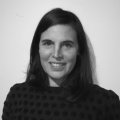
Mathilde Monperrus
Researcher at the Institute of Analytical Sciences and Physicochemistry for Environment and Materials (IPREM, CNRS–University of Pau and Pays de l’Adour, France)
Mathilde Monperrus has been researching aquatic pollutants for 20 years at IPREM Institute. Based in Anglet, in the French Basque Country, her team investigates emerging pollutants, including organic and inorganic pollutants, their sources, environmental fate, transformation processes and impacts on ecosystems and human health. Her research combines advanced chemical analysis, mass spectrometry and laboratory experimpentations to trace contaminants and investigate their transformation and attenuation in aquatic environments. Alongside her research, she is responsible for environment- and health-related Master’s programmes at UPPA, including the Master’s in Water Sciences, and serves as local coordinator of the Erasmus Mundus ECT+ One Health programme.
Venue
Miramar Palace
Pº de Miraconcha nº 48. Donostia / San Sebastián
Gipuzkoa
Miramar Palace
Pº de Miraconcha nº 48. Donostia / San Sebastián
Gipuzkoa
Other courses that might be of your interest...

-

Face-to-face
-
Face-to-face

-

Streaming
-
Face-to-face