

XIIIth Conference of the World Mediation Forum
The 13th Conference of the World Mediation Forum will focus on the theme “Cultures of mediation and mediation as a transformative culture”, offering four days of shared reflection and practice through conferences, panels and workshops with specialists from different fields.
Description
The World Mediation Forum (WFM) is an international non-profit organisation serving mediators from all continents, based on interdisciplinarity.
The mission of the World Mediation Forum is to develop and exchange knowledge, information and skills in in all mediation areas, notably through the regular organization of international congresses for more than twenty years: (2003 in Argentina, 2005 in Switzerland, 2007 in Israel, 2009 in Venezuela, 2012 in Spain, 2017 in Quebec, 2019 in Luxembourg, 2022 in Portugal - virtual and 2024 in Brazil).
The XIIIth Conference of the World Mediation Forum, which will take place in Donostia-San Sebastián, Spain, from 16 to 19 November 2026, will focus on the theme of: "Cultures of mediation and mediation as transformative culture".
With this general theme, the conference will address mediation in a wide variety of fields: justice, universities, schools, businesses, NGOs, sports and leisure organisations, religious fields, health systems, neighborhoods, municipalities, etc. It will thus address the most traditional themes, while questioning the prohibitions and limitations of the practice of mediation, restorative justice, therapeutic justice, transitional justice and transformative justice. The conference will feature theoretical panels presenting research findings, as well as more practical workshops and specific training sessions for particular groups.
KEYNOTE SPEAKERS
- Pilar del Río, journalist, writer, translator, and president of the José Saramago Foundation. We will celebrate with her the power of Literature and intergenerational commitment to human rights for peace.
- Yves Cartuyvels, emeritus professor at the Saint-Louis University - Catholic University of Louvain, Brussels, Belgium.
- David Moore, specialist in conflict management and constructive communication; co-founder of Transformative Justice Australia.
- José Luis de la Cuesta, Professor of Criminal Law at the Basque Institute of Criminology.
- Riccardo Cappi, Professor of Criminology at the State University of Bahia, Brazil.
- Clair Aldington, Artist, designer, restorative justice practitioner-researcher, UK.
- Joseph Eduardo Iacona, Artist, Consultant, & Restorative Practitioner, Philadelphia.
INVITED TRAINERS
In English:
- Marie Keenan, facilitator and Professor at the School of Social Policy, Social Work and Social Justice, University College Dublin, Ireland.
- Ivo Aertsen, Mediation and RJ trainer and Emeritus Professor at KU Leuven, Belgium.
In French:
- Jacques Faget, emeritus research director at the CNRS (Emile Durkheim Centre, Sciences Po Bordeaux), mediator trainer, practice group analyst, member of the National Council for Mediation.
- Olivier Chambert-Loir, certified mediator and trainer, accredited by the ISTC (Institute for the Study of Conflict Transformation, USA).
In Spanish:
Facilitators and members of the Laboratory of Theory and Practice of Restorative Justice of the University of the Basque Country (https://www.ehu.eus/es/web/ivac/sarrera), coordinated by G. Varona:
- Alberto Olalde, PhD and professor of Social Work at the University of the Basque Country.
- Mar Puga, trained in Law and mediation, is a facilitator in Catalonia and the Basque Country, within and outside judicial systems.
- Leticia Trombini Vidotto, PhD in Psychology (Brazil), researcher and facilitator in the Basque Country.
- Idoia Igartua, PhD and professor of Criminal Law at the University of the Basque Country.
Celebration at a local cider house
In addition to the activities of lectures, workshops, and training sessions, the 13th FMM Conference will include a special moment of celebration and conviviality among speakers and participants, held at a local cider house, highlighting the traditional gastronomy and culture of the Basque Country. This activity is optional, has limited availability, and requires separate registration, available in the Registrations section.
ORGANIZING COMMITTEE
- Prof. Riccarco Cappi (Brazil)
- Prof. Yves Cartuyvels (Belgium)
- Ana Míria dos Santos Carvalho Carinhanha (Brazil)
- Prof. M. Kamuzinzi (Rwanda)
Basque Institute of Criminology (University of the Basque Country, Spain):
- Prof. Gema Varona (coord.)
- PhD researcher Luis Conde
- Prof. Isabel Germán
- Prof. Idoia Igartua
- PhD researcher María Ochandorena
- Prof. Alberto Olalde
- Prof. Ignacio Subijana
- Prof. Isabel Trespaderne
- Dr. Letícia Trombini
- Prof. Ane Viana
- PhD researcher Devi Yerga
- Technical administrative support: Jorge López
SCIENTIFIC ADVISORY COMMITTEE
- Jean-Pierre Bonafé-Schmitt (France)
- Daniela Bolívar (Chile)
- John Braithwaite (Australia)
- Jacques Faget (France)
- Fernanda Fonseca Rosenblatt (Brazil)
- Mylene Jaccould (Canada)
- Marie Keenan (Ireland)
- Raoul Kienge (Democratic Republic of the Congo)
- Bhanu Prakash Nunna (India)
- Lode Walgrave (Belgium)
For more information about the city and accommodation: https://sansebastianturismoa.eus/en/
Follow our Instagram @worldmediationforumconference to stay up to date with conference updates and news.
Objectives
Training on mediation in a broad sense
Activity directed to
- All public
- University student
- Teachers
- Professionals
Organised by
In collaboration with


Directors
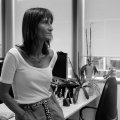
Gema Varona Martínez (Madrid, 1969) is director of the Basque Institute of Criminology/Kriminologiaren Euskal Institutua (Donostia/San Sebastián, University of the Basque Country), where she coordinates the Laboratory of Theory and Practice of Restorative Justice (https://www.ehu.eus/es/web/ivac/sarrera), which directs the Technical Secretariat of the Basque Forum of Restorative Justice promoted by the Basque Government. member of the Basque Academy of Science, PhD in Law, Diploma in Criminology and Master in Legal Sociology, she teaches Criminal Policy and Victimology at the Faculty of Law (UPV/EHU), co-directs the Postgraduate course “Working with victims” (UPV/EHU) and is co-editor of the Journal of Victimology/Journal of Victimology. Principal researcher in several projects (among them, in addition to those on interpersonal, political and environmental violence, currently one of the Ministry of Science on institutional victimisation), she is president of the World Society of Victimology, and author of monographs, chapters and articles in specialized journals (her most recent publications can be found at https://orcid.org/0000-0002-2794-2239
Speakers
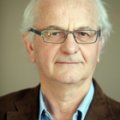
Ivo Aertsen is Emeritus Professor of Criminology at the University of Leuven (Belgium) and actively involved in mediation and restorative justice education and training. At the Leuven Institute of Criminology he has been leading the Research Line on ‘Restorative Justice and Victimology’ from 2001 to 2019. He has coordinated a series of European research projects in the field of restorative justice and has been involved as expert for several international institutions. Currently, he is doing research on restorative justice related to institutional violence and environmental crime, and on restorative cities. He is Co-Editor of 'The International Journal of Restorative Justice’ and General Co-Editor of ‘The International Encyclopaedia of Restorative Justice’. ORCID 0000-0002-6929-6757.

Clair Aldington
Dr. Clair Aldington is an artist, designer and researcher based in Scotland, UK. She is also a Restorative Justice practitioner. In the UK Clair has worked with Youth Offending Services, as a regional Creative Arts Development Worker in Youth Justice and as an Arts Development Officer. In 2008 she co-founded Space2face, which is now an independent creative restorative practices organisation (www.space2face.org) in the Shetland Islands, Scotland. As a freelance creative practitioner, Clair has made and sold her own work and delivered residencies in a prison, an immigration removal centre, women’s refuges, care homes and schools, working with regional and national organisations within the UK. She has also managed public art projects and was an artist advisor with the British Council (2015-2017). More recently she has been involved with the international restorative project, the ‘Encounter of the Encounters’. She has a MA in Contemporary Arts and Music and a PhD in Restorative Justice and Design. Her research interests are restorative justice, making and gifting in times of transition, crime and conflict, and islandness.

Riccardo Cappi
PhD in Criminology from the Université Catholique de Louvain (2011), Master’s degree in Economic Sciences from the Université Catholique de Louvain (1988), teaching qualification degree from the Catholic University of Louvain (1992), and Bachelor’s degree in Criminology from the Université Catholique de Louvain (1992). He is currently a Full Professor at the University of the State of Bahia, a collaborating professor at the Federal University of Bahia, a collaborating professor at the Federal University of the Recôncavo of Bahia, and a Full Professor at the State University of Feira de Santana. He has experience in the field of Law, with an emphasis on Criminology, working mainly on the following topics: criminology, human rights, juvenile delinquency, modern penal rationality, and education. http://lattes.cnpq.br/4640334021348071
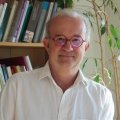
Yves Cartuyvels
UClouvain Saint Louis Bruxelles
Jurist, philosopher, and criminologist, Yves Cartuyvels conducts research at the intersection of these three disciplines, combining theoretical approaches with empirical research. Academic Director of the Certificate in Local, School, Penal, and Healthcare Mediation (MLSPSS) at UCLouvain (Belgium). Emeritus Professor at UCLouvain Saint-Louis Bruxelles (https://cesir.uclouvain.be/cartuyvels-yves).
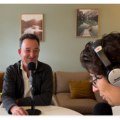
Olivier Chambert-Loir
Certified mediator and trainer in transformative mediation. Fellow and Board member of the ISCT (Institute for the Study of Conflict Transformation – USA). President of the AATC (Association for a Transformative Approach to Conflict – France and the French-speaking world).

Professor of Criminal Law. President honoraire. Basque Institute of Criminology. University of the Basque Country (UPV/EHU) Honorary President of the International Association of Penal Law (AIDP-IAPL). Former President of the Basque Council for the Participation of Victims of Terrorism (2010-2026) - Academic Degrees Doctor in Law (UPV/EHU), 1981. Extraordinary Doctorate Award. Extraordinary Degree Award (1977). Caja de Ahorros Provincial de Gipuzkoa Award. Second National Prize for the Completion of University Studies (Law). Higher Diploma in Criminology (Complutense University of Madrid), 1979. - Awards and recognitions Doctor honoris causa . University of Iasi (Romania), University of Huánuco and Universidad Autónoma de Perú (Peru). Honorable Professor, Northwest University of Politics and Law (Xi'an; China), 2006. Euskadi Research Award (2009) * Academies Full member. Jakiunde Full Friend. Real Sociedad Bascongada de Amigos del País (Royal Basque Society of Friends of the Country). Corresponding Member. Mexican Academy of Criminal Sciences
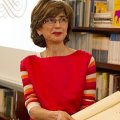
María del Pilar del Río Sánchez
Journalist, writer, translator, and President of the José Saramago Foundation, Pilar del Río was born in Seville. She began her career as a journalist at the Seville-based radio station La Voz del Guadalquivir and at Triunfo magazine, later working for Televisión Española, Canal Sur, and Cadena Ser. In 1986, reading the novel Baltasar and Blimunda profoundly moved her, leading her to seek out its author and future husband, José Saramago. She subsequently became his translator, rendering numerous works by the Nobel Prize–winning author into Spanish. As President of the José Saramago Foundation, she maintains a strong commitment to promoting the moral and ethical principles expressed by the Portuguese writer in his work.
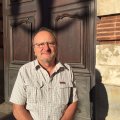
Jacques Faget
Emeritus Director of Research at the CNRS (Centre Emile Durkheim, Sciences Po Bordeaux), mediation trainer, practice group analyst, member of the National Mediation Council. https://shs.cairn.info/publications-de-jacques-faget--9665?lang=en&tab=apercu
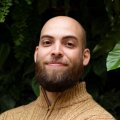
Joseph Eduardo Iacona
Iacona Arts LLC
Artist in residence, consultant, and restorative practitioner. Rooted in a 15-year community arts practice and a deep foundation in restorative pedagogy, Joseph partners with organizations and artists to move beyond transactional engagement toward genuine, collaborative inquiry.
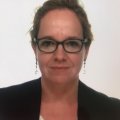
Idoia Igartua Laraudogoitia
Facultad de Derecho UPV/EHU, Profesora Agregada
Doctora en Derecho (Euskal Herriko Unibertsitatea, EHU). Máster de Igualdad (EHU). Experta Universitaria en Mediación Familiar y en Conflicto de Menores (Universidad de Sevilla) y Master en Derecho penal Internacional (Universidad de Sussex, GB). Más de dos décadas de experiencia profesional en los Servicios de Cooperación con la Justicia de Gobierno Vasco (Servicio de Atención a Víctimas y Servicio de Justicia Restaurativa). Profesora Agregada del área de Derecho penal de la Facultad de Derecho (EHU), miembro del Instituto Vasco de Criminología/Kriminologiaren Euskal Institutua y de la Clínica Jurídica por la Justicia Social (EHU)

Marie Keenan
University College Dublin
Emeritus Professor (RTA) at the School of Social Policy, Social Work and Social Justice, University College Dublin. She is a criminologist, restorative justice practitioner, forensic psychotherapist, and registered social worker. https://people.ucd.ie/marie.keenan (See also: https://themeetingfilm.com/ )
David Moore
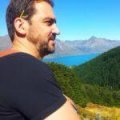
David B. Moore is current President of the Australian Association for Restorative Justice. David taught politics and history at Melbourne- then Charles Sturt University, where he coordinated Justice Studies, and piloted programs using group conferencing in justice and education systems. After working in the Queensland Premier’s Department, David co-founded Transformative Justice Australia in 1995, and taught restorative practice in Australia, North America, Norway and the UK, while providing conflict management services in Australian organisations. This work inspired David Williamson’s Jack Manning Trilogy of plays (1999-2001), and Michael Rymer's movie Face to Face (2011). Since the early 2000s, David has worked as an independent facilitator, trainer, and adviser on conflict management and constructive communication. His publications include Transforming Conflict (2000), The Jack Manning Trilogy: A study guide (2003), and Setting Relations Right in Restorative Practice (2023) with Alikki Vernon.

Alberto Jose Olalde Altarejos
Facultad de Relaciones Laborales y Trabajo Social ( Sección Araba)
He holds a PhD and is a Professor of Social Work at the University of the Basque Country (EHU). He has professional experience as a social worker (1998–2011) in residential care for incarcerated individuals and young people in conflict with the law, as well as experience as a mediator and facilitator in public family mediation and restorative justice services of the Basque Government. He also has experience facilitating restorative processes in cases involving terrorism and sexual abuse within religious institutions. https://www.ehu.eus/es/web/graduak/grado-trabajo-social/profesorado?p_redirect=fichaPDI&p_idp=174507

María del Mar Puga Arcos
Licenciada en Derecho. Máster en Gestión y Resolución de Conflictos: mediación por la Universidad de Barcelona. Curso de especialidad universitaria en intervención social con perspectiva sexológica en Isesus. Ha trabajado durante más de diez años como mediadora en los servicios públicos de mediación familiar y justicia restaurativa del Gobierno Vasco y Catalán. Ha participado como facilitadora de procesos de justicia restaurativa en victimización sexual. Es miembro del Laboratorio de teoría y práctica de la justicia restaurativa del Instituto Vasco de Criminología. Se ha formado en temas relacionados con la comunicación y el acompañamiento: C.N.V, Practitioner en P.N.L, Coaching sistémico, supervisión, sistémica, círculos de diálogo restaurativo y de reparación del daño, entre otros.

Leticia Trombini Vidotto
Psychologist graduated from the Federal University of Triângulo Mineiro (UFTM). Master’s degree from the Graduate Program in Psychology at the Faculty of Philosophy, Sciences and Letters of Ribeirão Preto, University of São Paulo (FFCLRP-USP), with a research internship at the University of New Hampshire, USA; PhD in Psychology from the University of São Paulo, with a research internship at the University of the Basque Country, Spain; Member of the CNPq research group DIALOG: Laboratory for Research in Dialogical and Collaborative Practices (USP-RP). Member of the Laboratory of Theory and Practice of Restorative Justice (LJR) of the Basque Institute of Criminology (IVAC-KREI), University of the Basque Country (Spain). Conflict Conciliator and Mediator, with an emphasis on Team Mediation. She has practical and research experience in the following areas: Social Constructionism; Single-Session Narrative Therapy; Dialogue Facilitation and Conflict Transformation; Restorative Justice. Contact: leticiatvidotto@gmail.com
Registration fees
Online registration will allow access to the practical training materials for the morning sessions, but participation in the practical training cannot be certified for online participants as it requires attendance in person. Participation in all other Conference activities will be certified in accordance with ECT regulations.
Those who register for the Conference in person may be accredited for the practical training received (9 hours in total). The same language of practical training (English, French or Spanish) must be chosen for all three days.
| Registration face-to-face | Until 15-07-2026 | Until 08-11-2026 |
|---|---|---|
| 70,00 EUR | 120,00 EUR |
| Registration Live Online - ZOOM | Until 15-07-2026 | Until 08-11-2026 |
|---|---|---|
| - | 60,00 EUR |
Venue
Ignacio Mª Barriola Center
Plaza Elhuyar 1. Donostia / San Sebastián
Gipuzkoa
Ignacio Mª Barriola Center
Plaza Elhuyar 1. Donostia / San Sebastián
Gipuzkoa
Sustainable development goals
Agenda 2030 is the new international development agenda approved in September 2015 by the United Nations. This agenda aims to be an instrument to favour sustainable human development all over the planet, and its main pillars are the eradication of poverty, a reduction in equality and vulnerability and fostering sustainability. It is a unique opportunity to transform the world up to 2030 and guarantee human rights for all.
16 - Peace, justice and strong institutions
Foster peaceful and inclusive societies for sustainable development, facilitate access to justice for everyone and construct efficient and inclusive institutions that are accountable at all levels. Key issues: a reduction in violence, mistreatment and exploitation, the rule of law, equal access to justice, a reduction in corruption and bribery, efficient and transparent institutions, participation, access to information, protection of fundamental freedoms.
More information
Other courses that might be of your interest...

-

Face-to-face

-
Face-to-face

-
Face-to-face

-
Face-to-face

-
Face-to-face