

Numerical Methods for Quantum Matter: From Nanographenes to Moiré Materials (NM4QM)
Description
In recent years, powerful numerical techniques have been developed to tackle various two-dimensional materials on the atomic level including quantum many-body systems. With the advent of machine learning, quantum simulations and tensor networks, the tool-box has been considerably extended which can now complement more traditional methods such as First-Principle and Density Functional, Dynamical Mean-Field or atomistic Hartree-Fock theories. The aim of the conference is to address new developments of these numerical methods when applied to large-scale atomistic two-dimensional systems which also include quasi three-dimensional moiré systems or non-commensurate quasicrystals. Implications on quantum transport, unconventional superconductivity, magnetic ordering and many-body ground states shall also be discussed.
This workshop brings together researchers developing and applying advanced numerical methods to study the rich physics of carbon-based systems. Topics will span moiré systems, van der Waals heterostructures, low-dimensional nanocarbons, and charge and heat transport in complex carbon architectures. Emphasis will be placed on method development, including electronic structure, many-body approaches, machine learning and multiscale modeling techniques.
With a particular focus on numerical techniques, the meeting will span 2.5 days of scientific talks followed by half a day of hands-on sessions and a loosely organized 1 day hackathon. Participants are encouraged not only to present their latest results, but also to showcase their code developments and numerical tools, offering others the opportunity to explore and use publicly available software.
ORGANIZING COMMITTEE:
B. Andrei Bernevig (Princeton, DIPC)
Tobias Stauber (CSIC)
Thomas Frederiksen (DIPC, Ikerbasque)
Objectives
The workshop aims to foster collaboration across communities working on graphene, carbon nanotubes, twisted bilayers, and related quantum materials.
By combining presentations, discussions, and interactive sessions, the workshop seeks for knowledge exchange, and the dissemination of open computational methods across the community.
Activity directed to
- University student
- Professionals
Contributors


Directors

Thomas Frederiksen
Donostia International Physics Center and Ikerbasque
Thomas Frederiksen (TF) obtained his PhD in physics in 2007 from the Technical University of Denmark on the topic of inelastic transport theory for nanoscale systems. In 2008 he was awarded a 5-year Gipuzkoa Fellowship to carry out research at the Donostia International Physics Center (DIPC) and abroad. In 2012 he was appointed Ikerbasque Research Professor at the DIPC where he leads a research group on Nanoelectronics. TF is one of the main developers of the DFT-NEGF code "Inelastica" to perform atomistic simulations of inelastic electron transport and local heating in nanoscale devices.
Speakers

Anton Akhmerov
Delft University of Technology

YUE BAN
Mads Brandbyge Brandbyge
Tech. Univ. of Denmark
Fabian Jaroslav
Univeristy of Regensburg
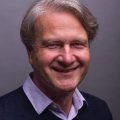
Jaroslav Fabian (PhD 1997, SUNY Stony Brook) is a professor of theoretical physics at the University of Regensburg where he heads the Spintronics Group since 2004. Prior to that Jaroslav Fabian was on the faculty at the Karl-Franzens University in Graz, and a research associate in University of Maryland at College Park, and Max-Planck Institute for Complex Systems in Dresden. Research activities of Jaroslav Fabian span a wide spectrum of theoretical and computational solid state physics, but are particularly focused on the physics of 2D materials and on the field of spintronics. He is a member of Graphene Flagship, and several collaborative research initiatives. Recently, he has been excited about the art of creating novel electronic and magnetic properties by proximity effects in stacks of 2D materials.
Nicolas Leconte
Nicolás Lorente Palacios
Jedediah Pixley Pixley
Rutgers, The State University of New Jersey
Nicolas Regnault
Ecole Normale Superieure-CNRS, Research director
Ivo Saldanha Souza
Centro de Física de Materiales
Ulrich Schollwoeck
LMU Munich
Maria-Roser Valenti Vall
University of Frankfurt
Tim Wehling
Hong Yao
Tsinghua University
Zeila Zanolli
Utrecht University
Registration fees
| Registration fees | Until 05-10-2026 |
|---|---|
| 0 EUR | |
| 250,00 EUR |
Venue
Donostia International Physics Center
Paseo Manuel Lardizabal, 4, 20018 Donostia/San Sebastián
Gipuzkoa
Donostia International Physics Center
Paseo Manuel Lardizabal, 4, 20018 Donostia/San Sebastián
Gipuzkoa
Other courses that might be of your interest...
-

Face-to-face
-
Face-to-face

-
Face-to-face

-
Face-to-face
-
Face-to-face