
Fundamental Science with Quantum Computers and Simulators
Description
The UIK Summer School, "Fundamental Science with Quantum Computers and Simulators," scheduled to be held in San Sebastián/Donostia from September 14 to 17, 2026, will offer advanced training on how programmable quantum devices facilitate new approaches to fundamental physics problems. The school will emphasize both theoretical and experimental perspectives, showcasing how quantum computers and simulators can be used to explore many-body physics, quantum information processing, and emergent phenomena beyond the capabilities of classical computation. A key aim is to encourage interaction and knowledge exchange among graduate students, early-career researchers, and leading international experts in the field.
The program features major experimental platforms, including superconducting circuits, trapped ions, Rydberg atom arrays, and ultracold atomic systems, along with the theoretical frameworks that connect these platforms to fundamental questions in quantum physics. Topics cover quantum simulation of strongly correlated systems, quantum error mitigation and control, variational and hybrid quantum algorithms, and the use of near-term quantum devices to study nonequilibrium dynamics, entanglement, and quantum phase transitions. Confirmed speakers and lecturers, such as David Hayes, Antoine Browaeys, Andreas Wallraff, Francesca Ferlaino, Luca Tagliacozzo, Pedram Roushan, Antonio Acín, Kristan Temme, Markus Müller, and Hans Peter Büchler, ensure the program spans both experimental and theoretical frontiers.
Directed by:
- Enrique Rico Ortega (UPV/EHU - Ikerbasque - BasQ - CERN)
- Juan José García Ripoll (CSIC Madrid)
- Daniel Barredo (CSIC Oviedo)
Objectives
- To offer solid, pedagogically sound, and structured training on the main experimental quantum platforms and their applications to fundamental science.
- To create a space for interaction among students, young researchers, and leading groups in Rydberg atoms, optical lattices, trapped ions, superconducting circuits, and quantum simulation in HEP.
- To promote collaboration between Spanish and international institutions in quantum computing and simulation.
Activity directed to
- All public
- University student
- Teachers
- Professionals
Organised by


In collaboration with




Directors
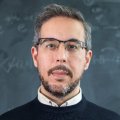
Juan José García Ripoll
Juanjo García Ripoll completed a PhD in ultracold atoms and 5 years of postdoctoral work at the Max Planck Institute for Quantum Optics, in which he contributed to the early developments of quantum simulation and quantum computing. In 2008 he joined CSIC as researcher, leading investigation in quantum hardware and quantum software to operate it. He coordinates the CSIC Platform for Quantum Technologies and the Spanish Network for Quantum Information and Quantum Technologies, and has contributed to the creation of two masters programas in quantum technologies in which CSIC collaborates.
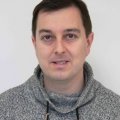
Daniel Barredo González
CSIC
Daniel Barredo is an experimental physicist in atomic physics and quantum information with Rydberg atoms. He obtained his PhD in 2009 from the Surface Science Laboratory at the Autonomous University of Madrid. Following his doctoral studies, he joined the group of T. Pfau at the University of Stuttgart, where he investigated finite-temperature Rydberg ensembles with long-range interactions in microcells for quantum technologies. He subsequently joined the group of A. Browaeys at Institut d'Optique in Palaiseau, France, contributing to the development of programmable neutral-atom arrays for quantum simulation and quantum computing. In 2023, he was appointed as a permanent researcher at the Spanish National Research Council (CSIC), where he continues to advance neutral-atom quantum platforms and their applications in quantum science and technology.
Speakers

Antonio Acin
Antonio Acín Dal Maschio is a Spanish theoretical physicist and ICREA Research Professor at ICFO – The Institute of Photonic Sciences, where he leads the Quantum Information Theory group. He holds degrees in Physics (University of Barcelona) and Telecommunication Engineering (Polytechnic University of Catalonia), and earned his PhD in Theoretical Physics in 2001 from the University of Barcelona, followed by a postdoctoral stint at the University of Geneva. His research focuses on quantum information theory, quantum cryptography, quantum communication protocols, certification of quantum technologies, and foundational aspects of quantum physics, including quantum optics, quantum thermodynamics, and many‑body physics. Acín has published extensively in high‑impact journals, delivered numerous invited talks, and has been awarded multiple European Research Council grants (Starting, Proof of Concept, Consolidator, and Advanced) as well as an AXA Chair in Quantum Information Science and the Rei Jaume I Prize for Basic Research. He is recognized for pioneering work in device‑independent quantum information processing and the characterization of quantum correlations.
Wallraff Andreas Joachim
ETH Zurich
Andreas J. Wallraff is a German physicist and Full Professor of Solid State Physics at ETH Zurich, where he has led research on superconducting quantum circuits and quantum information science since 2006. He holds physics degrees from Imperial College London and RWTH Aachen University and received his Ph.D. from the University of Erlangen-Nuremberg for pioneering work on vortex quantum dynamics in superconductors. As a postdoctoral researcher at Yale University, he contributed to foundational experiments demonstrating coherent interactions between single photons and quantum electronic circuits. At ETH Zurich, Wallraff’s research focuses on experimental circuit quantum electrodynamics (cQED), development of superconducting qubits, hybrid quantum systems integrating superconducting circuits with semiconductor quantum dots and Rydberg atoms, and strategies for quantum error correction. He has received numerous awards, including the Nicholas Kurti European Science Prize, an ERC Starting Grant and an ERC Advanced Grant, the ETH Zurich Max Rössler Prize, and the Helmholtz International Fellow Award. Wallraff also serves as Founding Director of the ETH Quantum Center.
Antoine Browaeys
Laboratoire Charles Fabry (UMR 8501 CNRS) - Institut d’Optique Graduate School
Antoine Browaeys is a French experimental physicist and CNRS Research Director at the Laboratoire Charles Fabry, Institut d’Optique Graduate School / Université Paris-Saclay / CNRS, where he leads the Quantum Optics – Atoms group studying many-body quantum physics with neutral atoms. He obtained his PhD in physics in 2000 at the Institut d’Optique under Alain Aspect, followed by a postdoctoral fellowship at the National Institute of Standards and Technology (USA) in the Laser Cooling group of W. D. Phillips. Browaeys’ research focuses on cooling, trapping, manipulating and observing individual cold atoms in optical tweezers to build synthetic quantum systems for exploring quantum many-body phenomena and advancing quantum information science, including scalable quantum simulators and computing platforms based on neutral atoms. His contributions have been recognized with the CNRS Silver Medal (2021), the Aimé Cotton Prize (2007), the Alfred-Verdaguer Prize, an ERC Advanced Grant, and his election to the French Academy of Sciences. He is also co-founder and scientific adviser of Pasqal, a quantum technology start-up.
Hans Peter Buechler
Prof. Dr. sc. nat. Hans Peter Büchler is a Swiss theoretical physicist and Professor of Physics at the Institute for Theoretical Physics III, University of Stuttgart, Germany, where he leads a research group on quantum many‑body phenomena in cold atomic, molecular, and photonic systems. He studied physics at ETH Zürich (Diplom 1999) and completed his Ph.D. in theoretical physics under Gianni Blatter (2003) with a dissertation on phase transitions in quantum condensed matter, awarded the ETH silver medal. Following a postdoctoral fellowship with Peter Zoller at the University of Innsbruck, he joined the University of Stuttgart as a professor in 2007. His research spans quantum simulation with Rydberg atoms, topological phases, quantum error correction, and strongly correlated quantum matter, with extensive high‑impact publications in Nature Physics, Phys. Rev. Lett., PRX Quantum, and other leading journals. He has secured significant funding, including ERC support, and actively collaborates on quantum technologies at the theoretical–experimental interface.
Francesca Ferlaino
Francesca Ferlaino is an Italian experimental physicist specializing in ultracold quantum matter and dipolar quantum gases. Born in Naples in 1977, she received her diploma in physics at the University of Federico II (magna cum laude) and completed her Ph.D. in 2004 at the University of Florence and the European Laboratory for Non-linear Spectroscopy (LENS) in Italy. After postdoctoral research in Innsbruck, she established the Dipolar Quantum Gases Group, achieving milestones including the world’s first Bose–Einstein condensate of erbium and pioneering work on dipolar mixtures of erbium and dysprosium, supersolid states, and complex many-body quantum phenomena. Since 2014, she has been a Full Professor of Experimental Physics at the University of Innsbruck and Scientific Director at the Institute for Quantum Optics and Quantum Information (IQOQI) of the Austrian Academy of Sciences. Her work has earned multiple European Research Council (ERC) grants and international awards, she was elected to the Austrian Academy of Sciences, and in 2025 was named Austria’s Scientist of the Year for her contributions to quantum science and public engagement.
Winfried K. Hensinger
Professor Winfried K. Hensinger is a leading experimental quantum physicist and Professor of Quantum Technologies at the University of Sussex, where he heads the Ion Quantum Technology Group and directs the Sussex Centre for Quantum Technologies. He obtained his physics education in Heidelberg and his MSc and PhD at the University of Queensland, undertaking additional research at NIST before spending three years at the University of Michigan as a FOCUS Research Fellow. Since joining Sussex in 2005, he has developed an internationally recognised research programme in trapped-ion quantum technologies, with particular emphasis on scalable quantum computing, integrated ion-trap microchips, quantum simulation, large-scale entanglement and quantum sensing. His work has contributed to the development of scalable ion-trap architectures and practical routes towards large-scale quantum computers, and he has been involved in major UK quantum-technology initiatives. He is also co-founder, Chief Scientist and Chairman of Universal Quantum, a Sussex spin-out established to commercialise scalable trapped-ion quantum computing architectures.
Michael Meth
Michael Meth is an experimental physicist in the trapped-ion quantum optics group at the University of Innsbruck. His research focuses on precision control of atomic ions for quantum information processing, quantum simulation, and high-fidelity coherent operations. He develops and operates complex laser systems, ultra-high-vacuum apparatus, and electronic control hardware, and implements experimental protocols for state preparation, manipulation, and measurement. His work includes system optimization, noise reduction, and automation of experimental sequences, contributing to scalable and robust trapped-ion platforms. He collaborates closely with theorists and engineers, supports laboratory infrastructure, and contributes to the training of students. His interests include quantum technologies, experimental methods, and advancing reliable architectures for quantum computing and simulation.
Markus Mueller
Prof. Dr. Markus Müller is a German theoretical quantum physicist and Professor of Theoretical Quantum Technology jointly at RWTH Aachen University and Forschungszentrum Jülich, where he leads the Theoretical Quantum Technology Group focused on quantum information processing, quantum simulation, topological quantum computing, and error correction in atomic, molecular, and optical systems. He earned a Diplom in Physics from the University of Konstanz (2000–2006) and completed his PhD (Dr. rer. nat.) under Prof. Peter Zoller at the University of Innsbruck and IQOQI (2007–2011) with a thesis on many-body quantum simulation with Rydberg atoms and ions. After a postdoctoral research appointment at the Complutense University of Madrid (2011–2015), he held faculty positions at Swansea University (Senior Lecturer to Professor, 2015–2019) before taking up his current professorship in 2019. His research spans scalable quantum computing, quantum error correction, and the theory of many-body quantum physics, with numerous peer-reviewed publications in leading journals.
Pedram Roushan Roushan
Dr. Pedram Roushan is an Iranian‑American physicist and Staff Research Scientist at Google Quantum AI, where he leads experimental research on Noisy Intermediate‑Scale Quantum (NISQ) algorithms and quantum simulation with superconducting qubits. He received his B.S. in Physics and Mathematics from the University of Pittsburgh and his Ph.D. in Physics from Princeton University in 2011, where he performed the first scanning tunneling microscopy studies of topological insulators. After postdoctoral work on superconducting qubits at the University of California, Santa Barbara, he joined Google in 2014 and contributed to the team that demonstrated quantum computational supremacy. His research focuses on simulating complex quantum dynamics and non‑equilibrium phenomena, including time crystals, topological states, measurement‑induced entanglement, and non‑Abelian excitations on programmable quantum processors, resulting in numerous high‑impact publications in Nature and Science.
Alireza Seif
Alireza Seif is a theoretical physicist and quantum information scientist currently serving as a Research Scientist at IBM Quantum, where he works on quantum noise characterization, error mitigation, quantum process learning, and scalable quantum computing architectures. He obtained his Ph.D. in Physics from the University of Maryland Joint Quantum Institute, with research spanning quantum optics, many-body physics, machine learning for quantum systems, and correlated quantum noise. He held a Prize Postdoctoral Fellowship in Theoretical Quantum Sciences at the University of Chicago. His scientific contributions include influential work on entanglement-enhanced quantum sensing and learning, compressed-sensing approaches to correlated noise spectroscopy, quantum error mitigation via classical shadows, measurement-induced entanglement transitions, and machine-learning-assisted quantum state readout. He has collaborated extensively across academia and industry on near-term and fault-tolerant quantum computing technologies.
Luca Tagliacozzo -
IFF-CSIC
Luca Tagliacozzo is a tenured Scientist at the Instituto de Física Fundamental (IFF‑CSIC), Madrid, where he leads research in quantum information, many‑body quantum systems, gauge theories, and tensor network methods. He holds dual PhDs from Politecnico di Torino and the University of Barcelona, and has held positions at the University of Strathclyde, University of Barcelona, University of Queensland, and ICFO. Tagliacozzo has authored 50+ peer‑reviewed publications in high‑impact journals, including Nature Physics, Nature Communications, Science, Physical Review X, and Physical Review Letters, on topics such as entanglement, tensor networks, and out‑of‑equilibrium quantum dynamics. He has supervised multiple PhD and master’s students, contributes to international collaborations, and teaches tensor network methods in quantum technologies. His work advances theoretical and computational frameworks for simulating complex quantum dynamics and exploring emergent phenomena in strongly correlated systems.
Registration fees
The registration fee includes workshop materials, coffee breaks, lunches, and conference dinner.
ACCOMMODATION: All conference attendees are advised to book their accommodation as soon as possible. San Sebastián is a popular tourist destination year-round, so finding available hotel rooms, especially at budget prices, can be difficult if you wait until the last minute.
- During registration, you will receive OLARAIN information and a promotional code. This is only for attendees with confirmed registration.
| Registration | Until 31-07-2026 | Until 07-09-2026 |
|---|---|---|
| 390,00 EUR | 440,00 EUR | |
| 440,00 EUR | 440,00 EUR |
Venue
Miramar Palace
Pº de Miraconcha nº 48. Donostia / San Sebastián
Gipuzkoa
Miramar Palace
Pº de Miraconcha nº 48. Donostia / San Sebastián
Gipuzkoa
Sustainable development goals
Agenda 2030 is the new international development agenda approved in September 2015 by the United Nations. This agenda aims to be an instrument to favour sustainable human development all over the planet, and its main pillars are the eradication of poverty, a reduction in equality and vulnerability and fostering sustainability. It is a unique opportunity to transform the world up to 2030 and guarantee human rights for all.

4 - Quality education
Guarantee quality education that is inclusive and equitable and foster opportunities for lifelong learning for everyone. Key issues: free-of-charge, equitable and quality education, access to higher education and training on an equal basis, education for sustainable development, suitable education centres for persons with disabilities, and safe, non-violent and efficient learning environments.
More information
9 - Industry, innovation and infrastructure
Build resilient infrastructures, promote inclusive and sustainable industrialisation and foster innovation. Key issues: reliable, sustainable, resilient and quality infrastructures, inclusive and sustainable industrialisation, modernisation, clean and environmentally rational industrial technologies and processes, scientific research and improvement of technological capabilities, universal access to ICTs.
More information
Other courses that might be of your interest...

-

Face-to-face

-
Face-to-face
-
Face-to-face