

XXIII Congress of the Iberian Association of Limnology
AIL 2026 BILBAO
URA, NATURA, KULTURA
Description
CASTELLANO / EUSKARA / ENGLISH / PORTUGUÊS
Since 1981, the Iberian Association of Limnology (AIL) has been promoting meetings among researchers and managers of continental water bodies—such as rivers, lakes, wetlands, and reservoirs—with the aim of updating existing knowledge, fostering research, and enhancing the transfer of scientific knowledge to society. The University of the Basque Country (EHU) is organising the XXIII AIL Congress in Bilbao, from 22 to 26 June 2026. The organising committee invites all interested participants to take part and contribute to the advancement of scientific knowledge in limnology, as well as to its application for improved environmental and social management. The congress will include plenary sessions with invited speakers, parallel thematic sessions, special sessions, poster sessions, courses, workshops, technical field trips and social events.
ORGANIZING COMMITTEE
- Arturo Elosegi (President)
- Maite Arroita (Secretary)
- Aitor Larrañaga (Treasurer)
- Idoia Biurrun
- Luz Boyero
- Leire Méndez
- Sergio Seoane
SCIENTIFIC COMMITTEE
- Romina Alvarez Troncoso (Universidade de Vigo)
- Pepe Barquín Ortíz (Universidad de Cantabria)
- Jhon Donato-Rondón (Universidad Nacional Colombia)
- Andrea C. Encalada (Universidad de San Francisco de Quito)
- Claudia Feijoó (Universidad Nacional de Luján)
- Verónica Ferreira (Universidad de Coimbra)
- Anna Freixa (Institut Catalá de Recerca de l'Aigua, ICRA)
- Rosa Gómez Cerezo (Universidad de Murcia)
- Vítor M. Costa Gonçalves (Universidade dos Açores)
- Cayetano Gutiérrez Cánovas (Universidad Rey Juan Carlos)
- Cláudia Pascoal (Universidade do Minho)
- João Pestana (Universidade de Aveiro)
- Andreu Rico (Universitat de València)
PLENARY SESSIONS
- Naiara López Rojo (National Research Institute for Agriculture, Food and Environment (INRAE) - University Savoie Mont Blanc, CNRS, Francia)
- Francisco J. Oficialdegui (Estación Biológica de Doñana (EBD-CSIC), España)
- Patricia Mª Rodríguez González (Universidad de Lisboa, Portugal)
- Victor Saito (Universidade Federal de São Carlos, Brasil)
- Lifetime achievement award in limnology (Manuel Augusto Simões Graça)
- Award for the best thesis in limnology (2024 and 2025 calls)
THEMATIC SESSIONS
General sessions
- SG01. Biology and conservation of freshwater organisms
- SG02. Ecology of rivers, estuaries, lakes, reservoirs and wetlands
- SG03. Processes and functioning of freshwater ecosystems
- SG04. Ecohydrology and underground water
- SG05. Aquatic ecotoxicology and environmental risk assessment
- SG06. Microbial ecology
- SG07. Global change: climate change, human impacts, past and current
- SG08. Invasive species and ecosystem functioning
- SG09. Ecosystem restoration
- SG10. New methodologies and techniques in limnology
- SG11. Ecosystem services and assessment methods
Special sessions
- SE01. Freshwater ecosystem functioning in a rapid-changing world. Ariadna García-Astillero, Guillermo García-Gómez, Ignasi Arranz Urgell y Javier Sánchez-Hernández
- SE02. The dark side of stream ecology: Advancing our understanding of the hyporheic zone role for stream biogeochemistry. Clara Mendoza-Lera, Marina Victoria Ríos y Julia Pasqualini
- SE03. Miguel Alonso, the naturalist and his lagoons. Antonio Camacho, Concha Duran, Manuel Toro y Francesc Mesquita
- SE04. Collaborative networks in limnology. Javier Pérez, Cayetano Gutiérrez-Cánovas y Juan Rubio-Ríos
- SE05. Research and management challenges on non-perennial rivers. María Mar Sánchez-Montoya, Núria Bonada, Núria Cid, Pablo Rodríguez-Lozano y Daniel von Schiller
- SE06. Bridging science and society in Limnology: citizen science, education and stakeholder participation. Maria Soria, Meritxell Abril y Pau Fortuño
- SE07. Molecular ecology and biodiversity: new perspectives in aquatic ecosystems. Jon Garrastatxu, Álvaro Fueyo, Alba M. Losa y Nieves López-Rodríguez
- SE08. Freshwaters from the Macaronesia: water resources, biodiversity and conservation management. Núria Cid, Raúl Acosta, Margarita Florencio y Pedro Raposeiro
- SE09. From limnology to technological innovation: Nature-Based Solutions as contributors to the European Water Resilience Strategy. Ainhoa Gaudes, Julio C. López Doval y Lluís Bertrans Tubau
- SE10.Cross-scale biogeochemical–microbial interactions in freshwater ecosystem functioning. Nuria Perujo y Anna Freixa
- SE11. Advancing equity and inclusion in limnology: achievements and future challenges. María Sánchez-Montoya, Mireia Bartrons, Anna Freixa y Maria Anton-Pardo
- SE12. Conservation and restoration of small water bodies: advances & challenges. Serena Sgarzi, Lena Fehlinger y Sandra Brucet
- SE13. Latin American wetlands: biodiversity, sustainable management, and socio‑environmental challenges in the 21st century. Sylvina Casco
- SE14. Reservoirs at risk: emerging challenges and solutions for water quality management. Sara C. Antunes, Sara Rodrigues, Jesús Delegido y Catarina Guimarães
- SE15. Dispersal y freshwater ecosystems: quantification, mechanisms, and applications. José María Fernández-Calero y Núria Bonada
ACTIVITIES
Courses (in parallel)
- Course 1. Species distribution models. Janine Pereira da Silva and Federica Rossetto
- Course 2. Remote sensing of inland waters made easy with Google Earth Engine. Camille Minaudo
- Course 3. From papers to people: science dissemination across academia and society. Kamil Hupalo, Maria Soria and Pau Fortuño
Technical workshops (in parallel)
- Workshop 1. Sharing (in)experience in DIY environmental sensors. Cedric Tentelier
- Workshop 2. Inclusive science communication: practical tools for research and leadership. Gender and Science AIL Group
- Workshop 3. eDNA in action: advancing implementation for a future-ready WFD. Jovenomics
- Workshop 4. Psychosocial barriers to the transition toward sustainability. Laura Vozmediano
- Workshop 5. Not a service: the symbiosis of scientific illustration. Jagoba Malumbres-Olarte
- Workshop 6. The art of asking questions: an introduction to quantitative surveys in socio-limnology. Pablo Rodriguez Lozano
Technical field trips (in parallel)
- Field trip 1. Bilbao's water. Bilbao Bizkaia Water Consortium
- Field trip 2. Restoration of Basque aquatic ecosystems. URA, Basque Water Agency
- Field trip 3. The Artibai river and its basin. Provincial Council of Biscay
- Field trip 4. Artikutza and the Enobietako dam. Donostia-San Sebastián City Council.
REGISTRATION AND ABSTRACT SUBMISSION
- Registration will be carried out through the “Enroll” link on the right side of the website (deadline: May 29; April 30 for reduced fee).
- Abstract submission will be done via this FORM (deadline: February 27), using this TEMPLATE.
LIMNETICA
All the contributors of the AIL2026 Meeting in Bilbao are invited to submit their works in the international open access journal Limnetica, published by the Iberian Society of Limnology (AIL). The journal publishes original papers on ecology of continental waters. Its scope includes ecology of rivers, lakes, reservoirs, lagoons and wetlands, biogeochemistry, paleolimnology, development of new methodology, taxonomy, biogeography and all aspects of theoretical and applied continental aquatic ecology. The journal publishes two volumes each year.
Limnetica is indexed in: Web of Science ®, Scopus, DOAJ (Directory of Open Access Journals), BIOSIS Previews®, Aquatic Sciences and Fisheries Abstracts (ASFA); Zoological Record ®; Freshwater Biological Association (FBA); NISSC’s FISHLIT database; between others. For more information about the journal and the instructions for authors, use the link: http://www.limnetica.com/en. JCR Impact factor (2023): 1,3
Deadline for sending papers: 31st October 2026
Objectives
- Communicating scientific discoveries arising in the field of freshwater ecology.
- Promoting interaction among people working on freshwater ecology topics.
- Training individuals who are beginning to work in freshwater ecology.
Activity directed to
- University student
- Teachers
- Professionals
Methodology
Erronka Garbia is a certification approved by the Basque Government that recognizes events that integrate environmental measures into their design and organization, in order to minimize as much as possible the negative impacts that their celebration may have on the environment.
The aim of this environmental label is to raise awareness among both event organizers and participants, in order to reduce the negative impacts associated with large-scale events and to promote the organization of events that generate the least possible impact on the environment.
For this reason, the Organizing Committee of the XVIII Congress of the Iberian Association of Limnology aims to promote an environmentally sustainable event. In fact, the motto of AIL 2026 BILBAO, “URA, NATURA, KULTURA" (WATER, NATURE, CULTURE), is fully aligned with the environmental sustainability philosophy promoted by Erronka Garbia.
What is Erronka Garbia?
The Erronka Garbia certification for environmentally sustainable events is based on a series of fundamental principles that must be considered as guidance for decision-making related to the design, planning, and organization of the event, as well as throughout the rest of its life cycle (before, during, and after).
How is it implemented?
The environmental sustainability assessment of an event should help all participants (especially attendees) to become aware of its environmental implications and of the potential for reducing impacts through changes in habits and behaviors.
What is the Erronka Garbia methodology?
Event management involves a cycle of activities related to programming, funding, production, and communication, which take place throughout the entire process: design and planning, organization, implementation, monitoring, dismantling, and closure.
To achieve this, it is structured around six main areas of action, within which environmental objectives, measures, and monitoring indicators are established:
- Mobility
- Energy
- Water
- Purchasing
- Infrastructure
- Waste
What are the benefits of participating in Erronka Garbia?
- Reduction in the consumption of raw materials, energy, and water
- Lower dependence on fossil resources
- Promotion of eco-innovation in products and services
- Reduced waste generation and improved waste management
- Decrease in emissions and discharges into the air, water, and soil
- Promotion of biodiversity and increased attention to local environmental issues
- Positive local economic impact and enhancement of cultural heritage
- Inclusion of socially vulnerable groups and improvement of citizen participation
How can I contribute?
Participation is possible by adopting conscious actions in each of the areas of action during the different phases of the event.
BEFORE THE EVENT
As an attendee, institution, or supplier, actions are mainly related to the mobility and energy areas:
- Use public transport or shared vehicles to travel to Bilbao whenever possible. Priority is given to road transport over air travel in order to reduce greenhouse gas emissions.
Bus routes to Bilbao:
- Santander–Bilbao: ALSA
- Pamplona–Bilbao: ALSA, CUADRABUS
- Logroño–Bilbao: ALAVABUS, CUADRABUS
- Burgos–Bilbao: ALSA, FLIXBUS
Other cities:
- Madrid–Bilbao: ALSA
- Barcelona–Bilbao: ALSA
Train routes to Bilbao:
RENFE: https://www.renfe.com
- Santander–Bilbao: multiple daily services
- Pamplona–Bilbao: usually 2 per day (9:03 and 17:26), with a transfer in Miranda de Ebro
- Logroño–Bilbao: usually 1 direct train per day (12:55)
- Burgos–Bilbao: usually 2 direct trains per day (9:15 and 19:31)
Other cities:
- Madrid–Bilbao: usually 2 direct trains per day (7:20 and 17:37)
- Barcelona–Bilbao: usually 1 direct train per day (8:50)
Map of participants’ origins:
https://www.google.com/maps/d/edit?mid=15S2kZdFwsSZ2a82YPB45kGJh9icnIuA&usp=sharing
- Use low-emission vehicles whenever possible
DURING THE EVENT
Four main focus areas: mobility, energy, water, and waste
· Use public transport in Bilbao:
-
- Bizkaibus (A3247 from the airport)
- Bilbobus (Puente de Deusto area)
- Metro (Deusto or San Mamés stations)
- Tram (Guggenheim or Abandoibarra stops)
· Walking or cycling to Bizkaia Aretoa is recommended. There are numerous bike lanes and pedestrian routes, including those through Doña Casilda Park and along the Bilbao estuary.
· Promote responsible consumption: reduce resource use, avoid food waste, and optimize water and energy consumption.
· Complete the Erronka Garbia–AIL2026 survey (available during and after the event).
AFTER THE EVENT
- Review the main conclusions (“take home messages”)
- Complete the surveys
MORE INFORMATION
Organised by
In collaboration with



Directors
Comité Organizador AIL26

Miriam Colls Lozano
Speakers
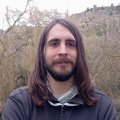
Alberto Alonso Blanco
Universidad del Pais Vasco/Euskal Herriko Unibersitatea (EHU)
Alberto Alonso is a researcher at the University of the Basque Country/Euskal Herriko Unibertsitatea (EHU), and his research focuses on analyzing the effects of biodiversity loss and species change on the structure and functioning of freshwater ecosystems. During his PhD, he studied the effects of diversity loss caused by emerging fungal pathogens in river ecosystems, specifically those produced by the loss and replacement of tree and amphibian species on leaf litter decomposition, periphyton growth, and the communities of macroinvertebrates, aquatic hyphomycetes, and algae, through field experiments and controlled laboratory conditions (microcosms and mesocosms). In addition to other studies on diversity loss and invasive species involving different taxa, he has also participated in projects examining other impacts such as land use changes, pesticides, nutrients, or temperature increase.
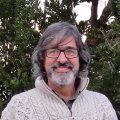
Manuel Graça
Universidade de Coimbra
Manuel Graça holds a PhD in Biology from the University of Sheffield, United Kingdom. Currently retired, he was a full professor of Ecology at the University of Coimbra, Portugal. His research has focused on the ecology of small rivers, particularly to understand the processes that regulate the decomposition of leaf litter entering rivers and its role as a source of energy and nutrients for aquatic communities. In this sense, he has worked with aquatic fungi and invertebrates, both in the laboratory and in manipulative experiments in rivers. His fieldwork has been conducted in various riverine environments across Portugal, Venezuela, Ecuador, Argentina, and Brazil. In parallel, Manuel Graça is interested in understanding how environmental stressors affect the ecology and functional parameters of decomposers. Finally, he has collaborated with environmental authorities and industry on environmental quality assessments to measure the effectiveness of pollution mitigation measures. He is the editor of a book on methods for studying decomposition in inland waters and another on the rivers of South America.
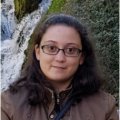
Naiara López Rojo
National Research Institute for Agriculture, Food and Environment (INRAE) - Université Grenoble Alpes, LECA, France
Her research focuses on how different components of global change alter the functioning of fluvial ecosystems and biotic communities. During her PhD, he analyzed the effects of riparian vegetation biodiversity loss (species richness, phylogenetic diversity and functional traits) on the functioning of headwater streams, particularly leaf litter decomposition, nutrient cycling and associated invertebrate communities, through laboratory experiments under controlled conditions (microcosms and mesocosms). She has also participated in projects assessing the effects of pollutants, such as fungicides and microplastics, on ecosystem functioning and the survival of invertebrates and amphibians. He later joined INRAE (France), where she investigated the effects of flow intermittency and drying on fluvial ecosystem functioning, with a particular focus on carbon emissions, stream metabolism and links with microbial diversity. More recently, she has become part of the Core Team of a global project investigating biodiversity patterns in intermittent rivers across multiple biological levels. Her current research examines how hydrological variability and drying regimes influence the functional and biotic dynamics of fluvial ecosystems.
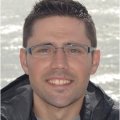
Francisco J. Oficialdegui
Doñana Biological Station (EBD–CSIC). Spain
Dr. Francisco J. Oficialdegui holds a PhD in Biology from the University of Seville and completed his doctoral thesis at the Doñana Biological Station (EBD-CSIC). During his postdoctoral stage, he worked at several Spanish institutions and at universities in the Netherlands and the Czech Republic, and has also carried out consultancy work for companies and international organizations such as the European Commission and the IUCN. He is currently a postdoctoral researcher at EBD-CSIC under a competitive contract funded by the Government of Andalusia. His research focuses on freshwater biological invasions, integrating ecological, molecular and socio-economic approaches. Using freshwater crayfish as a main study model, he analyzes introduction pathways and routes from historical, social and molecular perspectives; assesses ecological and socio-economic impacts; investigates disease dynamics in aquatic ecosystems and their consequences for biodiversity; and develops tools to support management and decision-making. His current research lines include prioritization strategies in invasive species management and the study of invasive species with commercial value, given their close ecological, economic and social interconnections.
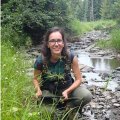
Patricia Mª Rodríguez González
University of Lisbon. Portugal
Patricia María Rodríguez González is a professor at the Instituto Superior de Agronomy of the University of Lisbon. She conducts her research at the Centre for Forest Studies and the Associated Laboratory TERRA, focusing on the ecology of riparian and wetland ecosystems, particularly the characterization, modelling, assessment and monitoring of riparian vegetation. Her current research lines include: i) studying riparian vegetation responses to abiotic (e.g. hydroclimatic) and biotic factors (biological invasions, emerging diseases) across different spatial scales, using functional approaches such as functional ecology, dendroecology and ecohydrology; and ii) applying this knowledge to the ecological restoration of river ecosystems. She is also interested in education and scientific knowledge transfer. Beyond academia, she has collaborated with public administrations on the implementation in Portugal of the Water Framework Directive, the Habitats Directive, the Ramsar Convention and the National Restoration Plan. She is co coordinator of the Portuguese Ecological Restoration Network and leads the Working Group on Education and Training of the Society for Ecological Restoration Europe.

Victor Saito
Federal University of São Carlos. Brazil
Victor Saito is an ecologist whose research integrates community ecology, ecosystem functioning and network theory to understand how freshwater systems respond to environmental change across broad latitudinal gradients. His work focuses on trophic networks in fluvial ecosystems, combining field measurements with advanced analytical approaches to quantify energy flow through aquatic food webs under contrasting environmental conditions. By linking organism traits, body size distributions and food web structure, he investigates the mechanisms that organize biodiversity from tropical to temperate regions and how these mechanisms change with temperature, land-use change, urbanization and the spread of non-native species. His studies show how environmental alterations affect key ecosystem processes such as energy flows, secondary production and the stability of trophic interactions. Through projects integrating experiments, field data and mathematical models, his work provides new insights into the resilience and functioning of fluvial ecosystems in a rapidly changing world.

Ismael Soto
Ismael Soto es investigador posdoctoral en la Estación Biológica de Doñana, especializado en biología de invasiones, centrándose en los patrones espacio-temporales de expansión de especies no nativas a escala global y regional. Además, una línea central de su investigación aborda los impactos económicos de dichas especies, evaluando la magnitud, la distribución y la evolución temporal de los costes asociados a los daños ambientales, las pérdidas productivas y los gastos de gestión.
Registration fees
| Registration | Until 30-04-2026 | Until 15-06-2026 |
|---|---|---|
| 260,00 EUR | 300,00 EUR | |
| 130,00 EUR | 150,00 EUR | |
| 380,00 EUR | 470,00 EUR | |
| 300,00 EUR | 360,00 EUR | |
| 455,00 EUR | 560,00 EUR | |
| 260,00 EUR | 300,00 EUR |
Venue
Bizkaia Aretoa-EHU
Avenida Abandoibarra, 3. 48009 Bilbao
Bizkaia
Bizkaia Aretoa-EHU
Avenida Abandoibarra, 3. 48009 Bilbao
Bizkaia
Sustainable development goals
Agenda 2030 is the new international development agenda approved in September 2015 by the United Nations. This agenda aims to be an instrument to favour sustainable human development all over the planet, and its main pillars are the eradication of poverty, a reduction in equality and vulnerability and fostering sustainability. It is a unique opportunity to transform the world up to 2030 and guarantee human rights for all.
6 - Clean water and sanitation
Guaranteeing the availability and sustainable management of water and sanitation for everyone. Key issues: universal and fair access at an affordable price, access to sanitation and hygiene services, water quality, efficient use of water resources, end-to-end management, protection of water ecosystems, reduction of pollution, elimination of waste discharges, wastewater treatment.
More information
13 - Climate action
Adopt urgent measures to combat climate change and its effects. Key issues: mitigation, resilience and capacity for adaptation, planning, national strategies and plans, education and raising awareness, reduction of effects and early warning systems, compliance with the Framework Convention of the United Nations on Climate Change.
More information
15 - Life on land
Protect, establish and foster the sustainable use of terrestrial ecosystems, manage forests sustainably, fight desertification, hold back and reverse the degradation of land and delay the loss of biodiversity. Key issues: the fight against desertification, reforestation, conservation, the regeneration and sustainable use of terrestrial ecosystems, natural habitats, biodiversity, invasive exotic species, integration of the values of ecosystems into planning, poaching.
More information
Other courses that might be of your interest...
-

Face-to-face
-
Face-to-face

-
Face-to-face
-
Face-to-face

-
Face-to-face