
Changing Oceans: Scientific Information to Anticipate and Act against Climate Change
~Aquarium | San Sebastián or streaming
The ocean acts as the planet’s thermometer, providing an early indication of the effects of climate change. Science provides the data needed to anticipate risks, but only through cooperation and evidence-based decisions can we protect the environment and ensure a sustainable future.
Description
To mark World Ocean Day, this paper takes a thorough look at climate change from the perspective that best reflects it: the ocean. The climate system follows and always complies with chemical and physical laws; the available data show that the concentration of CO₂ in the atmosphere already exceeds 420 ppm – levels not observed in, at least, two million years – while the global thermal anomaly in 2024 stood at +1.28 °C on the pre-industrial period. The ocean absorbs much of that excess heat; it expands, becomes acidified and raises its average level, which alters socio-economic, ecosystemic and coastal dynamics worldwide.
The Basque Country and the Bay of Biscay as a whole are not in a bubble: the air and sea’s surface temperatures are increasing by between 0.2 and 0.4 ºC a decade; the sea level is rising by over 3 mm/year, and storms at sea are causing repeated damage to ports, beaches, infrastructures and properties. The paper examines that evidence with historical series such as the one for San Sebastián Aquarium (since 1946); it is one of the oldest of the world and shows how the combination of mitigation and adaptation – protection, accommodation and, when viable, reversal – is essential to sustain human activities on the coast.
Information systems are the second key area of the paper. Good decisions require good observation: atmospheric and marine measurement networks, satellites, high-frequency radars, buoys, tide gauges, gliders, coastal remote sensing and autonomous vehicles. Initiatives such as EuskOOS – the Operational Oceanography System of the Basque Country –, the Bay of Biscay Climate Change Observatory, and the e-begi platform produce over 90 time series and over 500,000 observations as per FAIR (Findability, Accessibility, Interoperability and Reuse) principles, connected to European infrastructures, such as Copernicus Marine Service and EMODnet. Those systems supply models, predictions, digital twins and AI-based solutions that underpin adaptation plans, early warning system and spatial planning.
The session ends with a constructive message: we still have time to avoid the worst impacts if we active decisively, using data and working together. Adaptation is possible, but it needs to go at a faster pace and knowledge to be shared between administrations, the private sector, scientific community and citizens. At AZTI – Basque Research & Technology Alliance (BRTA) member centre –, we are working with Euskalmet, URA (Basque Water Agency), the Meteorology and Emergency Directorate of the Basque Government, the Provincial Governments, the ports and the Basque socio-economic sector in order for the scientific information to lead to decisions that protect lives, ecosystems and lifestyles along our coast and in our seas.
Activity directed to
- All public
- University student
- Students not from university
- Teachers
- Professionals
Program
08-06-2026
“Océanos en cambio: información científica para anticipar y actuar frente al clima“
Language: Spanish
El océano actúa como termómetro del planeta reflejando de forma temprana los efectos del cambio climático. La ciencia aporta datos para anticipar riesgos, pero solo con cooperación y decisiones basadas en evidencia podremos proteger el entorno y asegurar un futuro sostenible.
- Rogelio Pozo | AZTI - Director General (CEO)
Eva Caballero kazetariak hizlariarekin elkarrizketa izango du hitzaldia amaitutakoan / La periodista Eva Caballero mantendrá un diálogo con el ponente una vez finalizada la conferencia
Speakers
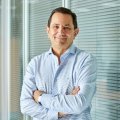
AZTI CEO. PhD in Chemical Science, Basque Research & Technology Alliance (BRTA) member centre. Rogelio Pozo, who has a PhD in Chemical Science, heads AZTI – the food and marine technology research and development centre, and BRTA member – in its mission to generate knowledge and innovation for a more sustainable and healthier society. He was previously Chief Operating Officer (COO) at Tecnalia, where he amassed over two decades of experience in managing R&D&I, technology transfer and leading European projects. He is a regular speaker and author on food sustainability, oceans and climate change, geostrategy of food and scientific communication. He is actively involved in international working groups and networks on the blue economy, food systems and the sustainable transition.
Venue
Aquarium
Plaza de Carlos Blasco Imaz 1, 20003 Donostia/San Sebastián
Gipuzkoa
Aquarium
Plaza de Carlos Blasco Imaz 1, 20003 Donostia/San Sebastián
Gipuzkoa
Other courses that might be of your interest...

-

Face-to-face

-
Face-to-face
-
Face-to-face