
Law and Democratic Backsliding
Description
In recent times, liberal democracies have undergone processes of institutional erosion and democratic backsliding, both within and beyond Europe. This phenomenon is reflected in extreme polarization, disinformation, institutional capture, and the rise of right- and left-wing populisms that challenge constitutional checks and balances and the principles of the rule of law.
The Summer Course adopts an interdisciplinary approach—primarily legal but in dialogue with political science and sociology—to understand the causes, dynamics, and consequences of this democratic crisis. A central focus of the program will be to examine the capacity of law and legal mechanisms (constitutional, administrative, and European) to contain these dynamics: from systems of checks and balances to judicial review, independent oversight bodies, fundamental rights guarantees, and European rule-of-law monitoring instruments. At the same time, the course will address their limitations, stemming from political pressure, institutional capture, the instrumentalization of law by “illiberal actors,” and the inherent fragility of legal norms when the democratic culture that sustains them deteriorates.
Objectives
Understanding populist strategies and narratives across their various ideological forms.
Comparative analysis of other European and International cases of democratick backsliding.
Assess the protective potential and vulnerabilities of the law in the face of institutional erosion.
Discuss normative and policy responses aimed at strengthening democratic resilience.
Activity directed to
- All public
In collaboration with

Program
02-07-2026
Registration
Bienvenida y saludo. Diputación Foral de Gipuzkoa y directores del curso
“Nacional-populismo y democracia inmediata“
Language: Spanish
- Jesús María Casquete Badallo | Universidad del País Vasco - Catedrático de Historia del Pensamiento y de los Movimientos Sociales y Políticos
“Mujeres en política en un contexto de crisis democrática“
Language: Spanish
- Ainhoa Novo Arbona | Universidad del País Vasco - Profesora de Ciencia Política
Participative dynamics: “Preguntas y Debate sobre las ponencias “
Language: Spanish
- Alberto López Basaguren | EHU - Catedratico Derecho Constitucional
Coffee break
“El papel de los tribunales constitucionales en contextos de erosión democrática“
Language: Spanish
- Maria Angeles Ahumada Ruiz | Universidad Autónoma de Madrid - Profesora de Derecho Constitucional
“Independencia judicial en tiempos inciertos: una perspectiva europea“
Language: Spanish
- Nuria González Campañá | Universitat de Barcelona - Profesora de Derecho Constitucional
Participative dynamics: “Preguntas y Debate sobre la ponencia“
Language: Spanish
- Mikel Díez Sarasola | EHU - Porfessor
Break
“Constitutional Pluralism and Democracy “
Language: English
- Tom Flynn | Universidad Pablo de Olavide - profesor Derecho Constitucional
“La judicialización de los valores europeos y la defensa de la democracia“
Language: Spanish
- Pablo Cruz Mantilla de los Ríos | Universidad Pablo de Olavide - Profesor Derecho Constitucional
Participative dynamics: “Preguntas y Debate sobre la ponencia“
Language: Spanish
- Mikel Díez Sarasola | EHU - Porfessor
03-07-2026
“Unchecked Arbitrary Power in the European Union “
Language: English
- Dimitry Kochenov | Central European University - Professor of Legal Studies
“EU Lawlessness Law“
Language: English
- Sarah Ganty | University of Peking - Postdoctoral Fellow
Participative dynamics: “preguntas y debate sobre la ponencia“
Language: Spanish
- Mikel Díez Sarasola | EHU - Porfessor
Coffee break
“La Izquierda Populista como Amenaza para la Democracia Liberal: Evidencia de América Latina“
Language: Spanish
- Benjamin García-Holgado | University of Delaware - Professor of Political Science
“El papel del poder judicial en tiempos de regresión democrática“
Language: Spanish
- Edmundo Rodriguez Achutegui | University of Innsbruck - Portavoz de Juezas y Jueces para la Democracia y Magistrado de la Audiencia Provincial de Bizkaia
Participative dynamics: “Preguntas y debate sobre la ponencia“
Language: Spanish
- Mikel Díez Sarasola | EHU - Porfessor
Round table: “perspectivas desde la politica“
Language: Spanish
- Iris Moreno Sanz (Moderator)
- Mikel Díez Sarasola | EHU - Porfessor
- Luke Uribe-Etxebarria Apalategi | Represetntante de PNV
- Eraitz Saez de Egilaz Ramos | Representante de Bildu
- Pau Blasi Uribarri | Representante de PSE-EE
- Mikel Lezama Zubeldia | Representante de PP
- Miren Etxebeste Gurrutxaga | Representante de Podemos
Directors

Professor of Constitutionalism and Globalization EHU/UPV Director of International Cooperation of the Provincial Council of Gipuzkoa. Professor of International Law at the University of Deusto. D. in Law and International Relations from the EHU under the direction of Noe Cornago and co-direction of Talha Syed. The global regime of Intellectual Property. LLM University of California, Berkeley. Fulbright Scholarship 2003-2004. Law Degree EHU
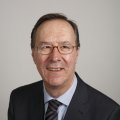
Alberto López Basaguren
UPV/EHU, Catedrático de Derecho Constitucional
UPV/EHU, Catedrático de Derecho Constitucional Catedrático de Derecho Constitucional en la UPV/EHU y Life Member de Clare Hall College, Universidad de Cambridge (Reino Unido). Ha formado parte del Comité de Expertos de la CELRM del Consejo de Europa (2006-2013), del Consejo Asesor del Euskera (2007-2016) y de la Comisión Arbitral (2009-2015). Entre sus publicaciones más recientes se incluyen: “La reforma federal del sistema autonómico: ¿cuadratura del círculo o triángulo virtuoso?” (2025), “Demandas de secesión en contextos democráticos. Desarrollos a partir de la teoría canadiense de la claridad” (2024), “El Ararteko y su ley reguladora a examen: balance y perspectivas de reforma” (2024), “La distribución de competencias en el sistema autonómico: la necesidad de la reforma” (2024), "Minority Languages in Spain: Recognition, Promotion and Some Conflicts" (2022, con Antonio López Castillo), “Cuestiones territoriales y secesión: reflexiones comparadas en la democracia de emergencia” (2022), “El Tribunal Constitucional frente a la emergencia pandémica (SSTC 148/2021, 168/2021 y 183/2021)” (2022), “Sobre elecciones en tiempo de pandemia. A propósito de las elecciones en Euskadi y Galicia y de la anulación de las elecciones en Cataluña
Speakers

Maria Angeles Ahumada Ruiz
Pau Blasi Uribarri
PSE-EE

Jesús María Casquete Badallo
Professor of History of Political Theory at the University of the Basque Country (UPV/EHU). His academic credentials include a MA in Political Science (New School for Social Research, New York), a PhD in Sociology (UPV/EHU) and a PhD in History (Technische Universität Berlin). Recipient of scholarships from the Alexander von Humboldt Foundation on several ocassions.

Pablo Cruz Mantilla de los Ríos
Universidad Pompeu Fabra
Pablo Cruz Mantilla de los Ríos is an Assistant Professor of Constitutional Law at Universidad Pablo de Olavide (Seville, Spain). Prior to this, he was an Assistant Professor of Constitutional Law at Universitat Pompeu Fabra in Barcelona and 'Juan de la Cierva' Postdoctoral Fellow at the same university. He holds a PhD in Law from the Universidad de Sevilla and the Università di Bologna. He was awarded a 'La Caixa' Foundation scholarship under the programme for postgraduate studies at European universities. His doctoral dissertation was published under the title 'La identidad nacional de los Estados miembros en el Derecho de la Unión Europea' by Aranzadi. He received the Gil Carlos Rodríguez Iglesias Prize for the best doctoral thesis, granted by the 'Asociación Española para el Estudio del Derecho Europeo' (AEDEUR), as well as the 'Premio Extraordinario de Doctorado'. His main research interests lie in European Constitutional Law, with particular attention to national identity, the rule of law crisis in the European Union, and EU values. He has undertaken research stays at the Università di Bologna, the Max Planck Institute for Comparative Public Law and International Law in Heidelberg, and Maastricht University.
Professor of Constitutionalism and Globalization EHU/UPV Director of International Cooperation of the Provincial Council of Gipuzkoa. Professor of International Law at the University of Deusto. D. in Law and International Relations from the EHU under the direction of Noe Cornago and co-direction of Talha Syed. The global regime of Intellectual Property. LLM University of California, Berkeley. Fulbright Scholarship 2003-2004. Law Degree EHU
Miren Etxebeste Gurrutxaga
Tom Flynn
Sarah Ganty
Benjamin García-Holgado
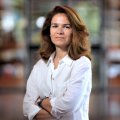
Nuria González Campañá
Núria González Campañá es Profesora Titular de Derecho Constitucional en la Universidad de Barcelona. Se doctoró en la Universidad de Oxford (gracias a una beca de la Fundación Rafael del Pino) con una tesis en Derecho Constitucional Europeo, bajo la dirección del Prof. Paul Craig. Un trabajo derivado de dicha tesis se publicó como monografía (Secession and European Union Law. The deferential attitude) en Oxford University Press en 2024. El libro fue galardonado con el Premio del Institut d'Estudis de l'Autogovern al mejor libro en organización territorial del poder en el año 2025. Además de la secesión y el derecho europeo y comparado, otra línea de investigación que ha cultivado en los últimos años se refiere al populismo, la erosión de la democracia constitucional y la defensa de la Constitución. Ha publicado sobre independencia judicial en el ámbito europeo y, en concreto, sobre Consejos Judiciales. Forma parte del grupo de investigación consolidado GEDECO, de la UB, y de la cátedra Jean Monnet en Democracia Constitucional Europea EUCODEM. Ha realizado estancias de investigación en la Universidad McGill (Montreal) y en el Instituto Europeo de Florencia.

Dimitry Kochenov
Prof Dimitry Kochenov holds a chair in European Constitutional Law and Citizenship and specializes in Citizenship and the Rule of Law. He served as a guest professor or a fellow is numerous institutions worldwide, including Princeton's Woodrow Wilson School (LAPA), NYU Law School (Emile Noël), UNAM Mexico, LUISS in Rome (Co-chair of EU Law), Institute of Gloval Studies in Basel, and the Scuola dei Studi Superiori at the University of Torino. His Citizenship (MIT Press 2019) has been translated into Italian and Russian and other most recent works include Quality of Nationality Index (ed with Lindeboom, Hart Publishing, Oxford, 2020); The Internal Market and the Future of European Integration (ed with Amtenbrink, Davies and Lindeboom, Cambridge 2019); EU Citizenship and Federalism (ed Cambridge 2017); The Enforcement of EU Law and Values (ed with Jakab, Oxford, 2017). Dimity consulted governments and international organizations on the subjects of his academi interest.
Mikel Lezama Zubeldia
Alberto López Basaguren
UPV/EHU, Catedrático de Derecho Constitucional
UPV/EHU, Catedrático de Derecho Constitucional Catedrático de Derecho Constitucional en la UPV/EHU y Life Member de Clare Hall College, Universidad de Cambridge (Reino Unido). Ha formado parte del Comité de Expertos de la CELRM del Consejo de Europa (2006-2013), del Consejo Asesor del Euskera (2007-2016) y de la Comisión Arbitral (2009-2015). Entre sus publicaciones más recientes se incluyen: “La reforma federal del sistema autonómico: ¿cuadratura del círculo o triángulo virtuoso?” (2025), “Demandas de secesión en contextos democráticos. Desarrollos a partir de la teoría canadiense de la claridad” (2024), “El Ararteko y su ley reguladora a examen: balance y perspectivas de reforma” (2024), “La distribución de competencias en el sistema autonómico: la necesidad de la reforma” (2024), "Minority Languages in Spain: Recognition, Promotion and Some Conflicts" (2022, con Antonio López Castillo), “Cuestiones territoriales y secesión: reflexiones comparadas en la democracia de emergencia” (2022), “El Tribunal Constitucional frente a la emergencia pandémica (SSTC 148/2021, 168/2021 y 183/2021)” (2022), “Sobre elecciones en tiempo de pandemia. A propósito de las elecciones en Euskadi y Galicia y de la anulación de las elecciones en Cataluña
Iris Moreno Sanz

PhD Lecturer of the Department of Political Science and Administration of the Faculty of Social Sciences and Communication (UPV/EHU). She has been Vice Dean of Teaching Organization of the Faculty of Social Sciences and Communication and Coordinator of the Degree in Political Science and Public Management. For the last five years, he has been a member of the Undergraduate Commission of the University of the Basque Country and a member of the Editorial Board of the Spanish Journal of Political Science. Public policies, especially equality policies and federal systems have been her main lines of research.
Edmundo Rodriguez Achutegui
Eraitz Saez de Egilaz Ramos
Legebiltzarra
Luke Uribe-Etxebarria Apalategi
Registration fees
| Face-to-face | Until 02-07-2026 |
|---|---|
| 30,00 EUR | |
| 20,00 EUR | |
| 20,00 EUR | |
| 0 EUR | |
| 20,00 EUR | |
| 0 EUR |
Venue
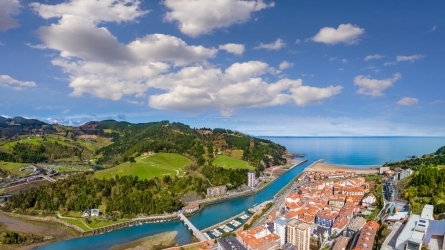
Miramar Palace
Pº de Miraconcha nº 48. Donostia / San Sebastián
Gipuzkoa
Miramar Palace
Pº de Miraconcha nº 48. Donostia / San Sebastián
Gipuzkoa
Sustainable development goals
Agenda 2030 is the new international development agenda approved in September 2015 by the United Nations. This agenda aims to be an instrument to favour sustainable human development all over the planet, and its main pillars are the eradication of poverty, a reduction in equality and vulnerability and fostering sustainability. It is a unique opportunity to transform the world up to 2030 and guarantee human rights for all.
16 - Peace, justice and strong institutions
Foster peaceful and inclusive societies for sustainable development, facilitate access to justice for everyone and construct efficient and inclusive institutions that are accountable at all levels. Key issues: a reduction in violence, mistreatment and exploitation, the rule of law, equal access to justice, a reduction in corruption and bribery, efficient and transparent institutions, participation, access to information, protection of fundamental freedoms.
More information
Other courses that might be of your interest...

-

Face-to-face

-
Face-to-face
-
Face-to-face