

La Unión Europea y América Latina: una alianza estratégica en un mundo inestable
Description
The growing instability of the international order, marked by the distancing of the United States, the questioning of multilateral norms, the use of coercion and force, and the geopolitical pressure exerted by emerging global actors, has prompted the EU to strengthen alliances with like-minded partners who share common values, interests, and visions.
In this context, Latin America emerges as a priority strategic partner: both regions share a commitment to democracy, the rule of law, human rights, environmental sustainability, and effective multilateralism. Characterized by their internal diversity, the European Union (EU) and Latin America are at a crucial juncture in the reconfiguration of their interregional relationship.
The recent reactivation of trade and political agreements, such as Mercosur, the modernization of agreements with Mexico and Chile, and the revitalization of the EU-CELA framework, present an opportunity to deepen a common agenda that combines political cooperation, green transition, digitalization, and shared prosperity.
This Summer Course offers an analysis and assessment of this new phase in EU-Latin America relations, combining legal, political, and economic perspectives. The course will also explore the impact and opportunities this strategic alliance offers for the Basque Country, both in terms of economic internationalization and technological cooperation, and in strengthening its historical and cultural ties with various Latin American countries. Experts from both regions will participate in the course to provide a comprehensive and up-to-date overview of one of the EU's priority areas of external action.
Objectives
To analyze the recent evolution of relations between the EU and Latin America, highlighting their growing relevance in the EU's international action and their role in defending multilateralism and shared democratic values.
To examine the political, legal, economic, and geostrategic implications of the main interregional cooperation agreements and frameworks, as well as their impact on the green and digital transitions.
To identify specific opportunities for the Basque Country in strengthening these relations, with particular attention to business internationalization, academic and technological cooperation, and historical and sociocultural ties with Latin America.
Activity directed to
- All public
- University student
- Teachers
- Professionals
In collaboration with


Program
29-06-2026
Registration
“Inauguración institucional“
EU/CAS
- Irune Zuluaga Zamalloa | EuroBasque - PresidentaLanguage: Spanish
EU/CAS
- Ander Caballero | Eusko Jaurlaritza/Gobierno Vasco - Secretario General de Acción Exterior y Euskadi GlobalLanguage: Spanish
EU/CAS
- Xabier Arruti Olazabal | Diputación Foral de Gipuzkoa - Diputada de GobernanzaLanguage: Basque
EU/CAS
- Bakartxo Tejería Otermin | Parlamento Vasco - PresidentaLanguage: Spanish
Round table
Language: Spanish
- Beatriz Pérez de las Heras | EuroBasque - Vocal (Moderator)
La revitalización de las relaciones UE–CELAC: autonomía y gobernanza frente a un orden mundial en crisis
- José Antonio Sanahuja | Univ. Complutense de Madrid - Catedrático de Relaciones Internacionales
La importancia estratégica de las relaciones de la UE con América Latina
- Brian Glynn | Embajador de Irlanda
Coloquio-debate
Coffee break
Round table
Language: Spanish
- Aitziber Salazar Arresti | EuroBasque - Vicepresidente (Moderator)
La dimensión comunicativa de las relaciones entre la UE y América Latina
- Mikel Reparaz Extramiana | EITB - Jefe del Área Internacional
Acuerdo UE - Mercosur: desafíos y oportunidades de un acuerdo geopolítico
- Sergio Caballero Santos | Universidad De Deusto
Coloquio-debate
Fin mañana
Round table: “Mesa de jóvenes“
Language: Spanish
- María Oianguren Idigoras | EuroBasque - Vocal (Moderator)
- Julen Martínez Arbulu
- Jon Ortega Andrío
- Valeria España Gómez | Directora de Migraciones de Uruguay
Debate
Fin tarde
30-06-2026
Round table
Language: Spanish
- Carmelo Barrio Baroja | EuroBasque - Vicepresidente (Moderator)
Transición verde, digitalización y materias primas críticas: ejes estratégicos de la cooperación UE–América Latina
- Arantza Gómez Arana | University of Northumbria (RU) - Senior Lecturer
Del multilateralismo comercial al Acuerdo UE-Mercosur: retos y oportunidades para la agroalimentación europea
- Ernest Reig Martínez | Universitat de València e IVIE - Catedrático Emérito de Economía Aplicada
Coloquio-debate
Coffee break
Round table
Language: Spanish
- Angel Landabaso Alvarez | EuroBasque - Vicepresidente (Moderator)
Las relaciones UE-América Latina
- Francisco Aldecoa Luzárraga | Universidad Complutense de Madrid - Presidente del CFEME, Catedrático Emérito
La dimensión atlántica del proyecto político europeo
- Igor Filibi López | EuroBasque y EHU - Secretario General
Coloquio-debate
Conclusiones de los codirectores
Fin del curso
Directors
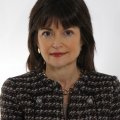
Beatriz Pérez de las Heras
EuroBasque, Vocal de la Junta Directiva
Professor of European Union Law and Jean Monnet Chair on European Integration at the University of Deusto (UD). PhD in Law (UD), she accomplished post-graduate studies at the Centre Européen Universitaire de Nancy (France), where she obtained the DESS and DEA en Droit Communautaire. She was Director of the European Studies Institute at UD from 1996 to 2009 and also served as Vice-Dean for Research and International Relations at Deusto Faculty of Law from 2013 to 2015. She has been a visiting scholar at the Universities of Oregon (2009), Georgetown (2012), Fordham (2013), Boston College (2014), Florida International University (2016) and Canterbury, (New Zealand, 2023). She is currently Editor-in- Chief of Cuadernos Europeos de Deusto Journal (SCOPUS-indexed ) and Main Researcher of the “Integración Europea y Derecho Patrimonial” research team. She is author of several books on European legal issues.

Igor Filibi López
Eurobasque, Secretario General
(Bilbao, 1971) se licenció en Ciencia Política y de la Administración (1995) y en Sociología Política (1997). Su formación de postgrado incluye diplomas en integración europea (1996) y en Derecho Constitucional y Ciencia Política (Madrid, Centro de Estudios Constitucionales, 1997). Cursó el programa de doctorado del Departamento de Derecho Internacional Público y Relaciones Internacionales (avalado con la mención de calidad del Ministerio de Educación) y defendió su Tesis en 2004, obteniendo la máxima calificación (sobresaliente cum laude por unanimidad). El tema de tesis consistía en explorar la influencia del proceso de integración política sobre los conflictos de las naciones sin Estado. A continuación trabajó en el proyecto europeo EUROREG (financiado por la Comisión Europea; contrato FP6 506019) entre septiembre de 2004 y agosto de 2007. Actualmente trabaja como profesor en el Departamento de Relaciones Internacionales de la Universidad del País Vasco.
Speakers
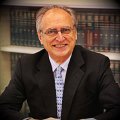
Francisco Aldecoa Luzárraga
Asoc. Cul. EUROCAMPUS
President of the Spanish Federal Council of the European Movement, belonging to it since the 1970s; In addition, he has been a member of the Conference on the Future of Europe, attending its seven plenary sessions between 2021-2022. He was previously Secretary General of the Basque Council of the European Movement 1994-2002, Jean Monnet Professor of the European Union, Professor of International Relations at the Complutense University of Madrid (UCM) since 2000 and previously at the UPV-EU since 1990 at the who was Vice Chancellor and Acting Chancellor. At UCM he has been Dean of the Faculty of Political Science and Sociology from 2002 to 2010 and has also been President of the Spanish Association of Professors of International Law and International Relations (2006-2010). He has been Director of the UCM Management Center (2011-2015).

Xabier Arruti Olazabal
Gipuzkoako Foru Aldundia
Diputado de Equilibrio Territorial Verde en la Diputación Foral de Gipuzkoa.

Carmelo Barrio Baroja
Eusko Legebiltzarra
En la actualidad Diputado por Álava en el Congreso de los Diputados. Partido Popular. Formación académica: Licenciado en Derecho por la Universidad del País Vasco/EHU. Curso Superior de Derecho y Economía de la Cooperativas UPV/EHU Gezki. Curso Escuela de Práctica Jurídica Colegio de Abogados de Álava. Trayectoria institucional: Diputado en el Congreso 2024 Parlamentario Vasco por Álava 1990-2024 Miembro de las Juntas Generales de Álava 1987-1990 Concejal Ayuntamiento de Zambrana (2003-2007) y Peñacerrada (2011-2015).
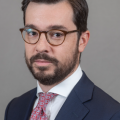
Ander Caballero
Boston. MA based international consultant at NEBEN Consulting and has more than 15 years of international experience working in corporate operations, public affairs, and diplomacy, in business and government. Formerly a biotech executive in the Middle East and North America, he has served as delegate of the Basque country to the United States as the appointed representative of the Basque government. His experience includes working in international business development for Mondragon Corporation’s Fagor and founding Diversity4Equality and the Idaho Basque Challenge, two social impact startup accelerator programs focused on intercultural sustainable entrepreneurship and diasporas, that span off from Mondragon University’s Mondragon Team Academy. Ander is currently the president of the New England Basque Club, and serves in the board of advisors of the Agirre Lehendakaria Center and Deusto University’s master in international relations and business diplomacy where he is also a lecturer.

Sergio Caballero Santos
He received his Ph.D. in International Relations in 2012 from the Autonomous University of Madrid (UAM) with the distinction of summa cum laude, and holds bachelor’s degrees in both Law (2002) and Political Science and Public Administration (2004), also from the UAM. He has been a tenured professor at the University of Deusto since 2016, where he has served as associate dean and principal investigator of the research team. He is currently the director of the Master’s Program in International Relations and Business Diplomacy, as well as the director of the UNESCO Chair for Latin America at the University of Deusto. His main areas of research include Latin American regional integration and Brazilian foreign policy, as well as theoretical debates on international relations and EU-Latin American relations. Publications can be found at https://www.researchgate.net/profile/Sergio-Caballero-3 and https://deusto.academia.edu/SergioCaballero

Valeria España Gómez
Abogada por la Universidad Nacional Autónoma de México (UNAM), Doctora en Derecho y Ciencias Sociales con título habilitante por la Universidad de la República (UdelaR), y Magíster en Derechos Humanos y Políticas Públicas por la Universidad Nacional de Lanús (Argentina), donde también es doctoranda. Es docente e investigadora en la Facultad de Información y Comunicación (UdelaR) e integra equipos de investigación sobre desigualdades sociales, situación de calle y justicia espacial. Actualmente es Directora de la División de Protección Social de personas migrantes, solicitantes de asilo y refugiadas del Ministerio de Desarrollo Social (Uruguay). Ha sido consultora de organismos internacionales como la OIT y la OIM, y del Instituto de Políticas Públicas y Derechos Humanos del Mercosur. Desde 2012 es columnista en La Diaria y cuenta con amplia trayectoria en la defensa y promoción de derechos humanos en distintos espacios académicos, institucionales y de incidencia.
Igor Filibi López
Eurobasque, Secretario General
(Bilbao, 1971) se licenció en Ciencia Política y de la Administración (1995) y en Sociología Política (1997). Su formación de postgrado incluye diplomas en integración europea (1996) y en Derecho Constitucional y Ciencia Política (Madrid, Centro de Estudios Constitucionales, 1997). Cursó el programa de doctorado del Departamento de Derecho Internacional Público y Relaciones Internacionales (avalado con la mención de calidad del Ministerio de Educación) y defendió su Tesis en 2004, obteniendo la máxima calificación (sobresaliente cum laude por unanimidad). El tema de tesis consistía en explorar la influencia del proceso de integración política sobre los conflictos de las naciones sin Estado. A continuación trabajó en el proyecto europeo EUROREG (financiado por la Comisión Europea; contrato FP6 506019) entre septiembre de 2004 y agosto de 2007. Actualmente trabaja como profesor en el Departamento de Relaciones Internacionales de la Universidad del País Vasco.
Brian Glynn
Arantza Gómez Arana
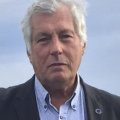
Angel Landabaso Alvarez
CE
Ángel Landabaso es un veterano funcionario europeo con más de dos décadas de trayectoria trabajando como consejero para la Comisión Europea. Vinculado estrechamente al ámbito diplomático y de instituciones vascas, también ha ejercido como representante oficial en el exterior, destacando su labor como presidente de la Casa Vasca en Brasilia.Su perfil profesional y actividades institucionales se estructuran de la siguiente forma:Perfil Institucional y CarreraÁmbito Europeo: Ha desarrollado gran parte de su carrera profesional como alto funcionario y consejero (counsellor) dentro de la Comisión Europea, impulsando proyectos de construcción europea y diálogo multilateral.Presidencia Internacional: Ejerce como presidente de la Eusko Brasildar Etxea (Centro Vasco de Brasilia) en Brasil.

Julen Martínez Arbulu
Lehendakaritza , Estudiante
Julen Martínez Arbulu (25/03/2002) holds a double degree in International Relations and Law from the University of Deusto (2025), completed with an exchange at Metropolitan University Prague (2023–2024) and now furthered through a master's at the University of the Basque Country (UPV/EHU). He interns at Lehendakaritza's General Secretariat for Foreign Action and Global Basque Affairs, working on the Basque diaspora, EU institutional participation, and the Government's external relations.An international analyst for Radio Vitoria (EITB), he regularly contextualizes international affairs — European politics, Middle East conflicts, and other issues — from a legal, historical, and geopolitical angle. Since 2022 he has collaborated with EuroBasque (Basque Council of the European Movement), taking part in awareness campaigns on European politics and representing it at federalist youth events. He has also interned at the Spanish Embassy in Tel Aviv's political section and served as academic director of a Model EU simulation (MEU Basque Country). Native in Spanish and Basque, he has professional proficiency in Italian, English, and French, plus basic Arabic.

María Oianguren Idigoras
Gernika Gogoratuz
Licenciada en Filosofía y Ciencias de la Educación (UPV/EHU). Máster de Ética para la Construcción Social por la Universidad de Deusto. Directora de Gernika Gogoratuz. Centro de Investigación por la Paz. Miembro de la Junta directiva de Aipaz. Asociación Española de Investigación por la Paz. Vocal en Eurobasque. Consejo Vasco del Movimiento Europeo y del Consejo Consultivo del Patronato de la Reserva de la Biosfera de Urdaibai y del Consejo de Cooperación del Patronato de la Reserva de Urdaibai Miembro del Comité de Selección del Programa del Protección Temporal de Defensores y Defensoras de Derechos Humanos del Gobierno Vasco. Presidenta del Consejo Consultivo de Conviencia y Derechos Humanos del Gobierno Vasco (2018-2020)
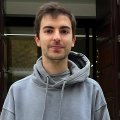
Jon Ortega Andrío
Graduado en Relaciones Internacionales y Derecho por la Universidad de Deusto (2020–2025). En la actualidad, cursa el MSc in Global Development en SOAS University of London. Su formación se ha completado con estancias internacionales, como la Academia de Derecho Internacional de La Haya (2024). Está especializado en estudios de desarrollo y derechos humanos, con especial interés en la intersección entre ambas disciplinas y aportando una mirada entre lo global y lo local.
Beatriz Pérez de las Heras
EuroBasque, Vocal de la Junta Directiva
Professor of European Union Law and Jean Monnet Chair on European Integration at the University of Deusto (UD). PhD in Law (UD), she accomplished post-graduate studies at the Centre Européen Universitaire de Nancy (France), where she obtained the DESS and DEA en Droit Communautaire. She was Director of the European Studies Institute at UD from 1996 to 2009 and also served as Vice-Dean for Research and International Relations at Deusto Faculty of Law from 2013 to 2015. She has been a visiting scholar at the Universities of Oregon (2009), Georgetown (2012), Fordham (2013), Boston College (2014), Florida International University (2016) and Canterbury, (New Zealand, 2023). She is currently Editor-in- Chief of Cuadernos Europeos de Deusto Journal (SCOPUS-indexed ) and Main Researcher of the “Integración Europea y Derecho Patrimonial” research team. She is author of several books on European legal issues.
Ernest Reig Martínez
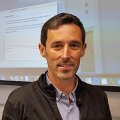
Mikel Reparaz Extramiana
Informativos Internacional ETB, Director
Mikel Reparaz es jefe de internacional en los informativos de ETB. Periodista especializado en información internacional. Además de corresponsal en Bruselas, ha sido enviado especial a elecciones, conflictos y procesos de paz en cuatro continentes. Su último destino internacional fue Estados Unidos, donde recorrió cada uno de los estados, y recientemente ha publicado el libro Las grietas de América.
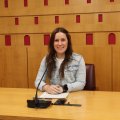
Aitziber Salazar Arresti
She holds a BA in Political Science from the University of the Basque Country, an MA in Peace and Conflict Research from Uppsala University (Sweden) and a postgraduate degree in International Election Observation and Electoral Analysis from EHU. She studied at the University of Ljubljana. Since the 2023 local elections, she has been a councillor at Vitoria-Gasteiz City Council and, since 2025, Vice-President of EuroBasque. Throughout her career, she has worked in the environment, energy transition, industry, economic development, commerce, tourism, mobility and international politics. In the public sector, she worked as an Immigration and Cultural Diversity officer at Eibar City Council and in several departments of Vitoria-Gasteiz City Council. In the private sector, she worked in Madrid as a public affairs and strategic communications consultant. She has international experience: she worked at UNLIREC, the UN Regional Centre for Peace, Disarmament and Development in Latin America and the Caribbean, in Lima, Peru; and in Singapore, at Spain’s Economic and Commercial Office and the EU Delegation. She also worked as an adviser in the European Parliament. She speaks Basque, Spanish, English, French and Russian.
José Antonio Sanahuja

Bakartxo Tejería Otermin
EUSKO LEGEBILTZARRA
Bakartxo Tejeria Otermin es presidenta de la XIII Legislatura del Parlamento Vasco, después de ser elegida en la sesión constitutiva celebrada el día 14 de mayo de 2024. También fue presidenta en las legislaturas XII (elegida en sesión de 3 de agosto de 2020), XI Legislatura (pleno de 21 de octubre de 2016) y en la X Legislatura (elegida en la sesión de 20 de noviembre de 2012). Nació en Donostia, el 28 de marzo de 1971. Vivió su infancia y juventud en Villabona; en la actualidad, reside en Donostia. Está casada y tiene cuatro hijos. Estudios: Licenciada en Derecho por la EHU-UPV. Trayectoria profesional: Ha ejercido como abogada y ha sido juez de paz. Idiomas: Euskera, castellano e inglés. Cargos públicos: Concejala de Villabona de 1999 a 2003 y de 2007 a 2011. Alcaldesa de Villabona desde 2003 hasta el año 2007. Parlamentaria vasca desde 2001.

Irune Zuluaga Zamalloa
Parlamentaria vasca, Presidenta de EuroBasque
Irune Zuluaga es presidenta de EuroBasque, una entidad con más de 70 años de trayectoria en el proyecto de construcción europeo. Licenciada en Psicología por la Universidad de Deusto, es parlamentaria en el Parlamento Vasco desde 2020 (XII Legislatura). Ha sido directora de la Fundación Sabino Arana durante más de 20 años (1999-2020) y representante del Parlamento en el Consejo Vasco de la Cultura en las Legislaturas VIII-XI (2007-2017). También ha sido miembro del Consejo Asesor de BizkaiKOA (2014-2015) y del Patronato de la Fundación Kutxabank (2012-2014). Fundó y regentó la librería Campoy (1986-2004).
Registration fees
| Face-to-face | Until 29-06-2026 |
|---|---|
| 87,00 EUR | |
| 74,00 EUR | |
| 61,00 EUR | |
| 25,00 EUR | |
| 74,00 EUR | |
| 74,00 EUR |
Venue
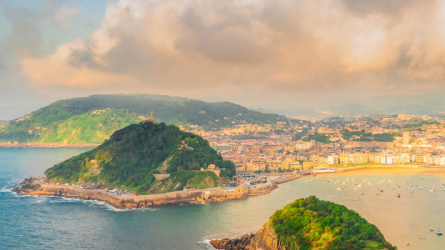
Miramar Palace
Pº de Miraconcha nº 48. Donostia / San Sebastián
Gipuzkoa
Miramar Palace
Pº de Miraconcha nº 48. Donostia / San Sebastián
Gipuzkoa
Sustainable development goals
Agenda 2030 is the new international development agenda approved in September 2015 by the United Nations. This agenda aims to be an instrument to favour sustainable human development all over the planet, and its main pillars are the eradication of poverty, a reduction in equality and vulnerability and fostering sustainability. It is a unique opportunity to transform the world up to 2030 and guarantee human rights for all.
16 - Peace, justice and strong institutions
Foster peaceful and inclusive societies for sustainable development, facilitate access to justice for everyone and construct efficient and inclusive institutions that are accountable at all levels. Key issues: a reduction in violence, mistreatment and exploitation, the rule of law, equal access to justice, a reduction in corruption and bribery, efficient and transparent institutions, participation, access to information, protection of fundamental freedoms.
More information
Other courses that might be of your interest...

-

Face-to-face

-
Face-to-face
-
Face-to-face

-
Face-to-face

-
Face-to-face