

Cómo poner en marcha una educación ecosocial-CANCELADO
Main lessons learned, methodological approaches and ways of evaluating ecosocial education in formal and non-formal education.
Description
The learning sequence will begin by identifying the main ecosocial challenges that education must address and the alternatives that educational spaces can offer. It will then examine the key elements of an ecosocial curriculum: learning objectives, content, methodology, and assessment.
The Summer Course will conclude with the presentation and discussion of various inspiring experiences.
Objectives
Manage the keys to carry out an ecosocial education in formal and non-formal education.
Identify the main environmental and social challenges to which ecosocial education responds.
Identify characteristics of fair, sustainable and democratic societies to develop within ecosocial education.
Select the main ecosocial learnings to be acquired by our students.
Manage methodologies according to the ecosocial approach.
Evaluate learning from an ecosocial perspective.
Activity directed to
- University student
- Teachers
- Teacher of formal and non-formal education
Methodology
The course will have round tables and exhibitions, but at all times they will be accompanied by a collective construction of knowledge through active methodologies by the students. The method proposed as functional to ecosocial education will be implemented, so different structures of cooperative learning will be used on an ongoing basis.
In collaboration with
Program
06-07-2026
Acreditación
Presentation by the Director of the activity
Language: Spanish
- Luis Gonzalez Reyes | FUHEM - Responsable de Educación Ecosocial
Round table: “Los retos de la educación ecosocial“
Language: Spanish
- Luis Gonzalez Reyes | FUHEM - Responsable de Educación Ecosocial (Moderator)
- Iñaki Barcena Hinojal | UPV/EHU - Profesor Pleno
- Yayo Herrero López | Garúa - Socia cooperativista
“Nueva Cultura de la Tierra“
Language: Spanish
- Charo Morán Cuadrado | FUHEM - Departamento Educación Ecosocial
Break
Participative dynamics: “Aprendizajes ecosociales y formas de adquirirlos“
Language: Spanish
- Luis Gonzalez Reyes | FUHEM - Responsable de Educación Ecosocial (Dinamizator)
07-07-2026
Participative dynamics: “Metodologías ecosociales“
Language: Spanish
- Paula Martín-Lunas Villoria | FUHEM - Educación Ecosocial (Dinamizator)
Participative dynamics: “Evaluación ecosocial“
Language: Spanish
- Luis Gonzalez Reyes | FUHEM - Responsable de Educación Ecosocial (Dinamizator)
Break
Round table: “Experiencias inspiradoras“
Language: Spanish
- Luis Gonzalez Reyes | FUHEM - Responsable de Educación Ecosocial (Moderator)
- Jose Manuel Gutierrez Bastida | Miembro de Hezekos, comunidad de prácticas en educación ecosocial de Euskal Herria. - Especialista Universitario en Educación Ambiental
- Gema Celorio Díaz | Instituto Hegoa EHU - Técnica de Educación.
Closing session
Language: Spanish
- Luis Gonzalez Reyes | FUHEM - Responsable de Educación Ecosocial
Directors
Luis Gonzalez Reyes
FUHEM
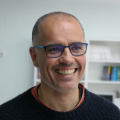
Head of ecosocial education at FUHEM and member of the Garúa cooperative. She combines her professional career focused on ecosocial transitions, with environmental activism and participation in social and solidarity economy projects related to housing, food and parenting. He is co-author or author of about thirty books, among which is "Educating with an ecosocial approach". Doctor of Chemical Sciences.
Speakers
Iñaki Barcena Hinojal
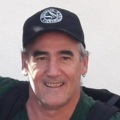
Degree in Law (1980) and PhD in Social and Political Sciences (1990) and Full Professor (2102) at the University of the Basque Country. Visiting researcher-professor at the University of Bradford (1986), Hamburg Universität (1996), Nevada University (1999). He is a member of EKOPOL and Ekologistak Martxan
Gema Celorio Díaz
Hegoa, Técnica de Educación
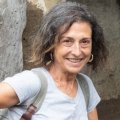
Graduated in Geography and History from the University of Cantabria. She completed the doctoral program in psychodidactics at the UPV/EHU. Hegoa’s Education Technique. It has carried out research and drafted opinions on education for social transformation. It has also provided advice to various institutions on master plans and programmes of a pedagogical nature. She is a lecturer in the Master's Degree in Development and International Cooperation (UPV/EHU) and in the Master's Degree in International Cooperation and Emancipatory Education (UPV/EHU). With the Hegoa Education team, she has organized several Conferences on Education for Social Change. It develops pedagogical programs to facilitate the incorporation of Critical Education and Feminist Food Sovereignty approaches in the different stages of formal education.
Luis Gonzalez Reyes
FUHEM
Head of ecosocial education at FUHEM and member of the Garúa cooperative. She combines her professional career focused on ecosocial transitions, with environmental activism and participation in social and solidarity economy projects related to housing, food and parenting. He is co-author or author of about thirty books, among which is "Educating with an ecosocial approach". Doctor of Chemical Sciences.
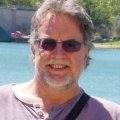
Jose Manuel Gutierrez Bastida
Maestro jubilado. Coordinador de Hezekos. Especialista Universitario en EA por la UNED. Master en EA por el Instituto de Investigaciones Ecológicas. Mención especial en el 1º Premi Francesc Xavier Gil (ICE de la Universidad de Barcelona). Experiencia laboral en varias escuelas e institutos. Once años en el Centro de Experimentación Escolar de Pedernales, ocho como Director Pedagógico. Ahora, en Ingurugela (Servicio de Educación Ambiental del Gobierno Vasco) desarrollando formación docente, asesoría e investigación. Más de 50 publicaciones (artículos, ponencias, libros, etc.) sobre constructivismo, evaluación, autorregulación de los aprendizajes, procesos de EA, educación ecosocial… Investigaciones actuales: “Currrículo de emergencia climática y competencia ecosocial”, “Evaluación y participación en ESenRED (red de redes de escuelas hacia la sostenibilidad”, “La Conferencia de Jóvenes Cuidemos el Planeta: su aportación al desarrollo competencial y en sostenibilidad del alumnado”…
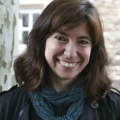
Yayo Herrero López
Consultant, researcher and teacher in the fields of political ecology, ecofeminisms and education for the sustainability of life. She holds a PhD in Social Sciences and Politics, is a Social and Cultural Anthropologist, Social Educator and Agricultural Engineer. She is a member-worker of Garúa Sociedad Cooperativa and participates in the environmental movement.

Paula Martín-Lunas Villoria
Primary teacher, teacher trainer and co-author of school materials. He is currently part of the ecosocial education team at FUHEM. He studied the Bachelor’s Degree in Food Science and Technology at the Complutense University of Madrid, with a Certificate of Pedagogical Aptitude, and the Diploma of Special Education Teaching at the Autonomous University of Madrid. For more than fourteen years he has worked as a teacher in primary and secondary education, both in ordinary contexts and in special education, with special dedication to attention to diversity and inclusion. He has been a member of the INIDE Team for ten years, promoting teacher training for the promotion of cooperative learning in classrooms. It is currently promoting projects, materials and advice to centres to strengthen education with an eco-social focus.
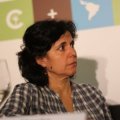
Charo Morán Cuadrado
FUHEM , Formadora
She has a degree in Biological Sciences, with a career focused on ecology, environmental management, ecological education and long-term training. She works in the Department of Ecosocial Education of FUHEM and in the Garúa cooperative. It is part of the solidarity economy in different projects, as well as in neighborhood spaces. She works for Ecologists in Action, especially on issues of ecological education and consumption.
Registration fees
| Face-to-face | Until 06-07-2026 |
|---|---|
| 87,00 EUR | |
| 74,00 EUR | |
| 61,00 EUR | |
| 25,00 EUR | |
| 74,00 EUR | |
| 74,00 EUR |
| Live online | Until 06-07-2026 |
|---|---|
| 87,00 EUR | |
| 74,00 EUR | |
| 61,00 EUR | |
| 25,00 EUR | |
| 74,00 EUR | |
| 74,00 EUR |
Venue
Bizkaia Aretoa-EHU
Avenida Abandoibarra, 3. 48009 Bilbao
Bizkaia
Bizkaia Aretoa-EHU
Avenida Abandoibarra, 3. 48009 Bilbao
Bizkaia
Sustainable development goals
Agenda 2030 is the new international development agenda approved in September 2015 by the United Nations. This agenda aims to be an instrument to favour sustainable human development all over the planet, and its main pillars are the eradication of poverty, a reduction in equality and vulnerability and fostering sustainability. It is a unique opportunity to transform the world up to 2030 and guarantee human rights for all.
4 - Quality education
Guarantee quality education that is inclusive and equitable and foster opportunities for lifelong learning for everyone. Key issues: free-of-charge, equitable and quality education, access to higher education and training on an equal basis, education for sustainable development, suitable education centres for persons with disabilities, and safe, non-violent and efficient learning environments.
More information
Other courses that might be of your interest...
-

Streaming
-

Face-to-face

-
Face-to-face
-
Face-to-face
-

Online
-
Streaming
-
Face-to-face

-
Face-to-face