

From evidence to clinical practice: the implementation science
Description
This Summer Course offers a comprehensive and applied introduction to implementation science, a discipline aimed at facilitating the effective and sustainable integration of evidence-based interventions into health systems. Over the course of an intensive day, the course combines conceptual sessions taught by experts in the field—focusing on theoretical foundations, the role of context, outcome measurement, and the incorporation of equity—with the presentation of three real-life implementation experiences from the Basque Health System and the international arena.
The course takes a practical, decision-making approach. Participants will be able to understand the key elements that influence the success or failure of implementation processes, learn about tools for evaluating and adapting interventions, and reflect on how to transfer these learnings to their own professional environments. The format encourages interaction, exchange between diverse profiles, and the construction of an integrated vision of implementation as a bridge between scientific evidence and healthcare practice.
The course combines:
- Short lectures, supported by clear presentations and conceptual rigour.
- Practical examples illustrating the use of strategies, frameworks and tools.
- Dialogue and interaction, promoting collective reflection on real implementation challenges.
- A multisectoral and interdisciplinary perspective, integrating clinical profiles, managers, researchers and professionals in the field of quality and innovation.
The course is designed to maximise practical applicability in a concentrated format.
Objectives
Introduce the fundamental of the science of implementation through a keynote lecture that addresses its importance in bridging the gap between evidence and practice, and its current position as a key discipline for strengthening health systems. This session will provide an understanding of its scientific maturity, growing international recognition, and relevance in promoting sustainable, evidence-based interventions.
Analyse the importance of context as a key determinant of implementation, exploring how organisational, cultural, professional and structural factors influence the adoption, adaptation and sustainability of interventions. At the same time, acquire tools to identify key agents, promote their involvement and form effective implementation teams.
Learn about the fundamental approaches to evaluating implementation, identifying the types of results, dimensions and elements to consider when assessing the progress, quality and impact of implementation processes. Aimed at understanding the usefulness of evaluation in guiding decisions, improving processes and promoting sustainability, without focusing on a specific framework or metric.
Embed equity, diversity, and inclusion as fundamental dimensions in implementation processes, understanding how cultural adaptation, identification of specific barriers, and measurement of differential impact can prevent the reproduction of inequalities and maximise the reach of interventions.
Learn through real-life implementation experiences, in the Basque Health System and also international, identifying barriers, facilitators, key learnings and results that enable understanding of the practical application of the concepts presented before.
Promote interaction and exchange between professionals from different backgrounds through structured discussion forums that encourage knowledge transfer, shared reflection, and capacity building around the implementation of evidence-based interventions.
Activity directed to
- University student
- Teachers
- Professionals
- -Profesionales clínicos y no clínicos -Perfiles gestores del ámbito sanitario - Personal de unidades de calidad – innovación -Estudiantes de doctorado
Organised by
In collaboration with

Program
24-06-2026
Registro
Presentation by the Director of the activity
Language: Spanish
- Dolores Verdoy Berastegui | Instituto de investigación en sistemas de salud Biosistemak
“An Introduction to Implementation Science and its relevance to health and social care practice“
Language: English
- Leah Buhrmann | Northumbria University Newcastle - Lecturer in Implementation Science
“Complex interventions and contextual adaptation: why they matter and how to approach them“
Language: English
- Heather Lynn Rogers Moore | 1-European Implementation Collaborative; 2-Biobizkaia Health Research Institute & Basque Foundation for Science - 1-Chair; 2-Ikerbasque Associate Professor
“Learning Through Evaluation: an introduction to outcomes and implementation processes“
Language: English
- Hilde Bastiaens | Faculty of Medicine and Health Sciences at the University of Antwerp - Head of department Family and Interdisciplinary care
Coffee break
“Leaving no one behind: equity as a key aspect of implementation“
Language: English
- Laura Musta | Finnish Institute for Health and Welfare (THL) - Development manager and doctoral researcher
Round table: “Experiencias de implementación en Osakidetza y otros sistemas de salud europeos - Implementation experiences at Osakidetza and other European health systems “
Language: English
- Yhasmine Hamu Azcarate | Instituto de investigación en sistemas de salud Biosistemak (Moderator)
- Joseba Igor Zabala Rementeria | Basque Healthcare Service Provider Osakidetza - Coordinator of the Care Integration and Chronicity Service (SIAC)
- Alvaro Sanchez Pérez | 1-Unidad de Investigación Atención Primaria de Bizkaia, Subdirección para la Coordinación de la Atención Primaria, Dirección General Osakidetza 2-Grupo de Investigación en Ciencias de la Diseminación e Implementación en Servicios Sanitarios Instituto In - 1-Técnico Responsable Area Corporativa; 2-Coordinador Área de Investigación en Atención Primaria en Salud, Prevención, Enfermedades Crónicas y Envejecimiento
- Sónia Dias | National School of Public Health, NOVA Universidade Lisboa - Dean & Full Professor
Synthesis
Directors

Ane Fullaondo Zabala
Instituto Biosistemak, Directora
Scientific Director of the Biosistemak Institute. Holding a doctorate in Molecular Biology and Genetics, she combines a strong scientific background with over a decade of experience in strategic leadership, R&D&I management and the deployment of European initiatives in digital health, integrated care and value-based medicine. Her career integrates science, management and organisational transformation, with a focus on data governance, health outcomes evaluation and innovation scaling. She has executive training in leadership and strategic management of scientific entities, digital health, advanced epidemiology and the application of Big Data and AI in biomedical research.
Speakers

Hilde Bastiaens
Full professor at the Faculty of Medicine and Health Sciences of the University of Antwerp. She is Head of the FAMPOP (Family Medicine and Population health) department, spokesperson of the research group ELIZA (Primary and Interdisciplinary care) and co-chair of the University Centre of Qualitative Health Research Antwerp. Her research is oriented towards implementation of evidence based interventions in primary care both in HIC (High Income countries) and LMIC (Low and Middle Income Countries) focusing on prevention of chronic diseases and healthy lifestyle, person-centered care. The past few years, here research interest also comprises community health and equitable and inclusive care and research. She coordinated a Horizon 2020 project on implementing and evaluating a comprehensive cardiovascular disease (CVD) prevention and care program at the community level in five countries. Currently she is involved in two European implementation projects, one focusing on stimulating inhabitants to being physically active in a city context and another looking into the implementation of a new program for the treatment of severe malaria in young children in Congo and Zambia. Besides being an academic, she works as a ge

Leah Buhrmann
Lecturer in Implementation Science and co-lead of the Innovation and Implementation Research (IIR) group at Northumbria University, UK. Her research focuses on how scientific findings can be effectively implemented within complex service systems, particularly at the interface between health and social care. Drawing on her background in psychology, she has a particular interest in improving the implementation of preventive interventions in mental health, taking a broad perspective that includes social determinants of health. Her doctoral research examined the implementation of social prescribing in the North East of England, exploring how innovative models of care can be successfully introduced and sustainably embedded within integrated health and social care systems. Through the IIR group, Leah works with colleagues to make implementation science methods accessible and useful for healthcare practitioners, including through the development of practical tools and resources ("building systems for experts"). She also supports the European Implementation Collaborative (EIC) in the role of Chief Operating Officer since 2019 and has been part of the organising committee for the European Implementation Events.

Sónia Dias
Sónia Dias is the Dean and Full Professor at National School of Public Health, NOVA University Lisbon. She has a PhD in International Health. She is a public health specialist and social scientist, with 20 years of experience in health promotion and disease prevention, behavioural and social sciences, implementation science, stakeholder engagement, health literacy and knowledge translation. She has extensive experience in Public Health research projects in Europe and Portuguese-speaking African countries, driven to address health inequalities, with a focus on supporting the design, implementation and evaluation of complex interventions and health policies, employing participatory health research and mixed-methods approaches. Currently, she is the President of the Section on Migrant and Ethnic Minority Health - European Public Health Association (EUPHA) and Co-Chair of the International Social Prescribing Collaborative. She is highly engaged in several scientific networks and has acted as a consultant for several international organizations. Prof. Sónia has authored more than 150 scientific publications.

Yhasmine Hamu Azcarate

Laura Musta
Development Manager at the Finnish Institute for Health and Welfare (THL) and a doctoral researcher in social and public policy at the University of Eastern Finland. She holds a Master of Philosophy in Global Health and her research focuses on equity for linguistic and cultural minorities in crisis contexts. She has extensive experience in designing and implementing equity-oriented health interventions and in embedding diversity, equity and inclusion principles into large-scale programmes. In the EU Joint Action on Cardiovascular Diseases and Diabetes (JACARDI), she supports translating equity goals into practical implementation strategies across countries and settings. Her approach combines participatory methods, stakeholder engagement and research to ensure that interventions are inclusive, context-sensitive and sustainable, with a strong commitment to reducing health inequalities through effective implementation.
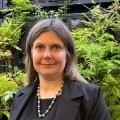
Heather Lynn Rogers Moore
Ikerbasque Associate Professor at Biobizkaia Health Research Institute in Basque Country, Spain. She is a member of the Research in sciences of dissemination and implementation in health services group within the Primary health care, prevention, and chronic disease research area. Her background is in behavioral sciences, medical psychology and public health. She has been conducting research in collaboration with primary care research practice networks and in primary care settings for almost 20 years. Her current work relates to strengthening the practice of family and community medicine within European health and social care systems. She is particularly interested in innovations in healthcare service delivery and leveraging methodologies from implementation science to advance sustainable changes with respect to health promotion, mental health, and person-centred care. She is currently chair of the European Implementation Collaborative (EIC) since 2023 and a Board Member since 2020. She is member of the Management Committee of the European Implementation Event, held bi-annually with the next gathering to take place on June 14-16, 2027 in Limerick, Ireland.
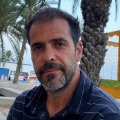
Alvaro Sanchez Pérez
Senior Researcher at the Bizkaia Primary Care Research Unit (UIAPB) within the Sub-Directorate for Primary Care Coordination of the Osakidetza General Directorate, and Coordinator of the Scientific Area for Primary Care, Health, Prevention, Chronic Diseases and Ageing at the Biobizkaia Institute. He holds a PhD in Psychology, an Advanced Diploma in Clinical Research Methodology, and a University Expert Diploma in Statistics and the Interpretation of Medical Studies. Throughout his research career, he has been the Principal Investigator (PI) on several projects funded by the Carlos III Health Institute and the Basque Government’s Department of Health, and a co-investigator on many other projects funded by the same institutions. Within the Biobizkaia Institute of Health Sciences (IIS Biobizkaia), he is the Principal Investigator of the Research Group on Dissemination and Implementation Sciences in Health Services, whose aim is to generate valid scientific knowledge to design, apply and evaluate implementation strategies, in order to transfer interventions of proven efficacy into routine clinical practice in a rapid, feasible, widespread and sustainable manner; and/or to promote the discontinuation of those of little or no value.

Dolores Verdoy Berastegui
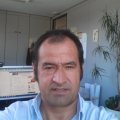
Joseba Igor Zabala Rementeria
Osakidetza
Since April 2015, he is the Head of the Integrated Care and Chronic Disease Service of the Healthcare Assistance Directorate of Osakidetza. From January/2013 to April/2015, he worked as a technician for the same service. From September 2010 to December 2012, he was a member of the Chronic Care Strategy Office at Osakidetza. From 1993 to 2010, he was the Continuing Education Manager for Osakidetza. Bachelor's degree in Psychology with a Master's degree in Human Resources from the University of the Basque Country. Diploma in Healthcare Management from EADA. He earned several diplomas related to the design, development, and evaluation of training programs, especially for clinicians and healthcare management professionals.
Registration fees
| Face-to-face | Until 24-06-2026 |
|---|---|
| 48,00 EUR | |
| 41,00 EUR | |
| 34,00 EUR | |
| 25,00 EUR | |
| 12,00 EUR |
| Live online | Until 24-06-2026 |
|---|---|
| 48,00 EUR | |
| 41,00 EUR | |
| 34,00 EUR | |
| 25,00 EUR | |
| 12,00 EUR |
Venue
Miramar Palace
Pº de Miraconcha nº 48. Donostia / San Sebastián
Gipuzkoa
Miramar Palace
Pº de Miraconcha nº 48. Donostia / San Sebastián
Gipuzkoa
Sustainable development goals
Agenda 2030 is the new international development agenda approved in September 2015 by the United Nations. This agenda aims to be an instrument to favour sustainable human development all over the planet, and its main pillars are the eradication of poverty, a reduction in equality and vulnerability and fostering sustainability. It is a unique opportunity to transform the world up to 2030 and guarantee human rights for all.
3 - Good health and well-being
Guarantee a healthy life and foster the well-being of all people of all ages. Key issues: universal healthcare coverage, sexual and reproductive health, reduction in the number of road accident casualties, pollution and chemical products, reduction in maternal and neonatal mortality, the end of epidemics such as AIDS, combating hepatitis and other water-borne diseases, drug and alcohol prevention, control of tobacco.
More information
10 - Reduced inequalities
Reduce inequality in countries and between them. Key issues: promotion of the social, economic and political inclusion of all people, equal opportunities, fiscal, wage and social protection policies to favour equality, migration and the policies that affect it, official assistance for the development, regulation and supervision of world institutions and markets.
More information
Other courses that might be of your interest...

-

Face-to-face

-
Face-to-face

-
Face-to-face