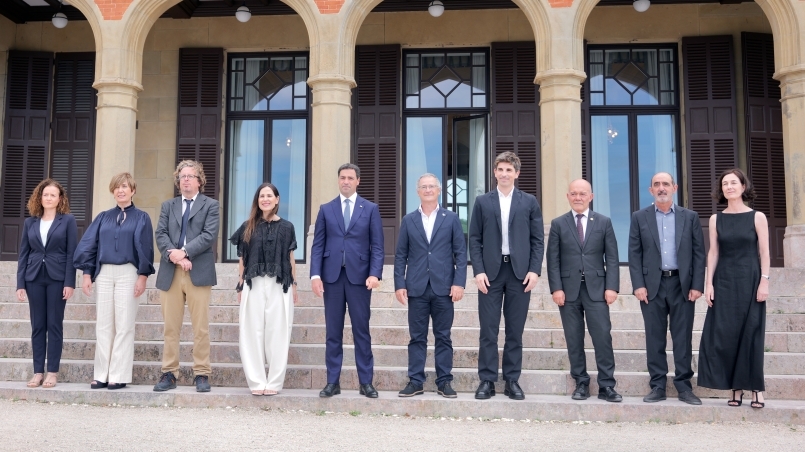
Universities across the Euroregion strengthen their partnership around the Cross-border Summer Courses
The agreement consolidates a project celebrating its fifth anniversary, making university cooperation, multilingualism and knowledge transfer a benchmark across the Euroregion

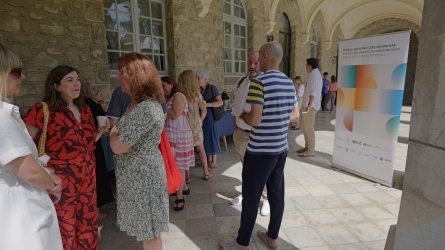
The Cité des Arts in Bayonne today hosted the signing of the Framework Agreement for Interuniversity Cooperation of the Cross-Border Summer Courses. The agreement formalises the commitment of the partner universities to a shared academic project which, five years after its creation, has established itself as a benchmark for university cooperation within the Euroregion.
The agreement has been signed by the University of the Basque Country (EHU), the Université de Pau et des Pays de l'Adour (UPPA), Université Bordeaux Montaigne (UBM), the Université de Bordeaux (UB) and the Public University of Navarre (UPNA), marking the opening of the fifth edition of the Cross-Border Summer Courses, taking place in Bayonne from 29 June to 3 July.
During the institutional opening ceremony, the Rector of the University of the Basque Country, Joxerramon Bengoetxea, stated that the agreement represents "a further step" in a partnership that has demonstrated over the past five years that borders can become spaces for cooperation and exchange. He also highlighted the role of public universities as institutions committed to social cohesion, sustainability and knowledge transfer, stressing that academic excellence must always go hand in hand with social responsibility.
He also recalled that the Cross-Border Summer Courses were created with the aim of connecting science, territory and society, and that, in just five years, they have become a leading forum within the Euroregion thanks to the joint efforts of universities and public institutions on both sides of the border. He also emphasised two defining features of the programme: the free access to all courses and the natural coexistence of Basque, French, Spanish and English as an expression of the region's cultural richness.
A project built on trust
Representatives of the partner universities shared a common message throughout their speeches: the signing of the agreement does not mark the beginning of a collaboration, but rather the consolidation of an alliance that has been built over the years through mutual trust, joint work and a shared vision of the university as a driver of territorial development.
The President of the Université de Pau et des Pays de l'Adour, Laurent Bordes, highlighted that the Cross-Border Summer Courses are a tangible example of the Europe of Universities, where academic cooperation brings direct benefits to students, citizens and territories alike. In his view, the experience gained over the past five years demonstrates that linguistic, cultural and institutional diversity is a strength rather than an obstacle to building common projects.
For his part, the Vice-President of the Université de Bordeaux, Dominique Rebière, underlined the role universities play in the economic and social development of their territories. He argued that cooperation between higher education institutions and socio-economic stakeholders is essential to addressing future challenges and stressed that initiatives such as the Cross-Border Summer Courses enable university knowledge to be transferred to society through collaborative projects.
The Vice-President for International Relations of Université Bordeaux Montaigne, Anne-Laure Metzger, reaffirmed multilingualism and interculturality as fundamental pillars of the project. She argued that the coexistence of Basque, French, Spanish and English not only reflects the reality of the Euroregion but also provides an essential framework for generating shared knowledge and fostering critical thinking through diversity.
Finally, the Vice-Rector for International Relations and Cooperation at the Public University of Navarre, Jorge Elso, stated that the agreement symbolises the maturity achieved through cooperation between universities operating under different systems, languages and regulatory frameworks. He also highlighted that the Cross-Border Summer Courses represent an innovative approach to university internationalisation by extending its benefits not only to the academic community but also to society as a whole.
Five years strengthening cross-border academic cooperation
The signing of the Framework Agreement coincides with the launch of the fifth edition of the Cross-Border Summer Courses, a programme promoted by universities and public institutions on both sides of the border that has become a recognised platform for knowledge exchange, dialogue and reflection on the shared challenges facing the Euroregion.
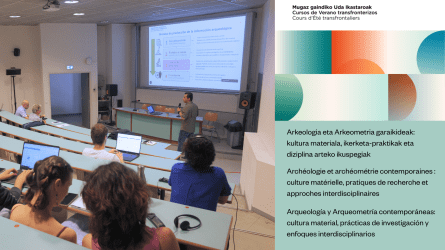
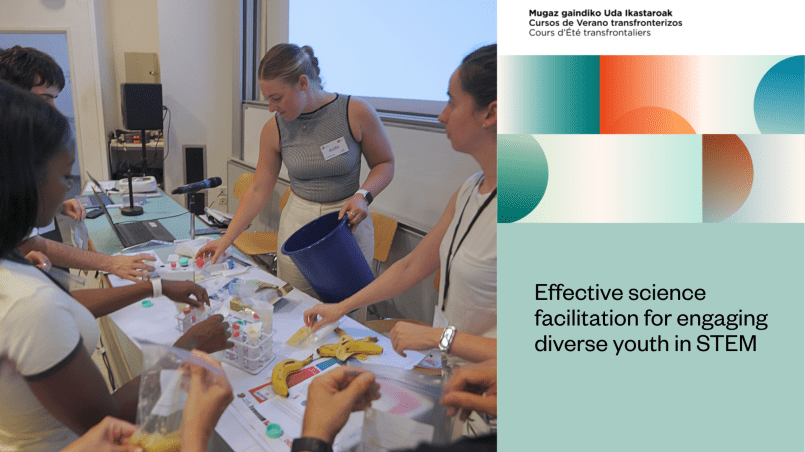
Until 3 July, the Cité des Arts in Bayonne is hosting eight courses addressing topics such as contemporary archaeology, migration, inclusive science communication, artificial intelligence for minority languages, Eurocity governance, language revitalisation, multilingual education and the cultural heritage of Basque pelota.
The programme continues to be built around four strategic pillars: cross-border cooperation, multilingualism, interdisciplinarity and the dissemination of knowledge to society. In addition, all activities are free of charge, ensuring open access to knowledge and strengthening the connection between universities and society.
By signing this Framework Agreement, the five partner universities renew their commitment to further developing an increasingly integrated, open and international cross-border university area, capable of jointly addressing the scientific, social and cultural challenges shared across the Euroregion.