

Communities of Practice. Intertwining People and Knowledge
Description
The Summer Courses offered by this community of practice combine innovative educational models with practice-based pedagogical approaches, integrating theory and direct experience. The aim is to offer participants a broad perspective on transformative educational practices, both conceptually and through the opportunity to experiment with them in practice.
On the first day, the course will introduce innovative approaches to education by presenting the conceptual framework and clearly situating their pedagogical foundations. Following this, through a guided demonstration of classroom practice, participants will have the opportunity to observe real-world practice and understand its theoretical-scientific basis and its practical application. The session will be complemented by practical workshops, where participants will collectively explore the applicability of these practices through experimentation, dialogue and reflection.
On the second day, the theoretical and operational approach of Communities of Practice will be addressed. After theorising the virtues of this training model, the foundations of community learning will be explained, and we will explore how a community functions, how it is organised, and what its pedagogical values are. Furthermore, through a practical example, participants will have the opportunity to familiarise themselves with the dynamics of community work, listen to the contributions of other professionals and identify the key takeaways for applying this to their own contexts.
The Summer Course, therefore, offers a rich space for discovering new pedagogical approaches, sharing effective practices and strengthening learning based on community collaboration. Participants will receive new perspectives, experiences and tools to foster transformative processes in their own practice.
Objectives
- To deepen the connections between innovative educational practices and their scientific foundations.
- To work on theory and real-life experiences in an integrated way, strengthening the ability to bring transformative perspectives into practice.
- To become familiar with the ecological and operational approach of Communities of Practice, understanding their foundations, structure, and functioning.
- To foster mutual reflection through practical examples, promoting co-learning.
- To strengthen collaboration and shared learning among members of the educational community by creating spaces for dialogue and participatory dynamics, encouraging the sharing of experiences and the consolidation of community networks.
Activity directed to
- University student
- Teachers
- Professionals
Methodology
The Summer Course will follow an active and participatory working methodology, grounded in real-life practice, professional dialogue, and solid theoretical foundations. Over the two days, activities will be developed through a range of formats (lectures, dialogues between different voices, workshops, and the development of community practices), fostering the direct participation of students, teachers, and education professionals.
Organised by

In collaboration with

Program
01-07-2026
Registration
Institutional Opening session. Speaking order:
Language: Basque
- Maider Kortajarena Rubio | EHUko Uda Ikastaroen Idazkari Akademikoa
- Aitor Uriondo Usandizaga | Eusko Jaurlaritza - Ikaskuntza eta Berrikuntzako zuzendaria,
Agurra Irekiera (Harrera Instituzionala ICIVIC)
Presentation by the Director of the activity
Language: Basque
- Andoni Arguiñano Madrazo | EHU - Ikastaroko Zuzendaria
- Garazi Ormazabal Arizcorreta | EHU - Ikastaroko Zuzendaria
“ Los currículos flexibles que afloran en la educación. Proyectos completos interdisciplinares“
Language: Spanish
- Helena Forrellad Vives | UAB - Ponente
Break
“Gelako praktika errealei oinarri zientifikoa emanez. Teoria eta Praktika eskutik lotuak. Azalpenak“
Language: Basque
- Nekane Otsoa Abrisketa | Arrankudiagako eskolako Hhko irakaslea eta zuzendaria
- Xabier Villanueva Izaguirre | Muskizko eskola - Eskola Irakaslea
Participative dynamics: “Tailerra. Hezkuntza ereduan murgiltzen eta praktikak hausnartzen“
Language: Basque
- Andoni Arguiñano Madrazo | EHU - Ikastaroko Zuzendaria
Synthesis
02-07-2026
Presentation by the Director of the activity
Language: English
- Andoni Arguiñano Madrazo | EHU - Ikastaroko Zuzendaria
- Garazi Ormazabal Arizcorreta | EHU - Ikastaroko Zuzendaria
Agurra Irekiera (Harrea Instituzionala ICIVIC)
“Education as Autopoietic Ecology: Meaning, Resilience and Digital literacy for the Future of Democratic Educational Communities“
Language: English
Simultaneous translation: Basque
- Steve Watson | Faculty of Education at the University of Cambridge - Ponente
Break
“Hezkuntza ahalduntze laborategia. Praktika komunitate baten jardun erreala“
Language: Basque
- Garazi Ormazabal Arizcorreta | EHU - Ikastaroko Zuzendaria
- Ander Zubizarreta Zufiria
Participative dynamics: “Praktika komunitateak ezagutzen. Praktika komunitatean ahotsak batzen“
Language: Basque
- Maitane Belasko Txertudi | EHU
Synthesis
Closing session
Language: Basque
Praktika Komunitateen Laborategia: Eskolak eta Euskal Herriko Unibertsitatea ehunduz
- Inaki Karrera Xuarros | EHU - Ponente
Directors
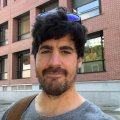
Andoni Arguiñano Madrazo
UPV/EHU
Andoni Arguiñano is an Associate Professor at the University of the Basque Country (UPV/EHU) where he teaches at the Faculty of Education, Philosophy and Anthropology in the Department of Didactics and School Organization. He is a member of the ALHE research group and one of the coordinators of the European project ICIVIC. He completed his doctoral dissertation at Antzuola Herri Eskola, and since then has been one of the key facilitators of the communities of practice with which the research group collaborates. His area of expertise focuses on pedagogical renewal, attention to diversity, and the role of teachers in educational transformation processes.

Garazi Ormazabal Arizcorreta
UPV/EHU
Garazi Ormazabal is a postdoctoral researcher at the UPV/EHU (University of the Basque Country), in the Faculty of Education, Philosophy and Anthropology, within the Department of Didactics and School Organization. In the field of research, she is a member of the ALHE research group, where she actively participates in various projects. Among these, I-CIVIC, an international project funded by the European Union, stands out. In the area of educational innovation, her doctoral thesis focuses on Eskola Txikiak (rural schools in the Basque Country) organized through workshops. Specifically, she has analyzed the pedagogical keys that enable children to be at the center of the learning process. Her lines of interest include innovative learning experiences, childhood culture and empowerment, and research conducted with children.
Speakers
Andoni Arguiñano Madrazo
UPV/EHU
Andoni Arguiñano is an Associate Professor at the University of the Basque Country (UPV/EHU) where he teaches at the Faculty of Education, Philosophy and Anthropology in the Department of Didactics and School Organization. He is a member of the ALHE research group and one of the coordinators of the European project ICIVIC. He completed his doctoral dissertation at Antzuola Herri Eskola, and since then has been one of the key facilitators of the communities of practice with which the research group collaborates. His area of expertise focuses on pedagogical renewal, attention to diversity, and the role of teachers in educational transformation processes.

Maitane Belasko Txertudi
UPV\EHU
2. Graduated in Early Childhood Education (2014) from the Universidad del País Vasco / Euskal Herriko Unibertsitatea, I completed a Master’s (2015) and a PhD (2023) with cum laude distinction and International and Basque mentions. My research focuses on 0–3 education, quality environments, and care practices. I have published in JCR journals, joined European projects and conferences, and completed an international stay. Since 2016, I have been a lecturer at UPV/EHU, collaborated with the Instituto Vasco de Administración Pública, and contributed to innovation and academic committees. Member of ALHE and the education laboratory

Helena Forrellad Vives
Helena Forrellad Vives is a Primary Education teacher, currently retired, with a solid career closely linked to the reflection on and transformation of educational practice. She is the coordinator and trainer of the seminar “The Mathematical Culture of People” (ICE UAB / FPCEEB at URL), a space from which she promotes a humanistic and cultural perspective on mathematics in education. During the 2004–2005 academic year, she was granted a study leave, within which she developed the work entitled “The Meaning of the Classroom as a Social Reality. The Role of Mathematical Practices in the Processes that Constitute It.” This research focused on understanding the classroom as a social space constructed through practices and interactions. She has served as a teacher educator in the Mathematics Reflective Practice Program of the Department of Education of the Generalitat de Catalunya, contributing to teachers’ professional development from a critical and reflective perspective. She has also published several articles in the field of qualitative research in education, particularly focused on teaching practice, pedagogical innovation, and reflection on teaching–learning processes.

Inaki Karrera Xuarros
Inaki Karrera is a senior lecturer at the University of the Basque Country (EHU), where he teaches at the Faculty of Education, Philosophy and Anthropology, within the Department of Teaching and School Organisation. He is the Principal Investigator of the Auzo Lana Hezkuntza (ALHE, 22/002) research group, as well as of the European research project ‘Innovating Civic Engagement: Pedagogies for a Resilient Generation’ and the Basque Government’s ‘Communities of Practice in Education’ project. He is one of the main driving forces behind the Communities of Practice with which the research group collaborates. His research focuses on democratic and participatory education, educational inclusion, digital inclusion, social inequalities and pedagogical renewal.
Garazi Ormazabal Arizcorreta
UPV/EHU
Garazi Ormazabal is a postdoctoral researcher at the UPV/EHU (University of the Basque Country), in the Faculty of Education, Philosophy and Anthropology, within the Department of Didactics and School Organization. In the field of research, she is a member of the ALHE research group, where she actively participates in various projects. Among these, I-CIVIC, an international project funded by the European Union, stands out. In the area of educational innovation, her doctoral thesis focuses on Eskola Txikiak (rural schools in the Basque Country) organized through workshops. Specifically, she has analyzed the pedagogical keys that enable children to be at the center of the learning process. Her lines of interest include innovative learning experiences, childhood culture and empowerment, and research conducted with children.
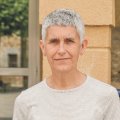
Nekane Otsoa Abrisketa
Early Childhood Education teacher and principal at the Arrankudiaga school. Coordinator of project-based methodology in the schools of Areatza, Zeberio, and Arrankudiaga, and co-founder of the education laboratory.
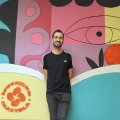
Xabier Villanueva Izaguirre
Xabier Villanueva Izaguirre is a sixth-grade Primary Education teacher at the public school Muskizko Ikastola, located in Muskiz (Bizkaia). He currently serves as coordinator of the school’s Digitalization Committee and STEAM Committee. He holds a degree in Primary Education from the University of the Basque Country (EHU/UPV) and a degree in Psychology from the National University of Distance Education (UNED), with a specialization in Educational Psychology and Special Educational Needs. He also holds a PhD in Psychodidactics from the University of the Basque Country (EHU/UPV). His doctoral thesis, entitled “Understanding the Plant World between the Ages of 4 and 8 through the Analysis of Children’s Drawings, Dilemma Resolution, and the Concept of Life,” focused on early scientific understanding. In this field, he has published several scientific articles on the didactics of experimental sciences and mathematics education.

Steve Watson
Steven Watson is Associate Professor of Transdisciplinary Studies in the Faculty of Education at the University of Cambridge and a Fellow of Wolfson College. His work sits at the intersection of systems theory, autopoiesis, cybernetics, and the societal integration of generative AI in education and knowledge work. He develops Autopoietic Ecology (AE) as a non-essentialist framework for understanding meaning-making, mediation, and institutional change under conditions of complexity. Steven’s research explores how disciplines, institutions, publics, and technologies translate—and often misrecognise—one another, and how more reflective, accountable forms of communication can be designed. Alongside theoretical development, he builds translational pathways through international research partnerships, cross-sector convening, and innovation initiatives. He is Founding Chair of the Cambridge Generative AI in Education Conference and has published widely on generative AI, education, and social systems theory in leading international journals. He has held visiting professorships in China and Croatia and currently contributes to EU-funded research on civic engagement and disinformation resilience.
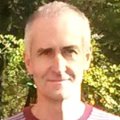
Ander Zubizarreta Zufiria
Ander is a teacher at Elgoibarko Herri Eskola EHE and has more than 30 years of experience in education. For 20 years he has worked with Project-Based Learning (PBL). Throughout his career he has mainly been a tutor for students aged 10–12. Although he has taught all subjects, he has especially focused on teaching mathematics and science. He is also one of the founders of Hezkuntza Laborategia, an initiative that promotes educational innovation and collaboration among teachers.
Registration fees
| Face-to-face | Until 11-04-2026 | Until 17-04-2026 | Until 01-07-2026 |
|---|---|---|---|
| 60,00 EUR | - | - | |
| - | 60,00 EUR | - | |
| - | - | 70,00 EUR | |
| - | - | 60,00 EUR | |
| - | - | 49,00 EUR | |
| - | - | 36,00 EUR | |
| - | - | 60,00 EUR | |
| - | - | 60,00 EUR |
| Live online | Until 11-04-2026 | Until 17-04-2026 | Until 01-07-2026 |
|---|---|---|---|
| - | - | 70,00 EUR | |
| - | - | 60,00 EUR | |
| - | - | 49,00 EUR | |
| - | - | 36,00 EUR | |
| - | - | 60,00 EUR | |
| - | - | 60,00 EUR | |
| - | - | 74,00 EUR | |
| - | - | 60,00 EUR |
Venue
Miramar Palace
Pº de Miraconcha nº 48. Donostia / San Sebastián
Gipuzkoa
Miramar Palace
Pº de Miraconcha nº 48. Donostia / San Sebastián
Gipuzkoa
Sustainable development goals
Agenda 2030 is the new international development agenda approved in September 2015 by the United Nations. This agenda aims to be an instrument to favour sustainable human development all over the planet, and its main pillars are the eradication of poverty, a reduction in equality and vulnerability and fostering sustainability. It is a unique opportunity to transform the world up to 2030 and guarantee human rights for all.
4 - Quality education
Guarantee quality education that is inclusive and equitable and foster opportunities for lifelong learning for everyone. Key issues: free-of-charge, equitable and quality education, access to higher education and training on an equal basis, education for sustainable development, suitable education centres for persons with disabilities, and safe, non-violent and efficient learning environments.
More information
Other courses that might be of your interest...
-

Face-to-face

-
Face-to-face

-

Streaming
-
Face-to-face
-
Face-to-face

-
Face-to-face