

Diagnóstico, tratamiento y manejo de las encefalopatías epilépticas y del desarrollo
Description
Las encefalopatías epilépticas y del desarrollo (EED) constituyen un grupo heterogéneo de trastornos neurológicos graves, generalmente de origen genético, caracterizados por la presencia de epilepsia y alteraciones del neurodesarrollo. En muchos casos, la actividad epileptiforme contribuye de manera significativa al deterioro cognitivo y conductual, aunque el déficit del desarrollo puede estar también directamente relacionado con la causa genética subyacente.
En los últimos años se han identificado más de un centenar de genes implicados en diferentes EED, siendo variantes en genes como SCN1A, SCN2A, STXBP1, CDKL5 o KCNQ2 algunas de las más frecuentes. Estas enfermedades, consideradas raras en su conjunto, tienen una incidencia global estimada de aproximadamente 1 de cada 2.000–5.000 nacimientos, lo que supone un importante reto diagnóstico y asistencial. En España, se estima que miles de personas viven con algún tipo de EED, aunque el infradiagnóstico y la heterogeneidad clínica dificultan obtener cifras precisas.
Las EED suelen debutar en los primeros meses o años de vida, frecuentemente con crisis epilépticas de difícil control que pueden incluir crisis tónicas, mioclónicas, focales o espasmos epilépticos. En muchos casos, estas crisis pueden evolucionar hacia estados epilépticos que requieren atención urgente. A lo largo del desarrollo, los pacientes presentan con frecuencia discapacidad intelectual, trastornos del movimiento, alteraciones del lenguaje, trastornos del espectro autista y problemas conductuales complejos.
La mortalidad en este grupo de enfermedades es significativa, particularmente en formas más graves, y se asocia tanto a complicaciones de la epilepsia (incluyendo la muerte súbita inesperada en epilepsia o SUDEP) como a comorbilidades médicas. El manejo clínico requiere un enfoque multidisciplinar que incluya neurología, neuropediatría, genética clínica, rehabilitación, psicología, psiquiatría y trabajo social, entre otros.
En España existen Centros, Servicios y Unidades de Referencia del Sistema Nacional de Salud especializados en epilepsia refractaria, así como unidades de enfermedades raras y genética clínica. Sin embargo, la complejidad de las EED implica la necesidad de modelos asistenciales integrados que permitan una atención coordinada, longitudinal y centrada en el paciente y su familia.
Este Curso de Verano aborda aspectos fundamentales para el enfoque adecuado de las EED:
- Descripción de los signos y síntomas característicos de las EED, así como de los criterios clínicos y genéticos que facilitan su diagnóstico precoz.
- Actualización sobre las estrategias terapéuticas actuales, incluyendo tratamientos farmacológicos, dietéticos, dispositivos, terapias génicas emergentes y medicina de precisión.
- Análisis del papel del equipo multidisciplinar en el manejo integral de los pacientes y sus familias, incluyendo el abordaje de comorbilidades y necesidades psicosociales.
Objectives
Introducir al alumnado en el conocimiento de un grupo de enfermedades neurológicas graves que, por su baja prevalencia individual y alta complejidad, suelen estar infrarrepresentadas en los programas formativos tradicionales.
Anticipar el aprendizaje que el alumnado adquirirá durante su formación especializada, especialmente en áreas como neurología, pediatría, genética clínica y psiquiatría.
Ampliar los conocimientos del alumnado sobre las EED, destacando su impacto clínico, social y sanitario, así como los retos en su diagnóstico y tratamiento.
Fomentar el interés del alumnado por trabajar en el ámbito de las enfermedades raras y complejas, en colaboración con pacientes, familias y equipos multidisciplinares.
Promover la vocación investigadora en el campo de las EED, poniendo en valor la investigación traslacional, el desarrollo de nuevas terapias y la participación activa de los pacientes en la generación de conocimiento.
Activity directed to
- All public
- University student
- Students not from university
- Professionals
In collaboration with



Program
25-06-2026
Presentation by the Director of the activity
Language: Spanish
- José Ángel Aibar --- | Fundación Síndrome de Dravet - Presidente
“Signos y síntomas diferenciales del SD y otras EEDs“
Language: Spanish
- Nadia Inés Izarabal | Universodad de Navarra
“Diagnóstico genético de EEDs, interpretación práctica de paneles, exomas y reanálisis“
Language: Spanish
- Carmen Fons Estupiñá | Hospital Sant Joan de Déu - Jefa del área de Neurología y Neurofisiología pediátrica
Break
“Retos clínicos y errores diagnósticos frecuentes en EEDs“
Language: Spanish
- Ángel Aledo Serrano | Blua Sanitas Valdebebas Hospital - Neurólogo y Epileptólogo
Synthesis
02-07-2026
Presentation by the Director of the activity
Language: Spanish
- José Ángel Aibar --- | Fundación Síndrome de Dravet - Presidente
“Fármacos antiepilépticos tradicionales y nuevos fármacos en desarrollo para EEDs“
Language: Spanish
- Vicente Villanueva Haba | Hospital Universitario y Politécnico La Fe - Jefe de la Unidad de Epilepsia Refractaria y del Programa de Cirugía de Epilepsia
“Terapia de precisión y terapia génica para EEDs“
Language: Spanish
- Simona Giorgi --- | Fundación Síndrome de Dravet - Directora Científica
Break
“Función de los miembros del equipo central y otros profesionales, terapias no farmacológicas para EEDs “
Language: Spanish
- Eulàlia Turón Viñas
Synthesis
09-07-2026
Presentation by the Director of the activity
Language: Spanish
- Simona Giorgi --- | Fundación Síndrome de Dravet - Directora Científica
“Manejo de crisis prolongadas en EEDs“
Language: Spanish
- Julián Lara Herguedas
“Perspectiva de las familias en el itinerario asistencial del SD“
Language: Spanish
- José Ángel Aibar --- | Fundación Síndrome de Dravet - Presidente
Break
“La importancia del equipo multidisciplinar para paciente y cuidador“
Language: Spanish
- Esther Moraleda Sepulveda | Universidad Complutense - Profesora en Facultad de Psicología
“Transición a la vida adulta“
Language: Spanish
- Sergio Aguilera Albesa
Closing session
Language: Spanish
- Simona Giorgi --- | Fundación Síndrome de Dravet - Directora Científica
Directors

Simona Giorgi ---
Fundación Síndrome de Dravet
Simona Giorgi holds a PhD in Health Biotechnology from Miguel Hernández University and a MS in Pharmaceutical Biotechnologies from the University of Bologna. Her career is marked by active collaboration in both basic and translational research projects, with a particular focus on the study of neurons and ion channels. During her doctorate, she led projects centered on the development of a pioneering in vitro model of human sensory neurons, achieving notable advances in the compartmentalized culture of neurons. Additionally, she expanded her experience with a stay at Semmelweis University in Budapest, where she delved into the study of in vitro models of human neurons. Currently, Simona serves as the Scientific Director at the Dravet Syndrome Foundation, where she centralizes and coordinates preclinical and clinical research projects. Her work is aimed at expanding knowledge about this rare disease, with the goal of improving the quality of life for patients and their families. Moreover, Simona is dedicated to scientific dissemination, combating the stigma associated with epilepsy and disability, and providing support to families through the promotion of research.
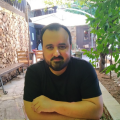
Jose Ángel Aibar has an international background in both electronics and aerospace engineering, and holds a management position in a leading technology company. One of his children has Dravet syndrome, which gave him the motivation to become involved with the Dravet Syndrome Foundation Spain, where he serves as president and chief executive officer since June 2018.
Speakers

Sergio Aguilera Albesa
Jose Ángel Aibar has an international background in both electronics and aerospace engineering, and holds a management position in a leading technology company. One of his children has Dravet syndrome, which gave him the motivation to become involved with the Dravet Syndrome Foundation Spain, where he serves as president and chief executive officer since June 2018.
Ángel Aledo Serrano
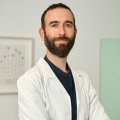
Ángel Aledo-Serrano MD, PhD is a neurologist and epileptologist, director of the Vithas Madrid Neuroscience Institute. His main focus of clinical and research work is in the area of neurogenetics, precision medicine and developmental and epileptic encephalopathies, including Dravet syndrome and other sodium channelopathies, MOGHE, CDKL5 deficiency disorder or SYNGAP1 encephalopathy, among others. He is very active in the social and educational aspects of DEEs, with a science dissemination platform in social media (@AledoNeuro).

Carmen Fons Estupiñá
La doctora Fons es la Jefa del área de Neurología y Neurofisiología pediátrica del Hospital Sant Joan de Déu y experta en epilepsias complejas y genéticas de debut precoz y en neurología fetal-neonatal. Es profesora asociada del grado de Medicina de la UB y directora del Master en Neuropediatría y de epileptología del HSJD-UB. Lidera la línea de investigación de Epilepsias neonatales y genéticas del IRSJD. Miembro del Centro de Investigación Biomédica en Red de Enfermedades raras (CIBERER), del International Consortium for the Research on Alternating Hemiplejia of Childhood (IAHCRC), co-coordinadora del WP-convulsiones neonatales de la European Reference Network en Epilepsias Compleas (EPICARE). Participa como IP en proyectos competitivos nacionales y Europeos relacionados con epilepsias genéticas
Simona Giorgi ---
Fundación Síndrome de Dravet
Simona Giorgi holds a PhD in Health Biotechnology from Miguel Hernández University and a MS in Pharmaceutical Biotechnologies from the University of Bologna. Her career is marked by active collaboration in both basic and translational research projects, with a particular focus on the study of neurons and ion channels. During her doctorate, she led projects centered on the development of a pioneering in vitro model of human sensory neurons, achieving notable advances in the compartmentalized culture of neurons. Additionally, she expanded her experience with a stay at Semmelweis University in Budapest, where she delved into the study of in vitro models of human neurons. Currently, Simona serves as the Scientific Director at the Dravet Syndrome Foundation, where she centralizes and coordinates preclinical and clinical research projects. Her work is aimed at expanding knowledge about this rare disease, with the goal of improving the quality of life for patients and their families. Moreover, Simona is dedicated to scientific dissemination, combating the stigma associated with epilepsy and disability, and providing support to families through the promotion of research.

Nadia Inés Izarabal
Universidad de Navarra

Julián Lara Herguedas
Hospital Puerta de Hierro Majadahonda
Julián Lara es Jefe de Servicio de Neurologia Infantil del Hospital Universitario La Paz Título Propio Especialista en Discapacidad Infantil por la Universidad Complutense de Madrid. Miembro del Comité Asesor Científico de la Fundación Síndrome de Dravet. Actualmente, es coordinador del Grupo de Epilepsia de la Sociedad Española Neuropediatría (SENEP). En los últimos años ha impulsado el desarrollo de diferentes proyectos de integración en epilepsia y otras enfermedades neurológicas.
Esther Moraleda Sepulveda
La Dra. Esther Moraleda Sepúlveda es una investigadora y docente especializada en psicología básica y logopedia. Con doctorado en Psicología por la por la Universidad de Castilla-La Mancha con la tesis Perfil morfosintáctico e intervención logopédica en niños con síndrome de Down 2013. Dirigida por Dr. Miguel Lázaro López-Villaseñor, Dr/a. Elena Garayzábal. Se desempeña en la Universidad Compluense de Madrid dirigiendo proyectos sobre alteraciones del lenguaje en poblaciones clínicas. Es docente en el Grado de Logopedia de la UCM y en los másteres de Especialización en Desarrollo Comunicativo y Lingüístico (0‑6 años) y el de Observación y análisis de conducta comunicativa. Su trayectoria combina docencia con la dirección de tesis, amplia producción académica y compromiso con la divulgación científica.

Eulàlia Turón Viñas
EDUCATIONAL BACKGROUND Degree: Medicine and Surgery from the University of Barcelona (UB) (1996-2002). Specialist degree: Pediatrics and its specific areas. Hospital Sant Pau (2003-2007). Master in Neuropediatrics by the University of Barcelona. Sant Joan de Déu Hospital (2008-2010). Doctorate in the Pediatrics, Obstetrics and Preventive Medicine and Public Health program at the Universitat Autònoma de Barcelona (UAB) September 2020. Epilepsy Fellowship at Hospital del Mar (2020 – 2021) PROFESSIONAL EXPERIENCE Pediatrician specialized in Neuropediatrics and Pediatric Critical Care. Management of pediatric neurocritical patient. Coordinator of the Neuropediatrics Unit at Hospital Sant Pau. Coordinator of the Epilepsy Unit’s pediatrics section at Hospital del Mar – Hospital Sant Pau Associate Professor of the Degree of Medicine of the UAB, of the Master of Neuropsychology of the UAB - Hospital Sant Pau and of the Master of Pediatric Nursing of the UB - Hospital Bellvitge.
Vicente Villanueva Haba
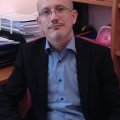
Vicente Villanueva MD, PhD, is a neurologist in Hospital La Fe, Valencia, since 2004. Since 2005 he also works at the La Fe Multidisciplinary Epilepsy Unit, where he is Head of the Refractory Epilepsy Unit and Epilepsy Surgery Programme. He serves as a representative of the European Reference Network Epi-CARE and is a member of the ILAE Intellectual Disability Task Force. He is an Associate Professor of Neurology at the Univ. of Valencia since 2017. Dr Villanueva undertook his training at Fundación Jiménez Diaz in Madrid (ES), Epilepsy Center of Univ. of Alabama (US), Epilepsy Center of New York Univ. (US) and Hôpital Saint-Vincent de Paul in Paris (FR). His current research interests include refractory epilepsy, video-EEG monitoring, and epilepsy clinical trials and surgery. Vicente is a member of the EEG board and the Epilepsy Guidelines Board of the Spanish Neurological Society, which awarded him in 2014 with the Scientific Prize in epilepsy and author of more than 100 articles about epilepsy.
Registration fees
| Live online | Until 09-07-2026 |
|---|---|
| 10,00 EUR | |
| 3,00 EUR |
Venue
25 junio-2 julio-09 julio
Online en directo
Live online
Sustainable development goals
Agenda 2030 is the new international development agenda approved in September 2015 by the United Nations. This agenda aims to be an instrument to favour sustainable human development all over the planet, and its main pillars are the eradication of poverty, a reduction in equality and vulnerability and fostering sustainability. It is a unique opportunity to transform the world up to 2030 and guarantee human rights for all.

3 - Good health and well-being
Guarantee a healthy life and foster the well-being of all people of all ages. Key issues: universal healthcare coverage, sexual and reproductive health, reduction in the number of road accident casualties, pollution and chemical products, reduction in maternal and neonatal mortality, the end of epidemics such as AIDS, combating hepatitis and other water-borne diseases, drug and alcohol prevention, control of tobacco.
More information
Other courses that might be of your interest...

-

Face-to-face

-
Face-to-face

-
Face-to-face