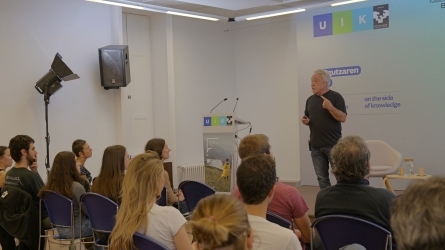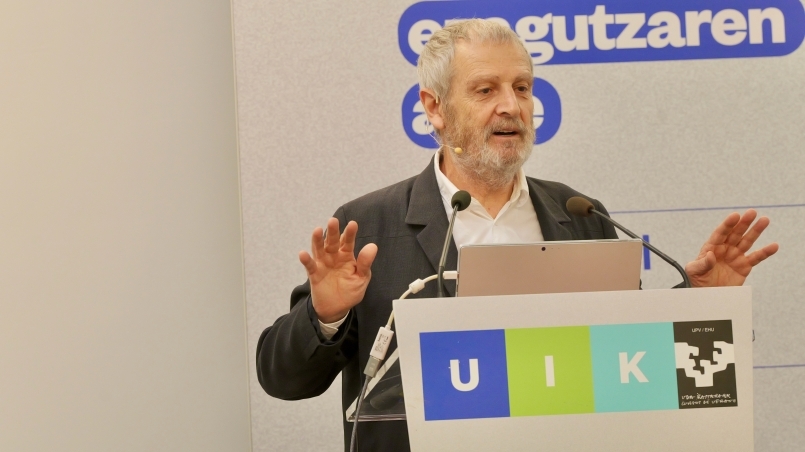
Rebecca Von Hellfeld: “Monitoring stranded mammals is essential to assess ocean health”
Monitoring marine mammals through stranded animal networks in the United Kingdom has become a key tool for advancing conservation policies and improving marine management. This was explained by Rebecca von Hellfeld at the conference held as part of the Donostia Sustainability Forum, where she detailed how data collected through the CSIP and SMASS programmes have helped strengthen wildlife protection and guide evidence-based decision-making, in a model that can be replicated globally. Von Hellfeld is a researcher at the University of Aberdeen (Scotland). She holds a degree in Environmental Sciences and Business Management from the University of London, an Erasmus Mundus Master’s degree in Environment and Marine Resources from EHU, and a PhD from Heidelberg University.

Long-last activities
The started describing thoroughly the work of two long-running UK monitoring programmes. The first one is the Cetacean Strandings Investigation Programme (CSIP) in England and Wales, and the second one is the Scottish Marine Animal Stranding Scheme (SMASS). These organisations attend and report all the stranding events occurring in the coasts of UK, carrying out detailed examinations of the animals. Rebecca outlined very interesting data. Hence, SMASS runs for more than 30 years (since 1990s) and has recorded more than 20.000 strandings to date, with more than 200.00 samples in their archives. Amazing!
The stranding events, despite of being impacting in visual and empathic terms, mainly the massive ones with dozens or even hundreds of animals dying in our beaches or rocky cliffs, are not just tragic sights, but important messengers. Rebecca pointed out the positive part of these events. That is, we need to listen to what the stranded bodies tell us because is essential for protecting ocean health and building a more sustainable relationship with the sea. Due these long-last activities along decades the UK networks possess an invaluable archive of samples and insights. This archive of samples (also known as Biospecimen bank), allows us to decipher many issues on animal behaviour, where they live, what affected their health, and, in many cases, to know why/how they died.
“Sentinels of the sea”: assessment of ocean’s health
Listening to what stranded marine mammals tell us is essential for protecting ocean health and building a more sustainable relationship with the sea. In the title of the talk Rebecca included the term “sentinels of the sea”. Why? Because these animals reflect the combined effects of pollution, climate change, fishing activities, and other human pressures.
Strandings data provide valuable clues about wider environmental issues. Changes in the number or type of species recorded, or the locations there are found in, can point to shifts in ocean conditions, the spread of disease, or increasing human impacts like entanglement, underwater noise, or chemical pollution. In some cases, stranded animals offer the first warning signs of emerging problems, including new diseases or the effects that warming seas have on marine life.
Environmental factors affecting strandings
Climate change can be assessed through alterations in health status or population composition which determine changes in ecosystem. In the last decades sea surface temperatures are rising in the North Atlantic. Hence, 2023 temperatures are 2-4ºC warmer than the 1981-2016 average!!! What does that mean for marine mammals adapted to live in a range of 8-9ºC? Due to thermal stress the blubber keeps warm, and if they need to keep cool (especially when they are active) they dedicate less energy to other biological processes such as reproduction and immune system. Thermal stress may provoke a decrease or a migration of preys to other latitudes, producing a poorer nutrition which can, again, affect reproduction, calf survival, and produce mortality under extreme conditions. These warm waters can be also a potential factor to increase the prevalence of pathogens and parasites that affect mammals’ health.
Rebecca pointed out that the analyses of tissues obtained in necropsies can give us information on the presence of contaminants such as plastics, metals, persistent organic pollutants and emerging ones, and show how pollution accumulates through the food web. She pointed that all this info is important to help assess whether current production, or waste management is environmentally sustainable. The main results obtained from the analyses show that there are serious implications for the management of contaminants in the UK and reinforce the need to prevent them entering the marine environment to ensure that levels continue to decline.
Other interactions of human activities and marine mammals are entanglement in ropes of underwater farming (i.e. prawn, lobster and crab, molluscs, …), ship strikes (interaction with fishing and commercial boats) and acoustic trauma. Rebecca pointed out that all these analyses allow policymakers to identify where human activity exceeds ecological limits. Following the advice of the scientist some farming companies in Scotland changed the way of deploying the ropes reducing a lot the ecological impact of entanglement on marine mammals.
Take-home message
The concept of stranding events of marine mammals and what kind of information can be obtained from them to apply conservation measures and improve the protection of marine mammals is useful to other networks running in other parts of the world. It is a good strategy to better understand what is happening beneath the surface of our seas and to know the ocean health status.