The Summer Courses are back under the ‘You Think, Therefore We Are’ slogan

✓ Caring as the basis for an innovative and inclusive future, the central theme of the 45th Summer Courses.
✓ Enrolment now open for the EHU Summer Courses
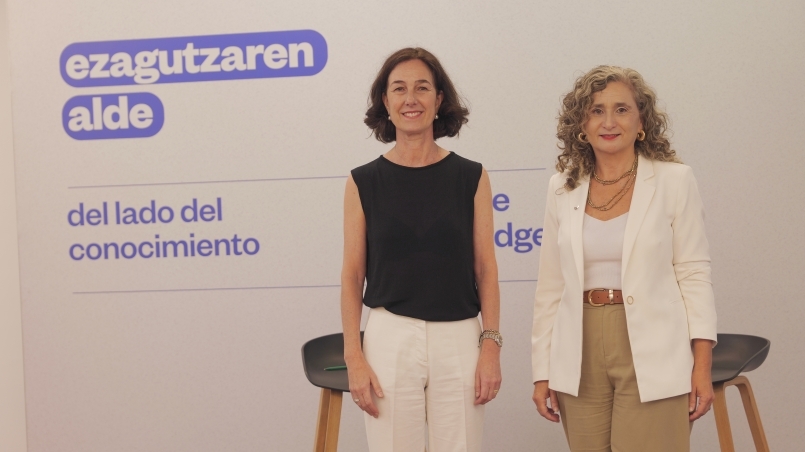
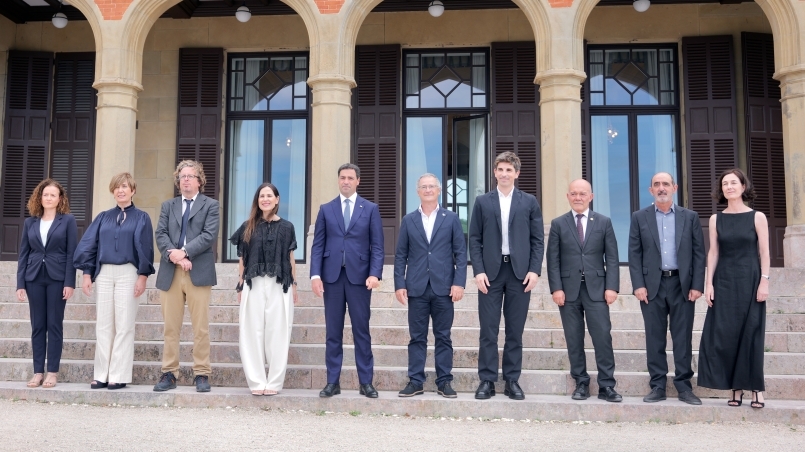
The 45th University of the Basque Country (EHU) summer courses have today been unveiled at the BBVA Foundation headquarters in Bilbao. The EHU Rector, Joxerramon Bengoetxea, the Deputy Director of the BBVA Foundation, Laura Poderoso, and the Academic Director of the Summer Courses, Idoia Otaegui, went over the details of the 2026 course programme.
A total of 133 Summer Courses and 29 workshops are scheduled to be run from early June to the end of September. As regards the volume of activities, Donostia/San Sebastián, Bilbao, Bayonne and Vitoria-Gasteiz will be the main venues. Courses will also be held in other municipalities, including Aramaio, Ataun, Beasain, Bermeo, Gernika-Lumo, Irun, Lesaka, Oñati, Ordizia and Zaldibia, in keeping with the aim to expand the territorial presence.
UIK, a meeting place for reflection and sharing knowledge
Thanks to the experience acquired over the years and to its work with numerous institutions and professionals from the field of knowledge, the Summer Courses Foundation of the University of the Basque Country (EHU) (UIK) is firmly established as a leading place to disseminate, discuss and reflect on the main social challenges. Each edition offers a diverse and rigorous course programme, aimed at analysing and addressing the most important current issues.
Strategic partnerships are key to the UK activity; proof of this is the unwavering backing of the Basque Government, Gipuzkoa Provincial Government, Donostia/San Sebastián City Council and the BBVA Foundation, which guarantee the development and continuity of the project.
As regards the current edition, the UIK Academic Director, Idoia Otaegui, stressed that: ‘Our aim with this year’s campaign is to send a simple but very important message: ideas, when they are shared, are not lost; instead, they grow and are transformed. Knowledge becomes meaningful when it is shared with other people, when it becomes a collective experience able to trigger new questions and forge new paths. The Summer Courses are a privileged setting to do so: a meeting point where people from diverse backgrounds gather to provide their perspective, their questions and their experience, thus transforming individual thought to collective knowledge. We have thus reinterpreted the famous phase of Descartes for this year’s slogan: ‘You Think, Therefore We Are’.
Accordingly, UIK is yet again offering a broad programme aimed at different audiences. The goal is clear: to bring together social agents and exchange different types of knowledge. Students of different generations, academics, scientists and professionals, representatives of the business world and of the administration, along with people from different sectors, are invited to share the same space to learn, reflect and build knowledge together.
Caring as the foundation for an innovative and inclusive future, the central theme of this year’s courses
The Summer Courses will address relevant themes structured in strategic series in response to the current challenges. This year, the core areas will be: Culture & Art, Society, Health, Education, Law, Economy & Business, Science & Technology, and Sustainability.
All in all, the 2026 programme will provide a comprehensive vision, with people and their living conditions at the centre. Thus, caring is taken to be the foundation of the development model and as fundamental to advance towards a more innovative and just society.
In this vein, the current and future challenges will be addressed together, by analysing, inter alia, the environmental crisis, the technological transformation and the impact of artificial intelligence. At the same time, issues related to wellbeing, such as health, inclusion, gender equality and the consequences of the longer life expectancy, will be considered.
Adapting governance models, democracy and justice system will also be studied by combining local and global perspectives. Finally, culture, education and community will be considered as fundamental tools to strengthen links and to advance towards a more cohesive and transformative society.
The main series in 2026 are summarised below, together with the courses that are included in each:
Culture and Art
The Culture and Art series offers a diverse range made up of nine courses, which cover heritage, contemporary creation and reflecting on culture from multiple perspectives. The Jose Migel Barandiaranen ekarpena Arkeologia, Etnografia eta euskal Mitologiara IV [Jose Migel Barandiaran’s Contribution to Archaeology, Ethnography and Basque Mythology IV] course will go further into the bases of Basque mythology and prehistory; while Aupa Etxebestetik Maspalomasera: euskal zinemak 20 urte (2005-2025) [From Aupa Etxebeste to Maspalomas: 20 Years of Basque Cinema (2005-2025] will analyse the evolution and future challenges of Basque cinema over the last two decades. Furthermore, issues linked to cultural management will be discussed on the Creación y producción de un festival o programación musical. Cómo afrontar los cambios y retos actuales de la industria musical [Creating and Producing a Music Festival or Programming. How to Address the Current Changes and Challenges of the Music Industry] course, which will provide key pointers to work on musical projects. In turn, innovative approaches to contemporary art conservation will be considered in El proyecto para la conservación del Bosque de Oma Experiencia y desarrollo metodológico. [The Project to Conserve the Oma Forest. Experience and Methodological Development]. The range of learning overall will offer an applied, current and broad vision of culture.
Society
The Society series offers a wide range of learning made up of twenty-seven courses, aimed at analysing the main contemporary social challenges from complementary and diverse perspectives. The Derechos y Ciudadanía ante un mundo en crisis [Rights and Citizens in a World in Crisis] course analyses the impact of global crises on human rights; Kontzientzia-eragozpenetik bake-hezkuntzara [From Conscientious Objection to Educating for Peace] is focused on constructing coexistence and a peace culture; and Europa y el Sur Global ante el reto de un nuevo multilateralismo inclusivo [European and the Global South Facing the Challenge of a New Inclusive Multilateralism] delves further into international relations and into the current geopolitical challenges. Furthermore, Komunitateak ekinean: gizarteratzeko praktikak [Communities in Action: Socialisation Practices] examines challenges to bolster social cohesion, while Voluntariado sostenible: claves para transformar el futuro desde Euskadi [Sustainable Volunteering: key Pointers to Transform the Future from the Basque Country] stresses the importance of citizen commitment. The series overall provides a transformative and diverse range of courses, aimed at fostering critical analysis and social transformation.
Health
The Health series consists of a broad range of eighteen courses and provides a comprehensive and current vision of health. The Narratiba eta osasuna: Nola sortu osasuna sortzen duten istorioak? [Narrative and Health: How to Use Stories for Health?] course, for example, analyses the power of stories to improve clinical practice; Itsasgora. Osasun arloko berrikuntzaren olatu eraldatzailea [Transformative Waves of Healthcare Innovation] addresses forward-looking strategic trends in the field of healthcare innovation; and Salud mental del personal médico: clave para el bienestar social [Mental Health of Medical Staff: Key for Social Wellbeing] stresses the importance of the professionals’ wellbeing. Furthermore, the Sociedades que conviven con el Cáncer: evidencia, experiencias y perspectivas [Societies Coexisting with Cancer: Evidence, Experience and Perspectives] course offers a comprehensive approach to cancer, while Sendatzen duen komunikazioa: nola saihestu gatazkak eta hobetu pertsonaren segurtasuna [Healing Communication: How to Avoid Conflicts and Improve Personal Safety] analyses the role of communication in conflict prevention and improving people’s safety.
As a parallel series, the main current mental health challenges will be analysed in the field of psychology.
Education
The Education series boasts a wide range of seventeen courses, that respond to the current educational challenges from innovative approaches. Courses such as Hezkuntza aniztasunetik justizia sozialera: identitatea, hizkuntza eta pedagogia eraldatzaileak [From Educational Diversity to Social Justice: Transformative Identity, Language and Education] place diversity and inclusion at the centre of the educational process. In that same vein, Genero identitateak ulertzen [Understanding Gender Identities] analyses how identities are constructed, while Conocer el cerebro desmontando mitos [Debunking Myths to Learn About the Brain] offer key pointers, from neuroscience, to improve learning processes. Furthermore, the Sexu-hezkuntza eta pantailak [Sexual Education and Screens] course addresses the challenges associated with digital environments. All in all, the series provides a transformative approach to foster critical thought and educational innovation.
Law
The Law series of the EHU Summer Courses includes a total of twenty options that address, from a current and applied perspective, the main contemporary social and legal challenges. These include Inclusión, derechos y apoyos de las personas con discapacidad [Inclusion, rights and support for people with disabilities] course, which analyses the evolution of the rights of people with disabilities and the challenges of full inclusion; El acompañamiento e intervención en el duelo: un compromiso social e institucional [Support and intervention in bereavement: an institutional and social commitment] focuses on the coordinated response of the public system to loss; and Migraciones en Euskadi. Reto de inclusión y prosperidad [Migrations in the Basque Country. Inclusion and Prosperity Challenge], which examines the current context of migration and the key pointers to build more inclusive societies. Similarly, the La garantía de los cuidados basada en la igualdad de las personas y en los derechos humanos: su impacto en la organización social y en las políticas públicas [Guaranteeing Care based on Equality and Human Rights: Its Impact on Social Organisation and Public Policies] course is an opportunity to rethink the role of caring as the focus of human rights and public policies.
An interesting parallel series will be in the field of criminology.
Economy and Business
The Economy and Business series comprises seven courses focused on meeting the current needs of economic development from a multidisciplinary and practical perspective. In this framework, Territorios vivos: servicios de proximidad que transforman el medio rural [Living Territories: Local Services Transforming the Rural Environment] analyses the importance of innovative services to bolster social cohesion and the quality of life in rural environments. In turn, Inteligencia Artificial para Directores Financieros de PYMEs [Artificial Intelligence for Financial Directors of SMEs] addresses the impact of artificial intelligence on business management and on strategic decision making. In that same vein, Fiscalidad: clave para transformar la industria [Taxation: Key to Transform Industry] examines the role of tax incentives in innovation, the energy transition and competitiveness. Finally, Ekonomia zirkularreko proiektuak lehen sektorean [Circular Economy Projects in the Primary Sector] considers practical applications of the circular economy, fostering new opportunities and cooperation in the primary sector.
Science and Technology
The Science and Technology series includes a wide range of eleven courses that seek to address the main current challenges from an innovative and multidisciplinary perspective. Accordingly, Sistemas Urbanos de Drenaje Sostenible [Sustainable Drainage and Urban Systems] analyses how to integrate and manage those systems in our towns and cities. In turn, Gizartearen konputazioa eta informatikaren sozializazioa [Computing Society and Mainstreaming Computer Sceience] is an opportunity to reflect on the impact of digital transformations in society in recent decades. The Taller de Medición Ambiental: IA para la Protección y Evaluación del Medio Ambiente [Environmental Measurement Workshop: AI to Protect and Assess the Environment], in turn, will explore the opportunities that artificial intelligence offers to improve environmental measurement and management. Similarly, Hiri – Logistikaren Transformazioa: Teknologia eta Eredu Arrakastatsuak [Transformation of Urban Logistics: Technology and Successful Models] analyses the future of urban mobility and sustainable logistics. All in all, the series offers a diverse range of courses that integrates science, technology and society, and provides key pointers to meet future challenges.
Sustainability
The Sustainability series comprises a broad range of courses with the aim of analysing the main environmental challenges from different perspectives, with a total of fourteen courses. The Nekazaritza ezaren kostua eta zerbitzu ekosistemikoak [The Cost of the Absence of Farming and Ecosystem Services] course focuses on the value of the ecosystem services and on the consequences of the absence of farming; in turn, Herritarren parte-hartzea ozeanoaren zaintzan: sentsibilizaziotik ekintzara [Citizen Participation in Caring for the Ocean: From Awareness to Action] fosters the active role of citizens to protect the ocean through citizen science. The risk of and preventing forest fires are addressed in Incendios forestales ¿cómo afrontarlos? II [Forest Fires, How to Tackle Them? II], by analysing their impact in the context of climate change. Furthermore, the Alimentos, Territorio y Clima [Food, Territory and Climate] course will consider the transition of the food system, by connecting production, consumption and territory. The courses in this series provide a comprehensive vision that combines scientific knowledge, social action and strategic reflection to advance towards a more sustainable future.
Apart from its range of courses, UIK will bolster its firm commitment to sustainability by organising activities as part of the permanent Donostia Sustainability Forum (DSF), launched in 2020, which are open to the general public.
Apart from the main series, the programme also includes a complementary range of courses in the fields of Architecture and Urbanism, Communication, History, and Linguistics and Literature and Sport which will enable the current reality to be addressed from a broader and more diverse perspective.
UIK in the world
UIK considers the international dimension to be a fundamental area in knowledge transfer, as it allows local expertise to be connected to global debates and to build robust partnership networks. The participation of international students and experts provides an added value to activity; this year’s programme continues in this vein and is attracting increasingly more diverse profiles as regards background and track record.
Examples of this are Los grandes retos actuales de la Unión Europea (VI edición) [The Current Major Challenges of the European Union (6th Edition)], a course that analyses the main legal and political and European project from a global perspective with input from international specialists; and the Retos y estrategias para la defensa de Derechos humanos en tiempos de criminalización y represión [Challenges and Strategies to Defend Human Rights in Times of Criminalisation and Repression] international meeting, which will address the challenges of defending human rights in the global context and with a global justice and feminist approach.
Similarly, the Cursos de Derecho Internacional y Relaciones Internacionales de Vitoria-Gasteiz [International Law and International Relations Courses in Vitoria-Gasteiz] foster academic debate and practice about international relations and law in the context of contemporary global society; and the Bikaintasuna Euskal Ikasketetan XVI. Euskara oholtzetan: musika, hizkuntza, nazioartea [Excellence in Basque Studies XVI. The Basque Language on the State: Music, Language and Internationalisation] course will work on the international outreach of the Basque language and culture, particularly with the focus on the relationship between music and language, by working with academia around the world.
All in all, these courses consolidate UIK as a leading space open to the international arena, aimed at sharing knowledge, generating partnerships and anticipating future challenges, with the key element being the participation and contribution of international agents.
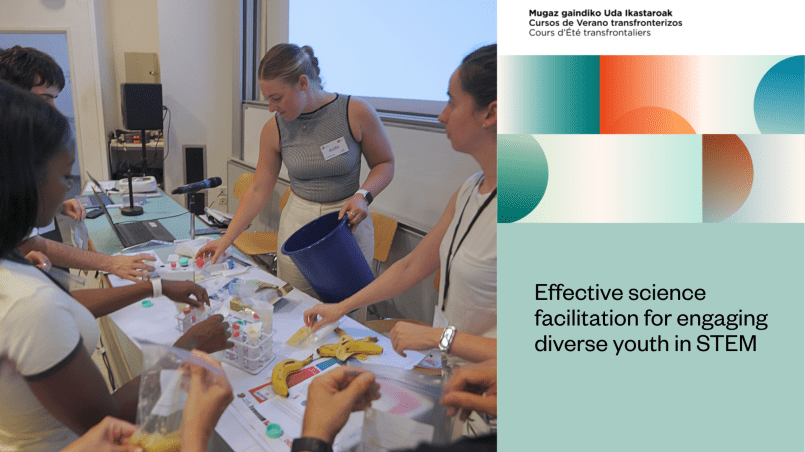
In addition to the Summer Courses, UIK provides specialist training throughout the year and organises top-tier activities that attract international experts. Furthermore, the V Cross-border Summer Courses, which are held in Bayonne, bolster this international dimension by means of partnerships with universities and institutions of the Nouvelle Aquitaine-Basque Country-Navarre Euroregion. This initiative seeks to share knowledge, foster the links among territories and boosting new ways to jointly address future challenges.
Encouraging participation
The majority of the courses will be in person; however, there will also be the possibility in many cases to take part in the live online format. Furthermore, innovative and participatory methodologies will be used in forty three Summer Courses, along with traditional formats. With that in mind, six courses are part of the TopaGune project, which are rolled out with the support of Gipuzkoa Provincial Council.
Furthermore, certain courses will provide the opportunity in take part in experiential activities.
Enrolment is open
Enrolment is now open and people have until the start of each course to sign up.
- Period: From 23 April to the start of each course.
- Registrations and information: www.uik.eus
As regards special rates, there are different types of discounts for different groups, both when enrolling on the courses and on accommodation. The detailed datasheet for each activity should be consulted, along with the general information.
In order to facilitate access to the Summer Courses, there is a special offer for young people aged between 18 and 25: the price will be only €25 in the majority of courses.