
Food, Territory and Climate
Description
The Summer Course addresses the main challenges and opportunities of the food transition in the Basque Country from an integrated perspective that connects agri-food production, consumption patterns, land and climate change.
Drawing on recent scientific evidence, the course explores how realistic changes in food demand and production systems can contribute to climate mitigation and adaptation.
The course adopts a systemic and multidisciplinary approach, integrating perspectives from agronomy, nutrition, economics, gastronomy, environmental modelling and the social sciences. It also includes spaces for dialogue with stakeholders from different segments of the food system (farmers, distributors, public administration, the hospitality sector, consumers and environmental organisations), as well as the presentation of projects and initiatives.
By the end of the course, participants will understand the challenges of the food transition, the feasibility of different scenarios, and the implications for land, rural economies and food security.
Objectives
Main Objective:
To analyse the food transition from a systemic perspective in a context of climate emergency.
Specific Objectives:
-
To understand the interrelations between food systems, land and climate change in the Basque Country and Europe.
-
To analyse the agricultural sector in the context of food production and the challenges posed by climate change.
-
To examine the consumption sector, including current diets and reference diets.
-
To assess the climate, territorial and socio-economic impacts of the current food system.
-
To identify opportunities, barriers and risks associated with the transition of the food system, considering territorial diversity.
-
To foster dialogue among the different actors of the food system in order to integrate multiple perspectives.
-
To showcase good practices and success stories developed within the framework of the SWITCH project.
Activity directed to
- All public
- University student
- Students not from university
- Teachers
- Professionals
Methodology
The methodologies of the course “Food, Territory and Climate” adopt a systemic and multidisciplinary approach to food systems, integrating knowledge from agronomy, environmental sciences, social sciences, and more.
For the delivery of the course, the following methodologies are proposed:
-
Lectures: These will be used to present recent scientific evidence and explore topics such as climate challenges, the food transition, the importance of a territorial perspective, and social sciences.
-
Round tables: Their aim is to integrate multiple perspectives and foster debate and dialogue. Stakeholders from across the food chain will participate, with a focus on the Basque Country.
-
Presentation of success stories and good practices: Practical sessions will be dedicated to showcasing real examples of food transition carried out by different territorial actors, including cases developed within the framework of the SWITCH project and others.
-
Synthesis activity: The course will conclude with a synthesis activity following this multidisciplinary approach.
Organised by

In collaboration with



Program
06-07-2026
Registration
Presentation by the Director of the activity
Language: English
- María José Sanz Sánchez | BC3 - Researcher / Investigadora
“ Links between climate, food systems and global diets (Participa vía Zoom)“
Language: English
- Jessica Fanzo | University Johns Hopkins - Food Policy and Climate at the Johns Hopkins School of Advanced International Studies in Bologna (Italy) (Participation by zoom)
Coffee break
“Indicators for assessing the sustainability of diets“
Language: English
- Simona Castaldi | Università degli Studi della Campania "Luigi Vanvitelli" - Prof., PhD - Dipartimento di Scienze e Tecnologie Ambientali Biologiche e Farmaceutiche
“International Food Trade: Food Security and Environmental Footprint“
Language: English
- Neus Escobar | BC3
Synthesis
Pausa comida
“SWITCH study cases “
Language: English
- Chiara De Tomassi Lucini | BC3
- Victor Martinez Cano | BC3
- Leire Osuna Galisteo | GOE-Tech
- Eneritz Kaltzakorta Elordi | UPV/EHU
- Miren Millet Mendibil | Kutxa Fundazioa
- Rebecca Blevins - | BC3
07-07-2026
“La importancia del enfoque territorial en los procesos de transición alimentaria“
Language: Spanish
- Veronica Rebollo Díaz | Alimentta
- Pablo Salaregui Díez | Alimentta
“Determinantes sociales y vulnerabilidad del sistema para avanzar hacia una transición justa del sistema alimentario“
Language: Spanish
- Julia Diez Escudero | Universidad de Alcalá - -
Coffee break
Round table: “Retos del sector agroalimentario frente al cambio climático: adaptarnos y mitigar“
Language: Spanish
- Olatz Unamunzaga Galarza | NEIKER - -
- Cinta Lomba Fernandez | GOE tech
Synthesis
Directors

Inma Batalla ---
BC3
Inma Batalla, es investigadora en BC3 desde 2018 en el área de sistemas alimentarios y cambio climático. Estudio Ingeniería Agrónoma en la Universidad de Extremadura y Desarrollo Rural Territorial en la Universidad de Córdoba, y es Doctora en Agrobiología Ambiental por la EHU (Universidad del País Vasco). Su trayectoria científica se ha centrado en la evaluación de la sostenibilidad de sistemas agroalimentarios con una perspectiva multicriterio, con especial énfasis en los retos asociados al cambio climático. Cuenta con una amplia experiencia en el análisis holístico de sistemas agrícolas utilizando indicadores económicos, sociales y ambientales para dar una mejor comprensión de la situación del sector primario a través de una visión sistemática. Ha trabajado con especial énfasis en la exploración de sinergias entre los diferentes impactos de los sistemas agroalimentarios, prestando especial atención a los sistemas ganaderos utilizando enfoques diversos como marcos de sostenibilidad, ACV, la perspectiva “one health”, procesos participativos y análisis de políticas públicas.
Ikerbasque Professor and Scientific Director of the Basque Centre for Climate Change (2016-). She graduated at University of Valencia and post-doct in the Arizona State University. She has worked on research and research-policy at national and international level. She has also worked at Mediterranean Center for Environmental Studies (CEAM) until 2007. She was Senior Officer positions at the secretariat of the UNFCCC supporting climate change negotiations (2007-2011), and at FAO as Program Coordinator of the UNREDD Programme (2012-2015). She held the High Distinction for Scientific Merit of the Generalitat Valenciana (2019). Dr. Sanz has worked extensively on air pollution and climate change and environment issues for 30 years. She has published over 150 scientific papers, among other in Nature, Nature Climate Change and PNAS, and is recognized as an expert in land use and climate change issues. She has been an advisor to and collaborated with many national and international organizations (World Bank, UNDP, UNEP, UNFCCC secretariat, Meridian Institute, the European Commission, the Green Climate Fund and the governments of Spain), and several of its regional governments, Japan, US, and several developing country governments.
Speakers

Rebecca Blevins -
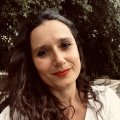
Simona Castaldi
Professor of Ecology at Università degli Studi della Campania “Luigi Vanvitelli”. PhD and Research Fellow at the University of Edinburgh, UK. Her research focuses on ecosystem services in forests and agroecosystems, adaptation and sustainable land management, climate and global changes, and sustainable food systems. She has coordinated research groups on these subjects in international frameworks (Horizon, FP4, FP6, FP7, COST, ERC, LIFE), national programs (PRIN, FISR, INGV). Winner 2025 of the LIFE AWARD for Climate Action with the project LIFE DESERT-ADAPT. Scientific consultant for ISMEA, Rete Rurale del Ministero Politiche Agricole e Forestali, Ministero dell’Ambiente, Fondazione Barilla. Member of the National Council of WWF Italia.

Chiara De Tomassi Lucini
Chiara De Tomassi is a PhD at BC3. She graduated in Earth and Environmental Science at the National Autonomous University of Mexico and has a MSc in Sustainable Development from KU Leuven. She has experience working both in the academic world and with NGOs, where she focused on social and climate justice in urban and rural areas. Currently, she is working on the Horizon project "Switching European food systems for a just, healthy, and sustainable dietary transition through knowledge and innovation", where she analyses the Spanish agrifood system.

Julia Diez Escudero
Doctora en Epidemiología y Salud Pública. Actualmente trabajando como Profesora Ayudante Doctor en la Universidad de Alcalá donde colabora con el Grupo de Investigación en Salud Pública y Epidemiología (GISPE). Su investigación se centra en las desigualdades sociales a nivel urbano y, especialmente, en analizar el impacto de estas desigualdades en el entorno alimentario y la equidad nutricional.
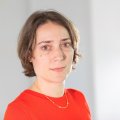
Neus Escobar
Basque Centre for Climate (BC3)
Neus Escobar is a Research Fellow at the BC3, where she develops quantitative tools and methodologies to evaluate the sustainability of agriculture and forestry sectors at different scales. She combines life cycle assessment, multi-regional input-output analysis, and economic modelling to consider the effects of international biomass trade and land use change. Neus Escobar is an Agricultural Engineer by training, with a major in environmental and natural resource management. She holds a PhD in Food Science, Technology, and Management from the Polytechnic University of Valencia (Spain). Neus Escobar was a postdoctoral researcher at the Institute for Food and Resource Economics (ILR) at the University of Bonn (Germany), and a Research Scholar at the International Institute for Applied Systems Analysis (IIASA) in Austria. She has contributed to several international projects on the risks of the bioeconomy, focusing on the impacts of biofuels, bioplastics, and biochemicals competing with food uses. Neus Escobar is currently working on a global database of bilateral trade in food products and collaborates with the Food and Agriculture Organization of the United Nations as an expert in agri-food trade.
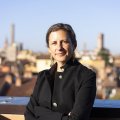
Jessica Fanzo
Jessica Fanzo, Ph.D., is the James Anderson Professor of Food Policy and Climate at the Johns Hopkins School of Advanced International Studies in Bologna Italy. She has participated in various collective endeavors, including the Food Systems Economic Commission, the Global Panel of Agriculture and Food Systems for Nutrition Foresight 2.0 report, the Lancet Commission on Anaemia, and the EAT-Lancet Commissions 1 and 2. She was also the Co-Chair of the Global Nutrition Report and Team Leader for the UN High-Level Panel of Experts on Food Systems and Nutrition. Fanzo serves on the International Livestock Research Institute and the Alliance for Bioversity and CIAT boards and is the co-Chair of the Executive Committee for the Scaling Up Nutrition Movement. She currently leads the development of the Food Systems Dashboard and the Food Systems Countdown to 2030 Initiative. She currently leads the development of the Food Systems Dashboard and the Food Systems Countdown to 2030 Initiative. She became an elected member of the U.S. National Academy of Sciences in 2024.

Eneritz Kaltzakorta Elordi
Lecturer at the University of the Basque Country (EHU/UPV), Faculty of Economics and Business (Elkano Campus), Department of Economics and Management.
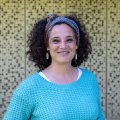
Cinta Lomba es responsable del área de sostenibilidad de BCCInnovation, centro tecnológico de Basque Culinary Center. Es licenciada en Ingeniería en Automática y Electrónica Industrial por la Universidad de Navarra, Máster en Globalización y Desarrollo por la UPV (HEGOA) y Doctora en Ingeniería Aplicada por la Universidad de Navarra, especializándose en la resiliencia al cambio climático de ciudades e infraestructuras críticas. Su trayectoria profesional empezó en el ámbito de los servicios de ingeniería para la industria y en los últimos años se ha ido orientando hacia la docencia y la investigación. Actualmente coordina el área de sostenibilidad de BCCInnovation impulsando proyectos que contribuyan a mejorar la sostenibilidad y resiliencia de los sistemas alimentarios.
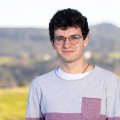
Victor Martinez Cano
BC3
Victor Martínez-Cano is a PhD at BC3. He graduated in Economics at the University of the Basque Country (EHU) and holds a MSc in Globalisation and Development also for the EHU. After carrying out his master thesis at BC3, he joined the Horizon project "Switching European food systems for a just, healthy and sustainable dietary transition through knowledge and innovation" (SWITCH) where he is currently analysing food insecurity in Spain.
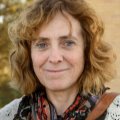
Miren Millet Mendibil
Kutxa Fundazioa
She is the Initiatives and Content Officer at Kutxa Fundazioa.
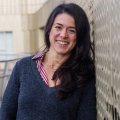
Leire Osuna Galisteo
Leire Osuna Galisteo is graduated in Human Nutrition and Dietetics (2022) and Food Science and Technology (2025) at the University of San Antonio Católica de Murcia, Spain. She is currently pursuing a PhD in Gastronomic Sciences at Goe Tech Center - Basque Culinary Center (Mondragon Unibertsitatea). Her thesis is supported by a grant from the Basque Government through the IKERTALENT 2024 program. Her research explores how school canteens can contribute to more sustainable and healthy dietary patterns through the integration of environmental and nutritional criteria into menus, considering food waste and stakeholder collaboration underlining the potential of gastronomy in this transformation. She is currently affiliated with the Sustainability Area of GOe Tech Center, where she collaborates on projects related to her doctoral research.
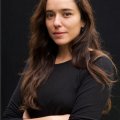
Veronica Rebollo Díaz
Verónica Rebollo Díaz is a biologist (Autonomous University of Madrid) and holds a master's degree in Advanced Studies in Social and Cultural Anthropology (Complutense University of Madrid). She is currently part of the technical team at Alimentta, a think tank focused on the food transition, while pursuing her Ph.D. at the Pablo de Olavide University (Seville). Her doctoral research analyzes power dynamics in the Spanish food system and explores how to strengthen cross-sector dialogue to foster the sustainability, resilience, and autonomy of local food systems.
Pablo Salaregui Díez
Pablo Saralegui-Díez holds a Master's degree in Agroecology from the Pablo de Olavide University (UPO) and a Master's degree in Health Biotechnology (CESIF). Currently, he conducts interdisciplinary analyses on the performance of logistics networks, agri-food production clusters, and the distribution and size of industries and global exchange hubs, focusing on their socio-environmental impact within the food system. He works as a technical researcher at the Alimentta think tank.
Ikerbasque Professor and Scientific Director of the Basque Centre for Climate Change (2016-). She graduated at University of Valencia and post-doct in the Arizona State University. She has worked on research and research-policy at national and international level. She has also worked at Mediterranean Center for Environmental Studies (CEAM) until 2007. She was Senior Officer positions at the secretariat of the UNFCCC supporting climate change negotiations (2007-2011), and at FAO as Program Coordinator of the UNREDD Programme (2012-2015). She held the High Distinction for Scientific Merit of the Generalitat Valenciana (2019). Dr. Sanz has worked extensively on air pollution and climate change and environment issues for 30 years. She has published over 150 scientific papers, among other in Nature, Nature Climate Change and PNAS, and is recognized as an expert in land use and climate change issues. She has been an advisor to and collaborated with many national and international organizations (World Bank, UNDP, UNEP, UNFCCC secretariat, Meridian Institute, the European Commission, the Green Climate Fund and the governments of Spain), and several of its regional governments, Japan, US, and several developing country governments.

Olatz Unamunzaga Galarza
NEIKER Jefa Departamento de Conservación de los Recursos Naturales
Jefa Departamento de Conservación de los Recursos Naturales Olatz es Doctora en Biología por la Universidad de Zaragoza. En 2004 se incorpora en NEIKER especializándose en el mapeo de suelos a través de técnicas geoestadísticas, y en estudios relacionados con las propiedades del suelo y su relación con la producción y la calidad de la uva y del vino. Desde el año 2010 es responsable técnico de proyectos nacionales y europeos relacionados con el Análisis de Ciclo de Vida en el sector agrario. En el ámbito docente, imparte docencia en el Máster Universitario en Enología Innovadora de la Universidad del País Vasco. Asimismo, ha dirigido cuatro trabajos fin de Máster y una Tesis Doctoral.
Registration fees
| Face-to-face | Until 06-07-2026 |
|---|---|
| 87,00 EUR | |
| 74,00 EUR | |
| 61,00 EUR | |
| 25,00 EUR | |
| 74,00 EUR | |
| 74,00 EUR |
Venue
Miramar Palace
Pº de Miraconcha nº 48. Donostia / San Sebastián
Gipuzkoa
Miramar Palace
Pº de Miraconcha nº 48. Donostia / San Sebastián
Gipuzkoa
Other courses that might be of your interest...

-

Face-to-face

-
Face-to-face

-
Face-to-face