

TopaGune Ikastaroa: Hezkuntza aniztasunetik justizia sozialera: identitatea, hizkuntza eta pedagogia eraldatzaileak
Description
This Summer Course is aimed at teachers, university lecturers, researchers, and other members of the educational community, including families. It offers an opportunity to design and develop educational practices grounded in social justice. Throughout the course, we will explore and experience transformative pedagogies that treat linguistic, cultural, and identity diversity as a pedagogical resource, with a focus on the socio-emotional well-being of both teachers and students. We will examine the principles of intercultural education, Queer Pedagogies, and the Pre-Text protocol, which can help us build more inclusive schools by acknowledging gender and sexual diversity and actively combating exclusion. We will also focus on translanguaging and multilingual classroom practices, valuing students’ home languages and situating Basque within a broader multilingual paradigm. Together, we will share teachers’ perspectives, challenges, and goals around language and identify best practices collaboratively.
The course combines lectures with practical workshops so that participants can engage in hands-on activities and leave with concrete tools they can apply in their own classrooms. By connecting with current research on culturally and linguistically sustaining pedagogies, we will strengthen the links between theory and practice. The ultimate goal is to deepen and enrich relationships between teachers and students.
This course will be a TopaGune course. This name is given to courses that encourage a higher level of participation. In such cases, the course leader, the academic management team at UIK and the course facilitator work together to design the techniques that will be most effective in encouraging this participation. In this way, course participants will be able to play an active role in the reflection and co-creation activities planned for this Summer Course.
Objectives
1. Analyze educational diversity from a social justice perspective by examining linguistic, cultural, and identity diversity, identifying systemic inequalities within education, and considering their impact on the social and emotional well-being of both students and teachers.
2. Apply transformative pedagogical approaches—including Queer Pedagogy, the Pre-Text protocol, and principles of intercultural education—to design inclusive practices that promote participation, recognition, and equity, and that actively challenge exclusion and discrimination.
3. Critically examine the role of Basque and curricular languages in multilingual educational contexts by analyzing their integrative function, as well as teachers’ linguistic perceptions, attitudes, and methodological approaches.
4. Evaluate and implement equitable approaches to multilingualism by using translanguaging and multilingual practices to recognize students’ full linguistic repertoires, positioning Basque as a central language while also valuing family languages, and addressing the associated pedagogical and emotional challenges.
5. Share and critically reflect on good practices and collective challenges by exchanging experiences across educational contexts and collaboratively identifying strategies for more inclusive and transformative educational responses.
6. Integrate research and practice in educational decision-making by engaging with research on culturally and linguistically sustaining pedagogies, contextualizing it in local settings, and linking improvements in teachers’ working conditions to students’ emotional well-being.
Activity directed to
- All public
- University student
- Students not from university
- Teachers
- Professionals
Methodology
An active and participatory methodology will be employed, based on the principle of learner-centred learning, with the learner as the true protagonist of their own learning process. From this perspective, meaningful learning will take centre stage. To this end, a variety of teaching tools will be used, such as:
Theoretical presentations aimed at imparting knowledge, in which discussion and active participation will be encouraged.
Group activities that encourage discussion and reflection, aimed at understanding and integrating the different topics covered.
Immersive visual and auditory exercises that facilitate reflection and internalisation.
Activities that create opportunities for sharing through the use of interactive tools.
Individual and group activities to be carried out throughout the course, aimed at producing a final project, or mini-challenge, with direct application either on a personal level or professionally across different fields.
In collaboration with
Program
25-06-2026
Registration
Presentation by the Director of the activity
Language: Basque
- Andrea Perales Fernández de Gamboa | Euskal Herriko Unibertsitatea (EHU) - Irakasle Atxikia
“Eskola inklusiboago baten bidean: Hizkuntzen Irakaskuntza eta Pedagogia Kuirra“
Language: Basque
- Uxue Diez Guiral | Euskal Herriko Unibertsitatea (EHU) - Irakasle Laguntzaile Doktore
Break
Participative dynamics: “Pre-Text hezkuntza protokolo demokratizatzailea“
Language: Basque
- Olatz Etxebarria Perez de Nanclares | Euskal Herriko Unibertsitatea (EHU) - Irakasle laguntzaile doktore
Bazkaria
Participative dynamics: “Harremanak ehuntzen: hizkuntza- eta kultura-aniztasunetik kulturarteko eskolara “
Language: Basque
Elkarrekin sor dezagun kulturarteko eskola!
- Andrea Perales Fernández de Gamboa | Euskal Herriko Unibertsitatea (EHU) - Irakasle atxikia
Synthesis
26-06-2026
Participative dynamics: “Hizkuntzak zubi: paradigma elebakarretik eleanitzera, translanguaging bidezko aldaketa pedagogikoa“
Language: Basque
Dinamika parte-hartzailea
- María Orcasitas Vicandi | Euskal Herriko Unibertsitatea (EHU) - Irakasle agregatua
- Izaskun Molás Olalde | Euskal Herriko Unibertsitatea (EHU) - Doktoregaia
Break
“Irakasleen ikuspegi linguistikoak, erronkak eta jomugak hezkuntza elaniztunean“
Language: Basque
- Mikel Gartziarena San Policarpo | Euskal Herriko Unibertsitatea (EHU) - Irakasle atxikia
- Nerea Villabona Perurena | Euskal Herriko Unibertsitatea (EHU) - Irakasle atxikia
Round table: “Euskal hezkuntza eleaniztuna: errealitate, jomuga eta erronka linguistikoak“
Language: Basque
- Mikel Gartziarena San Policarpo | Euskal Herriko Unibertsitatea (EHU) - Irakasle Atxikia (Moderator)
- Maider Aldaia Buldain | Amaiur ikastola - Amaiur ikastolako Zuzendaria
- Ane Olmedillo Berasategi | Doktoregaia eta Pedagogo Terapeuta
- Aicha Benbekheita Maati | Euskal Herriko Unibertsitatea (EHU) - Lehen Hezkuntzako Graduko ikaslea
Closing session
Language: Basque
- Andrea Perales Fernández de Gamboa | Euskal Herriko Unibertsitatea (EHU) - Irakasle atxikia
Directors
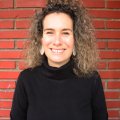
Andrea Perales Fernández de Gamboa
Euskal Herriko Unibertsitatea
Dr Andrea Perales-Fernández-de-Gamboa is based in the Basque Country, where she works as a lecturer and researcher in language education at the University of the Basque Country (UPV/EHU). Her work sits at the intersection of applied linguistics and teacher education, with a particular focus on translanguaging, culturally sustaining pedagogies, multilingual identities, and social and cognitive justice in language education. Her research is grounded in classroom-based studies in linguistically and culturally diverse secondary schools, especially in contexts where minority and minoritised languages coexist. Through her work, she is particularly interested in how language teaching can challenge deficit perspectives and better prepare teachers for multilingual educational realities. She is a member of the research group "País Vasco, Europa y América: Vínculos y Relaciones Atlánticas".
Speakers
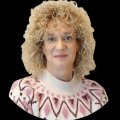
Maider Aldaia Buldain
Maider Aldaia Buldain has been the director of Amaiur Ikastola (Pamplona) since 2020 and has over 20 years of experience as an Early Childhood Education teacher in various schools in Navarre. She currently leads the Basque Language Committee and the Language Plan at the ikastola, overseeing campaigns to promote Basque language use, foster Basque culture, and encourage community involvement, among other initiatives. She also coordinates Inclusion and Innovation (PROMOVILIDAD - HEZIGARRI), facilitates the School Climate Committee and support programs, and coordinates the school's Digital Plan. During the course, she will share the challenges she has faced as a director and in the classroom: strategies for increasing the prevalence, challenges, and use of Basque, combining inclusion and well-being.
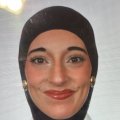
Aicha Benbekheita Maati
Aicha Benbekheita Maati, born and raised in Vitoria-Gasteiz, is 21 years old and the eldest daughter of an Algerian family. She studies at the Faculty of Education and Sport in Vitoria-Gasteiz with the goal of becoming an English teacher. She is also studying Law, Philosophy, and Psychology because these areas help her understand critical thinking and human behavior. She is fluent in eight languages: Arabic, French, Basque, Spanish, Russian, Italian, Dutch, and English, with a C2 level in English and C1 or B2 in the others. In her professional experience, she works as a legal translator in a court, helps students at an English academy, and also gives private lessons. A publishing house also commissions her to translate literary books.
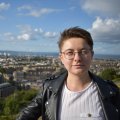
Uxue Diez Guiral
Teacher and researcher in the Department of Didactics of Language and Literature at the University of the Basque Country (UPV/EHU). I completed a Bachelor's degree in English Studies (UPV/EHU) with a specialization in English Linguistics. I begun my specialisation in language teaching and learning at the Master's in Language Education at the University of Salamanca (USAL) and the European Master's program in Multilingualism and Education at UPV/EHU. Following this academic trajectory, I secured a pre-doctoral contract from the Basque Government to write my doctoral thesis, which was part of the program "Education: School, Language, and Society." I obtained my PhD in 2024. My research examines Language Anxiety and Willingness to Communicate from a gender perspective and utilizes queer theories. I have contributed to various research projects both within and outside of the university. Within the university, I have participated in projects such as LISTIAC, PETRANSCUR, and HIGAEU. Additionally, I have collaborated with local municipalities and other stakeholders in research projects, conducted diagnostics, and analysed historical memory, among others. While I have a broad range of interests, my research primarily focuses on the influ
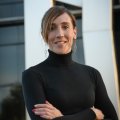
Olatz Etxebarria Perez de Nanclares
EHU
Olatz Etxebarria Perez de Nanclares es profesora e investigadora en la Universidad del País Vasco. Doctora en Psicología de la Educación por la misma institución, realizó la estancia internacional del doctorado en la Universidad de Harvard. Es graduada en Educación Primaria con menciones en Educación Física, Pedagogía Terapéutica e Inglés como Lengua Extranjera, y posee un máster en Orientación e Intervención Psicopedagógica. A lo largo de 17 años ha desarrollado su labor profesional en diversas áreas de la educación en Euskal Herria, Estados Unidos y Asia. Sus líneas de investigación se centran en la identidad de género, las necesidades educativas especiales, los contextos multiculturales y multilingües, y la actividad física. Ha difundido sus trabajos en revistas científicas de alto impacto y ha participado como ponente en congresos de ámbito nacional e internacional.
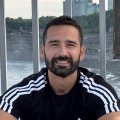
Mikel Gartziarena San Policarpo
EHU
Mikel Gartziarena holds a Bachelor's degree in Primary Education (University of the Basque Country - UPV/EHU), a postgraduate degree from the School of Writers (National University of Distance Education - UNED), and a Master's degree in Multilingualism and Education (UPV/EHU). After teaching in Primary Education, he is currently a professor in the Department of Language and Literature Didactics at the UPV/EHU, training future teachers on the Gipuzkoa campus. He received the Extraordinary Doctoral Award in 2023 for his dissertation, "Plurilingual and Methodological Beliefs of Primary School Teachers in Southern Spain." His study analyzes teachers' linguistic attitudes, strategies for effective multilingual language teaching, and the sociolinguistic factors that influence the revitalization of Basque. He has also undertaken international research stays and collaborations with research groups in Quebec, Wales, the French Basque Country (Iparralde), Boise, and Reno, and publishes in high-impact international and Basque journals. She currently edits the journal Tantak UPV (Education and Basque Language). During the course, she will present the main results of her research.

Izaskun Molás Olalde
Izaskun Molás Olalde is a PhD student in the Language Acquisition in Plurilingual Contexts program of the Euskal Herriko Unibertsitatea since 2024. At this same university he developed the degree of Trilingual Primary Education (2021) and the master of Psychodidactics (2022). Her family’s bilingual background and experiences lived abroad and in teaching have had a major influence on her professional trajectory; in this way, her interest has focused on language teaching and intercultural dynamics. Her research, led by María Orcasitas-Vicandi and Andrea Perales-Fernández-de-Gamboa, focuses on the impact of an innovative, plurilingual and multimodal thought methodology for Primary Education, as in the case of Basque, Spanish and pupils’ English reading and drafting ability. In addition, during this PhD process, the opportunity to study at the South African University of Stellenbosch has brought her closer to culturally sustainable pedagogies.
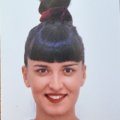
Ane Olmedillo Berasategi
Ane Olmedillo-Berasategi is a PhD candidate in Psychodidactics: Psychology of Education and Specific Didactics from the University of the Basque Country (UPV/EHU). She currently works as a lecturer in the Department of Education Sciences, Faculty of Education, Philosophy and Anthropology (UPV/EHU), while she works Therapeutic Pedagogy teacher in Secondary Education within the Basque educational system.

María Orcasitas Vicandi
UPV/EHU
María Orcasitas-Vicandi is a professor in the Department of English and German Philology, Translation and Interpretation at the UPV. She holds a degree in English Philology and two masters in Multilingual Education and Teacher Training. She has extensive teaching experience in Secondary Education, Vocational Training and UPV. She is also dedicated to teacher training and has participated in the design and development of teaching materials for different educational levels. The results of her research activity have been published in the form of books, articles and book chapters, both nationally and internationally. Likewise, she actively participates in scientific congresses and their organizing committees and acts as a reviewer for academic journals. She has participated in national, autonomous and international research projects and her main lines of research are plurilingual education and second and third language learning, always from an inclusive perspective and understood as a social education tool.
Andrea Perales Fernández de Gamboa
Euskal Herriko Unibertsitatea
Dr Andrea Perales-Fernández-de-Gamboa is based in the Basque Country, where she works as a lecturer and researcher in language education at the University of the Basque Country (UPV/EHU). Her work sits at the intersection of applied linguistics and teacher education, with a particular focus on translanguaging, culturally sustaining pedagogies, multilingual identities, and social and cognitive justice in language education. Her research is grounded in classroom-based studies in linguistically and culturally diverse secondary schools, especially in contexts where minority and minoritised languages coexist. Through her work, she is particularly interested in how language teaching can challenge deficit perspectives and better prepare teachers for multilingual educational realities. She is a member of the research group "País Vasco, Europa y América: Vínculos y Relaciones Atlánticas".
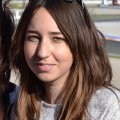
Nerea Villabona Perurena
Nerea Villabona is an Assistant Professor in the Department of Didactics of Languageand Literature at the University of the Basque Country (UPV/EHU), where she teachesin the Primary Education and Early Childhood Education degree programs. Her research lies in the field of language and multilingual education, with particularemphasis on language ideologies, multilingual teaching approaches, and classroompractices. She has presented her work at numerous national and internationalconferences on multilingualism in education and has published in peer-reviewedjournals. She has also conducted research stays at the University of Minnesota andBoise State University (USA), as well as at the Université de Montréal (Canada).
Registration fees
| Face-to-face | Until 25-06-2026 |
|---|---|
| 25,00 EUR | |
| 25,00 EUR | |
| 25,00 EUR |
Venue
Miramar Palace
Pº de Miraconcha nº 48. Donostia / San Sebastián
Gipuzkoa
Miramar Palace
Pº de Miraconcha nº 48. Donostia / San Sebastián
Gipuzkoa
Sustainable development goals
Agenda 2030 is the new international development agenda approved in September 2015 by the United Nations. This agenda aims to be an instrument to favour sustainable human development all over the planet, and its main pillars are the eradication of poverty, a reduction in equality and vulnerability and fostering sustainability. It is a unique opportunity to transform the world up to 2030 and guarantee human rights for all.
4 - Quality education
Guarantee quality education that is inclusive and equitable and foster opportunities for lifelong learning for everyone. Key issues: free-of-charge, equitable and quality education, access to higher education and training on an equal basis, education for sustainable development, suitable education centres for persons with disabilities, and safe, non-violent and efficient learning environments.
More information
5 - Gender equality
Achieve gender equality and empower all women and young girls. Key issues: the end of all forms of discrimination and violence, recognition of unpaid care and domestic work, shared responsibility, equal opportunities, full and effective participation in reproductive rights, equal rights vis-à-vis economic resources, access to land and other assets and ownership.
More information
10 - Reduced inequalities
Reduce inequality in countries and between them. Key issues: promotion of the social, economic and political inclusion of all people, equal opportunities, fiscal, wage and social protection policies to favour equality, migration and the policies that affect it, official assistance for the development, regulation and supervision of world institutions and markets.
More information
Other courses that might be of your interest...

-

Face-to-face
-

Streaming
-
Face-to-face

-
Streaming
-
Face-to-face