

Fostering Dialogue and Collaboration among Minority Language Educators: Basque, Occitan and Irish within our Teacher Academies
Description
This Summer Course brings together the University of the Basque Country (EHU), the University of Bordeaux (UBx) and the University of Galway to examine the role of minority languages in education. It examines the teaching of Basque and Occitan in New Aquitaine, France, where French is the sole official language and regional minority languages are relegated to optional subjects in public education. It also explores the teaching of Irish in Ireland, both as a curricular subject in English-medium education and as the language of instruction in Irish-medium education.
New Aquitaine, in southern France, is home to several minority languages, among which Basque and Occitan. Basque is spoken in the southern part of the region (Northern Basque Country or Iparralde), while Occitan is spoken more widely across New Aquitaine and beyond. Basque is also spoken in the Southern Basque Country (Hegoalde), encompassing the Basque Autonomous Community (BAC) and Navarre in Spain. In the BAC, Basque enjoys co-official status and serves as a vehicular language in the education system (Pérez-Izaguirre, Châteaureynaud & Amiama Ibarguren, 2021; Pérez-Izaguirre, Châteaureynaud & Van der Worp, 2025).
In Ireland, Irish is the first official language but only a minority of the population report speaking it daily (1.3% according to the 2022 Census). The language does have core status in the national curriculum at primary and second-level, although this status has become increasingly contested (Murray et al., 2021). One of the key sites of Irish language revival is the immersion education sector, which has experienced rapid growth in recent decades, particularly in regions where the language does not have a strong presence (MacGearailt, MacRuairc & Murray, 2021). The Máistir Gairmiúil san Oideachas (MGO) at University of Galway is a teacher education programme that prepares teachers for working in the Irish language sector and is the only programme of its kind in Ireland.
As institutions responsible for teacher education in the Irish, Basque and Occitan Academy, the UGal, EHU and UBx are committed to addressing the needs of their regional languages. As teacher educators and academics, we consider it our duty to transfer the findings of research on this topic to the wider educational and practice community.
This Summer Course brings together external and internal stakeholders (professionals, students, institutions) and higher education academics, primarily from the ENLIGHT network. We believe dissemination and knowledge exchange is key to sustaining the teaching of minority languages. This is particularly important given that educators working with minority languages often face many of the same challenges and constraints, despite their varying national contexts. Bringing together academics, professionals and students from the three contexts into dialogue provides future teachers and teacher educators with a unique opportunity to learn about diverse linguistic realities, to reflect on the status and teaching of our regional languages, and to build capacity in the minority language teaching sector.
The Summer Course will foster dialogue between experts, institutions, and professionals of these regional minority languages. This initiative also lays the foundation for future collaborations.
Mac Gearailt, B., Mac Ruairc, G., & Murray, C. (2021). Actualising Content and Language Integrated Learning (CLIL) in Irish-medium education; why, how and why now? Irish Educational Studies, 42(1), 39–57. https://doi.org/10.1080/03323315.2021.1910971
Murray, C., Lynch, A., Flynn, N., & Davitt, E. (2021). Articulating Minority Language Value in Diverse Communities: The Case of Compulsory Irish Language Education. Journal of Language, Identity & Education, 22(3), 247–261. https://doi.org/10.1080/03323315.2021.1910971
Pérez-Izaguirre, E., Châteaureynaud, M. A., & Amiama, J. F. (2021). Teachers’ view on the elements that enhance and hamper Basque and Occitan teaching in southern France: an exploratory approach. Diaspora, Indigenous, and Minority Education, 15(3), 151–165. https://doi.org/10.1080/15595692.2021.1929154
Pérez-Izaguirre, E., Châteaureynaud, M.-A., & van der Worp, K. (2025). Basque and Occitan in the new global context: Some reflections on language coexistence in multilingual education. In W. Wei & J. Schnell (Eds.), The Routledge handbook of endangered and minority languages (Vol. 2). Routledge.
Objectives
To bring together and foster dialogue between ENLIGHT academics and external stakeholders (professionals, students, institutions).
To create a toolkit for enhancing and strengthening the position of minority languages in teacher education / for embedding best practice in minority language education in teacher preparation programmes.
Activity directed to
- University student
- Students not from university
- Teachers
- Professionals
Methodology
This summer course combines several methodologies:
- Three lectures are offered by academic experts in the field of minority languages in education. After the lectures time for discussion is offered.
- Two round tables are organised, with participants from the academic field and stakeholders
- A participatory methodology is provided in the workshop "Strategies for minority language teacher training: a toolkit within our Teaching Academies", where all participants will actively participate in the construction of a toolkit for minority language teacher training.
Organised by

In collaboration with


Program
10-07-2026
Registration
Presentation by the Director of the activity
Language: English
- Elizabeth Pérez-Izaguirre | University of the Basque Country (EHU)
- Karin Van der Worp --- | University of the Basque Country (EHU)
“ Training teachers for minority language transmission: the case of occitan“
Language: English
- Marie-Anne Châteaureynaud | UBx - Full Professor
“Policy, practice and pedagogy in Irish-medium education“
Language: English
- Seán Grádaigh | University of Galway - Lecturer in Education
- Clíona Murray | University of Galway - Lecturer in Education
Coffee break
“Similarities and differences in Basque teacher training: the cases of Iparralde and Hegoalde“
Language: English
- Argia Olcomendy | Université Bordeaux Montaigne - Full Professor
- Elizabeth Pérez-Izaguirre | University of the Basque Country (EHU)
- Karin Van der Worp --- | University of the Basque Country (EHU)
Round table: “Teacher training for minority language education: opportunities and challenges“
Language: English
- Sinead Ní Ghuidhir | UGAL - Lecturer in Education
- Iris Orosia Campos Bandrés | University of Zaragoza - Associate Professor
- Elizabeth Pérez-Izaguirre | University of the Basque Country (EHU)
- Marie Delpech | Basque inspector
- Begoña Iturgaiz Rodriguez | Berritzegune
Synthesis
Workshop: Strategies for minority language teacher training: a toolkit within our Teaching Academies
Round table: “ Pre-service teacher practice for minority language education in a global context in Basque, Occitan and Irish Teacher Academies“
Language: English
- Roseann Ni Chéidigh Uí Fhlatharta | UGAL - Lecturer in Education
- Alban Garros | Bordeaux Academy
- Martial, Patrice Peyrouny | University of the Basque Country (EHU)
- Alexander Mmartinez de Madina Acorta | UBx - PhD candidate Occitan teaching
- Marie-Anne Châteaureynaud | UBx - Full Professor
Closing session
Language: English
- Elizabeth Pérez-Izaguirre | University of the Basque Country (EHU)
Directors
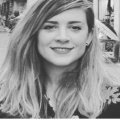
Elizabeth Pérez-Izaguirre
UPV/EHU
Elizabeth Pérez Izaguirre is an Associate Professor at the University of the Basque Country (EHU), with accredited six-year research (2015-2021) and five-year teaching track record. (2017-2021). She is currently the principal researcher of the AKTIBA-IT research lab at the EHU. Her academic work focuses on ethnographic studies of education, particularly exploring teaching practices, identity, and minority languages in multilingual contexts. She has led interdisciplinary projects, conducted international research stays, and explored linguistic and cultural diversity in education through collaborative research.
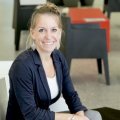
Karin Van der Worp ---
UPV/EHU, Profesora Agregada
Karin van der Worp holds a Doctoral degree in Education (UPV/EHU, Basque Country), a Master degree in Teaching Spanish Language and Culture (RuG, The Netherlands), a Master degree in Applied Linguistics (RuG), a Bachelor degree in Romance Languages and Cultures (RuG) and a Bachelor degree in Pedagogy (UPV/EHU). She is associate professor at the UPV/EHU University of the Basque Country, at the Faculty of Education, Philosophy and Anthropology, at the Department of Educational Sciences, where she teaches classes related to educational research in the bachelor programs of Pedagogy and Social Education, and in the Master of Secondary Education. Karin van der Worp is member of the DREAM research group. Her research interests include multilingualism in the workplace and in education and minority languages. She has presented her work at national and international conferences and has published several articles in international academic journals.
Speakers
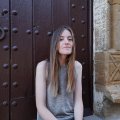
Iris Orosia Campos Bandrés
Iris Orosia Campos Bandrés holds a PhD in Education and is an Associate Professor of Language and Literature Didactics at the University of Zaragoza, where she also directs the Specialisation Diploma in Aragonese Philology and the Teaching Innovation Group in Linguistic and Literary Education. She is a member of the ECOLIJ research group. Her research interests focus on the teaching of Aragon’s linguistic heritage, educational sociolinguistics, and reading and literary education. She is the Principal Investigator (PI) of the Spanish partner in the European project “LocalLing. Revitalisation of Linguistic Diversity and Cultural Heritage”, and a member of the project “PYRENLANG. Multilingualism and minority languages in schools of the western Pyrenees: a transdisciplinary approach”, led by the UPV/EHU and the UB. She has published several monographs on the teaching and learning of Aragonese, including El aprendizaje del aragonés en la vida adulta. A qualitative study on students’ representations (2023). In terms of knowledge transfer, her coordination of the PlurilingüES project stands out: Teaching materials on multilingualism in Spain, promoted by the Government of Aragon and sponsored by the Spanish Ministry of Culture and Sport.
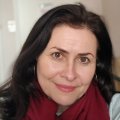
Marie-Anne Châteaureynaud
Marie-Anne Châteaureynaud is professor of applied linguistics at the INSPE (College of Education) of University of Bordeaux. Her research focuses mainly on Occitan, minority languages, sociolinguistics, Language teaching and learning, and multilingualism.
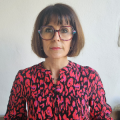
Marie Delpech
Secondary education inspector for Basque (Euskara) within the French National Education system. I completed my studies at the Bayonne campus of the University of Pau and the Pays de l’Adour, specialising in Basque Language and Civilization. I began my professional career in primary education, carrying out substitute teaching as a Basque-language teacher within public bilingual education. After passing the secondary education competitive examination, I worked as a tenured teacher in various lower and upper secondary schools, gaining a wide range of experience. Subsequently, I spent twenty years as a Basque-language teacher at the Villa Fal public school in Biarritz, where I was actively involved in language teaching and pedagogical projects. For the past four years, I have been working as a secondary education inspector in the Bordeaux Academy. I currently serve as a subject-matter advisor to the Rector, contributing to teacher support, the implementation of educational policies, and the promotion of multilingualism.

Alban Garros
Education 2015 – Master’s degree in Teaching 2014 – CAPES qualification in Occitan 2014 – Master’s degree in Contemporary History: “La course à l’espagnole in Parentis‑en‑Born: stakeholders, challenges and organisation of novilladas from 1927 to the present day” Professional experience Since 2014 Secondary school teacher Currently teaching in Langon Participation in committees responsible for designing final competitive examination assessments (upper secondary and higher education) Since 2017 Occitan voice actor with Conta’M Provided voice‑overs for Mr Stick / Stick Man (Martin Freeman), several characters in Avril and the Twisted World (including Olivier Gourmet’s character), Solan Gundersen in two feature films (The Big Cheese Race and Journey to the Moon), Astérix in The Mansion of the Gods, as well as various roles in animated series and films (Arthur and the Children of the Round Table, Mini‑Loup, The Badger‑Fox Family, Terminator 2, The Name of the Rose, among others).
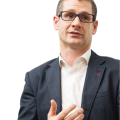
Seán Grádaigh
Seán Ó Grádaigh is a Lecturer in Teacher Education at the School of Education, University of Galway, and Director of the Máistir Gairmiúil san Oideachas (MGO), an Irish-language immersion programme preparing teachers for second-level Irish-medium schools. An Apple Distinguished Educator, he has served for over a decade as Ireland's Country Lead for Apple Professional Learning Specialists. He is founder and Chair of the MiTE Conference (International Conference on Mobile Technologies in Initial Teacher Education), with previous editions hosted in Sydney and Los Angeles. His research focuses on Digital Learning, artificial intelligence, teacher education & Irish-medium education. He currently serves on the International Expert Panel on AI for the Wales Collaborative for Learning Design, which advises the Welsh Government on educational policy.
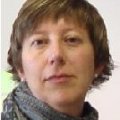
Begoña Iturgaiz Rodriguez
Euskararen eta Hizkuntzen Ikaskuntzarako Institutua, Aholkularia
Bachelor’s Degree in Primary Education (Science Specialization), complemented by studies in Basque Philology at the University of the Basque Country (UPV/EHU). Extensive experience as a Science and English teacher, alongside work as a developer and author of English-language educational materials. Held senior leadership positions in the school sector, including Head of Studies and School Principal. Since 2009, has served as a Primary Education Advisor at the Leioa Berritzegune (Educational Support and Innovation Centre), providing guidance and support to schools and teaching professionals. Throughout this period, has both undertaken and delivered specialized professional development in Content and Language Integrated Learning (CLIL), Translanguaging, and Language Teaching Methodology and Didactics within Early Childhood and Primary Education. Additionally, possesses substantial expertise in Project-Based Learning (PBL), gained through practice and leadership both as a classroom teacher and as an educational advisor. Currently, is a member of the Multilingualism working group within Basque Eductiona Dept. contributing to the development and implementation of educational policies and initiatives in these strategic areas.

Alexander Mmartinez de Madina Acorta
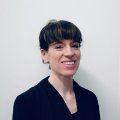
Clíona Murray
Dr. Clíona Murray is an assistant professor at the School of Education, University of Galway. She teaches sociology of education and research methods and is coordinator of practitioner research on the Máistir Gairmiúil san Oideachas teacher education programme. Her research interests include education policy studies, social inclusion, minority languages in education, and narrative research. A graduate of University of Galway, UCL Institute of Education and Maynooth University, her doctoral research examined the interplay of education policy and teacher identity. Clíona worked as a post-primary teacher of French and German prior to taking up her current position.

Roseann Ni Chéidigh Uí Fhlatharta
Roseann Uí Fhlatharta is a Lecturer in Teacher Education at the School of Education, University of Galway. She contributes to the preparation of future post-primary teachers on the Máistir Gairmiúil san Oideachas (MGO), an immersion Initial Teacher Education programme delivered through Irish. Her work centres on supporting and guiding future post-primary teachers, through a strong emphasis on creative, reflective, and research-informed approaches to language immersion education. Through her teaching on the MGO, she is focused on modelling high-quality pedagogical practice in Irish-medium contexts and fostering confidence, adaptability, and professionalism amongst student teachers. Roseann brings extensive classroom and leadership experience to her work in ITE. She has contributed to national curriculum developments and has played a key role in designing and delivering professional learning for teachers at post-primary level. She has a longstanding interest in curriculum development, teacher pedagogy and innovative teaching and learning strategies for language education.
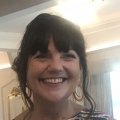
Sinead Ní Ghuidhir
Sinéad is a lecturer in Teacher Education in the School of Education, University of Galway. She is Co-director of the Máistir Gairmiúil san Oideachas (MGO), a flagship immersion language Initial Teacher Education programme through Irish. Sinéad’s role involves preparing teachers for the future, modelling best practice at the forefront of Irish medium Initial Teacher Education. A parallel function is the continued networking and support of teaching and learning in Irish medium schools and the encouragement of learning within this medium. Her research interests lie in active teaching & learning methods, with an emphasis on creativity, inclusion and the use of drama in the classroom. She also has a keen interest in the research and implementation of CLIL, and offers CPD to inservice teachers in this area.

Argia Olcomendy
Since 2025: Full Professor of Basque Studies at Université Bordeaux Montaigne (UBM). Since 2022: Associate Professor (Maîtresse de conférences) of Basque Studies at UBM. 2013–2021: PRCE in Basque Studies at UBM. 2023: Habilitation to Supervise Research (HDR) in Basque Studies. School culture in the Basque context. HDR defended on 15 June 2023 at UBM. Supervisor: Jean Casenave. 2022: Triple CNU qualification for Associate Professor positions: Section 73 Regional Cultures and Languages; Section 07 Language Sciences: General Linguistics and Phonetics; Section 70 Education and Training Sciences. 2017: Doctoral dissertation in Basque Studies (joint supervision). Teaching spoken Basque: a linguistic and didactic analysis. Dissertation defended on 27 November 2017 at Université Bordeaux Montaigne. Supervisors: Jean Casenave and Itziar Idiazabal Gorrotxategui. 2012: Research Master’s degree in Basque Studies, UBM. Contemporary identities of Basques in Argentina. 2005: BA in History, University of Pau and the Pays de l’Adour. 2002: Successfully passed the external CAPES examination in Basque Regional Language. 2001: BA in Basque Regional Languages and Cultures, University of Pau and the Pays de l’Adour.
Elizabeth Pérez-Izaguirre
UPV/EHU
Elizabeth Pérez Izaguirre is an Associate Professor at the University of the Basque Country (EHU), with accredited six-year research (2015-2021) and five-year teaching track record. (2017-2021). She is currently the principal researcher of the AKTIBA-IT research lab at the EHU. Her academic work focuses on ethnographic studies of education, particularly exploring teaching practices, identity, and minority languages in multilingual contexts. She has led interdisciplinary projects, conducted international research stays, and explored linguistic and cultural diversity in education through collaborative research.
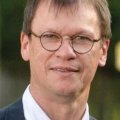
Martial, Patrice Peyrouny
A certified teacher of Occitan (langue d’oc), he has worked for over thirty years in the Bordeaux Academy, where he has developed recognised expertise in regional language didactics and educational design. His career is defined by the creation of structured interdisciplinary teaching frameworks and by a sustained commitment to the development of educational provision, resulting in a significant increase in student enrolment and training opportunities. Holder of the CAFFA qualification, he has been involved for more than twenty years in both initial and in‑service teacher education (INSPE), particularly in the preparation of bilingual primary teachers, closely aligned with university requirements. He has contributed to academic‑ and national‑level initiatives, including curriculum development, examination design for the baccalauréat and CAPES, and participation in juries for national competitive exams. As the author of key pedagogical resources (Oc ben, Trobadors), his work is grounded in the production and dissemination of knowledge. He is currently acting as an IA‑IPR, applying his scientific, didactic and institutional expertise to the steering of educational policies.
Karin Van der Worp ---
UPV/EHU, Profesora Agregada
Karin van der Worp holds a Doctoral degree in Education (UPV/EHU, Basque Country), a Master degree in Teaching Spanish Language and Culture (RuG, The Netherlands), a Master degree in Applied Linguistics (RuG), a Bachelor degree in Romance Languages and Cultures (RuG) and a Bachelor degree in Pedagogy (UPV/EHU). She is associate professor at the UPV/EHU University of the Basque Country, at the Faculty of Education, Philosophy and Anthropology, at the Department of Educational Sciences, where she teaches classes related to educational research in the bachelor programs of Pedagogy and Social Education, and in the Master of Secondary Education. Karin van der Worp is member of the DREAM research group. Her research interests include multilingualism in the workplace and in education and minority languages. She has presented her work at national and international conferences and has published several articles in international academic journals.
Registration fees
| Face-to-face | Until 10-07-2026 |
|---|---|
| 15,00 EUR | |
| 10,00 EUR |
| Live online | Until 10-07-2026 |
|---|---|
| 15,00 EUR | |
| 10,00 EUR |
Venue
Miramar Palace
Pº de Miraconcha nº 48. Donostia / San Sebastián
Gipuzkoa
Miramar Palace
Pº de Miraconcha nº 48. Donostia / San Sebastián
Gipuzkoa
Sustainable development goals
Agenda 2030 is the new international development agenda approved in September 2015 by the United Nations. This agenda aims to be an instrument to favour sustainable human development all over the planet, and its main pillars are the eradication of poverty, a reduction in equality and vulnerability and fostering sustainability. It is a unique opportunity to transform the world up to 2030 and guarantee human rights for all.
4 - Quality education
Guarantee quality education that is inclusive and equitable and foster opportunities for lifelong learning for everyone. Key issues: free-of-charge, equitable and quality education, access to higher education and training on an equal basis, education for sustainable development, suitable education centres for persons with disabilities, and safe, non-violent and efficient learning environments.
More information
Other courses that might be of your interest...

-

Face-to-face

-
Face-to-face
-
Face-to-face