UIK ends the 45th edition with its position solidified as a space for knowledge, meeting and dialogue

-
14,981 people took part in the 169 activities; Science & Technology, Society, Law, Health and Sustainability were the areas with most participants.
-
A network of 279 partner entities, the participatory dynamics and dialogue between disciplines have bolstered the UIK collaborative model.
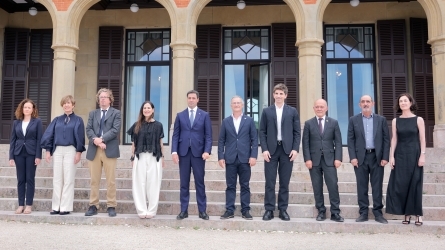
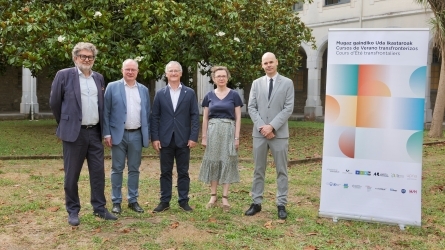
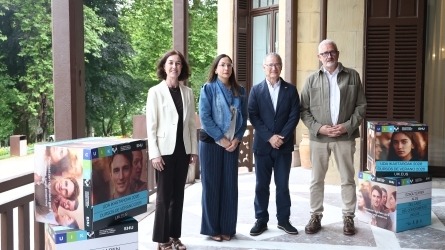
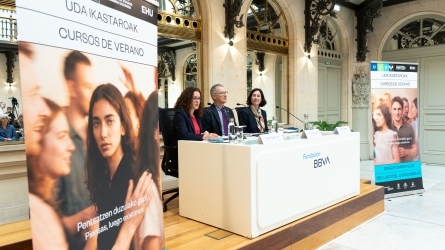
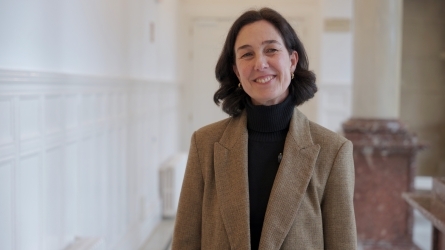
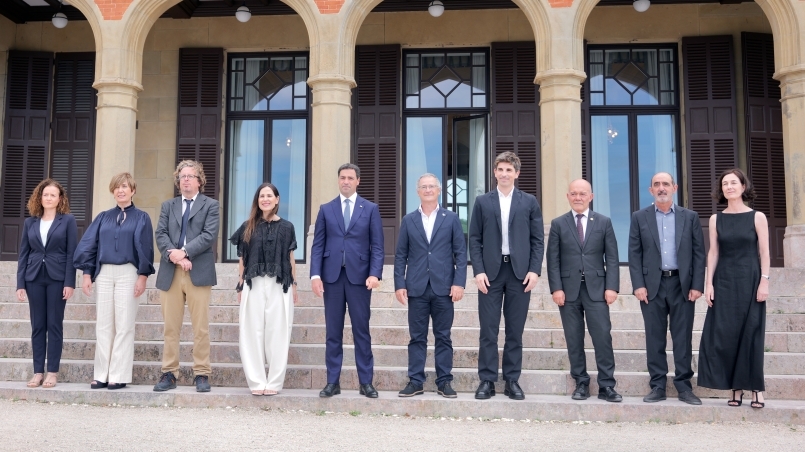
Juana Goizueta, Vice-Rector of the Gipuzkoa Campus of the University of the Basque Country (EHU), and Idoia Otaegui, the Academic Director of the EHU Summer Courses Foundation (UIK), were today at the Miramar Palace in Donostia-San Sebastián to take stock of the 45th Summer Courses. The 2026 courses, with ‘You Think, Therefore We Exist’ as the tagline, focused on knowledge and gathered together different scholars, institutions, professionals and citizens throughout the summer.
There was a total of 169 activities this year: 117 Summer Courses – 8 of which were Cross-Border Summer Courses – 33 workshops, 18 open activities – including 13 Donostia Sustainability Forum sessions— and an extended online Summer Course. In total, 14,981 people took part: 13,061 students and 1,965 speakers and members of the management teams.
The programme was run throughout the territory, with Donostia / San Sebastián, Bilbao, Vitoria-Gasteiz and Bayonne as the main centres. Furthermore, true to its mission to take the Summer Courses out to the towns and to spread knowledge throughout the territory, the programme was run in Aramaio, Ataun, Baigorri, Beasain, Bermeo, Gernika-Lumo, Irun, Lesaka, Oñati, Ordizia and Zaldibia. In addition to the in-person range of learning, there was the option of following different live activities online.
Beyond the figures: dialogue and shared knowledge
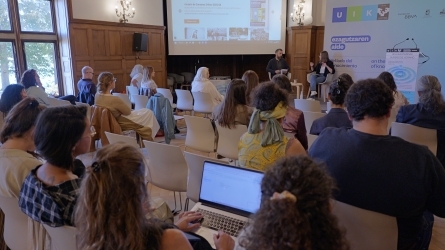
The Summer Courses’ contribution can be seen to go far beyond the number of activities and participants. They were an opportunity to present and compare research results, for institutional representatives to meet with citizens, and to connect experiences from different fields. A myriad of studies and research – from housing policies to the diversity of beliefs, and not forgetting data protection or longitudinal studies on ageing – were presented and discussed.
The multidisciplinary perspective had a prominent role. Against a backdrop where connecting specialist knowledge is ever more necessary, UIK offers a space to explore those links: it gathers academia, the public administration, professionals, social stakeholders and citizens together around the same table to raise new questions and work together to come up with answers.
What sparked most interest in 2026?
The participation figures provide an insightful snapshot. Science and Technology was the area with the highest participation, with 3,462 people, followed by Society (2,101), Law (1,856), Health (1,527) and Sustainability (1,497). The activities with the highest attendance include the courses on sustainable urban drainage, fiscal policy to transform industry, human rights, Basque self-government, challenges of ageing, and end-to-end security.
An observatory of social concerns and a space to pause and reflect.
UIK’s vocation as an observatory allows what lies behind the figures to be interpreted. What came to light in the classrooms and the conversations during the breaks show that social issues such as gender-based violence, inclusion, feminism, community and coexistence continue to spark great interest. In the field of health, the courses on mental health, emotions, mourning and care – along with innovation – were a great success. Interest was also seen in environmental issues, including wildfires, water management and climate communication.
In such a complex and fast-changing context as the present, the Summer Courses offer a different pace: a space to pause, meet face-to-face and talk to people from other fields, with time to reflect on the challenges facing society.
Participation, collaboration and quality
UIK’s activity is based on collaboration. There were 270 partner entities in the 2026 edition. Methodologies to foster participation also played an important role: 35 courses included participatory dynamics and 5 were TopaGune, the format that UIK has rolled out with Gipuzkoa Provincial Government to drive participation. 315 people attended the TopaGune sessions and, over all, there were a total of 2,346 participants in the 35 courses with participatory dynamics.
The feedback also endorses the quality of this year’s course: the satisfaction index of students, speakers and management teams stands at 9.23 out of 10. In turn, the diversity of ages and genders reflects the calling of the Summer Courses to reach a wide audience.
International and cross-border scale
The international scale was particularly important in the 2026 courses, both down to the origin of the participants and to the programme and profile of the speakers. In total, 1593 international students took part in the Summer Courses. France, Germany, the United States, Italy, the United Kingdom and Switzerland were among the main countries of origin.
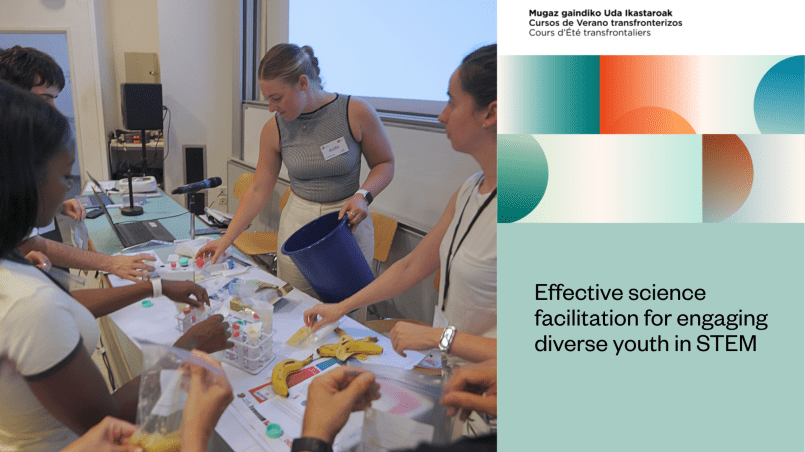
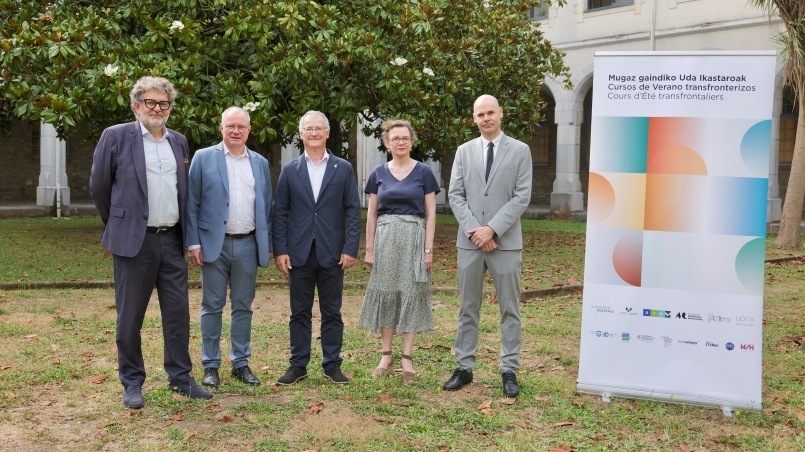
The international outlook was also reflected in the programme, with courses and session on migration, the challenges of the European Union, relations between Europe and the Global South, digital health, competition on digital markets, international law and citizenship. One of the main exponents of this interterritorial and international calling was the 5th Cross-Border Summer Courses. Between 29 June and 3 July, 8 courses were held and attended by 490 students – 209 in person and 281 following live online streaming. There were also 112 speakers from Spain, France and other European countries.
Many renowned experts from local to global levels, including Agustín Fuentes, Ana Zubiaga, Antonio Vitorino, Carlos de Hita, Cristina Fallarás, Daniel Innerarity, Duncan Haldane, Eneko Sagardoy, María Elósegui, María José Segarra, Ramon Agirre, Teresa Ribera and Yayo Herrero, took part in the 2026 edition. Their contributions – along with those of many other people – allowed current challenges to be addressed from a broad diversity of knowledge, experiences and perspectives.
A 45 year legacy, looking toward the future
The 2026 edition has bolstered one of the ideas advanced from the very start: when knowledge is shared, it grows and transforms. The classroom sessions have shown that many people and institutions are working – often silently – to find answers for the social challenges, and they choose UIK to share experiences, questions and research. One idea – hope – was recurring throughout the edition. Even though the challenges are huge, knowledge, commitment and a collaborative network exist that are able to help to face them.
The 45-year track record also marks the future way: boosting the connections between knowledge areas and participatory methodologies, and continuing to ensure UIK is a meeting point and open space to address the concerns and transformations of society.
‘Summer Courses are not only a range of learning; they are an ecosystem
to share knowledge. A space where academia, institutions, professionals
and citizens can be heard, discuss and build new perspectives.’
UIK would like to thank all the people and organisations who have contributed to making the 45th edition possible: the Organising Committee —the BBVA Foundation, the Department of Science, Universities and Innovation of the Basque Government, the Provincial Council of Gipuzkoa and San Sebastián City Council—, as well as sponsoring and partner institutions, programme and course management teams, speakers, students and participants, communication professionals and the media who have helped bring the content of the Summer Courses to a wider audience.
Now the edition is over, UIK will soon begin to prepare the 2027 Summer Courses. The period for course submissions and themes will be open from 1 to 30 November. UIK invites all those individuals and entities who wish to share knowledge and generate new spaces for dialogue to take part.